
The Boeing safety standard, "BSS 7230 F1 Vertical Bunsen burner test (60 seconds)," is part of Boeing's BSS 7230 series, which includes various flammability test procedures for materials used in aircraft interiors. This standard is a fire safety standard that specifies flammability, smoke, and toxicity requirements for materials used in aircraft interiors.
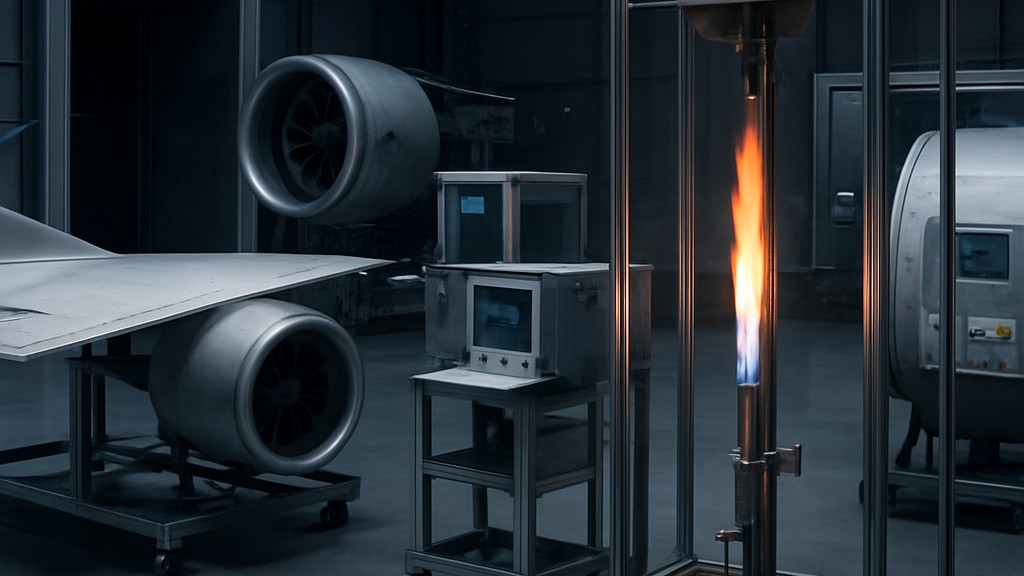
The purpose of this standard is to evaluate the flammability properties of materials used in aircraft cabin and cargo hold interiors. In these tests, a vertically mounted test specimen is exposed to a Bunsen burner flame for 60 seconds. After exposure, the specimen is evaluated for flame duration, drip flame duration, and burn length.
The sample size is typically 76 mm x 305 mm, and five samples are used in the tests. This test method complies with Federal Aviation Administration (FAA) regulations, specifically 14 CFR 25.853 Appendix F, which covers flammability requirements for aircraft materials.
CFR 25.853 is the part of Part 14 of the U.S. Code of Federal Regulations (CFR) titled "Aeronautics and Space," specifically concerning airworthiness standards for transport-category aircraft. This regulation, published by the Federal Aviation Administration (FAA), establishes flammability standards for materials used in the interiors of transport-category aircraft. It is a crucial component of ensuring aircraft cabin safety, particularly in the event of a fire.
Essential requirements of 14 CFR 25.853 include, but are not limited to:
Boeing's BSS 7230 series also covers other flammability test methods, including:
These test methods are designed to evaluate the fire response of various materials under different conditions. The orientations and exposure conditions provide comprehensive safety assessments for aircraft components.
Materials must meet specific fire resistance criteria depending on their location and function within the aircraft. Testing typically includes:
The standards for these tests are detailed in Annex F of Part 25. The purpose of this regulation is to minimize fire hazards in the cabin and to ensure that passengers and crew have sufficient time to evacuate safely in the event of a fire.
The Bunsen burner test is a common method for flammability testing in which a material sample is exposed to a controlled open flame from a Bunsen burner to evaluate how the material behaves when ignited. This method is widely used in aerospace, automotive, construction, and textiles to ensure fire safety compliance of materials. This test:
The flame source, a Bunsen burner, typically has a flame height of 3,80 cm. In this test method, the sample is held vertically. The exposure time is typically 12 to 60 seconds. Afterglow time refers to the time the flame continues to burn after the flame is removed. Burn length is the distance the flame travels. Burn rate refers to how fast the flame spreads (in mm per minute). Drip behavior refers to the falling of flaming drops and the ignition of other materials. The passing criterion is a burn rate of no more than 6,5 cm per minute.
Materials that pass Bunsen burner tests are considered fire retardant or self-extinguishing, making them safer for use in:
Our organization, which has been supporting businesses across all sectors for years through a wide range of testing, measurement, analysis, and evaluation activities, has a strong team of employees who closely follow global developments in science and technology and are constantly improving themselves. In this context, we also provide testing services to businesses in accordance with the "BSS 7230 F1 Vertical Bunsen burner test (60 seconds)" standard.
To get an appointment, to get more detailed information or to request an evaluation, you can ask us to fill in our form and reach you.