

Flue gas is gas leaving combustion plants and containing the reaction products of fuel and combustion air and residual materials such as particulate matter (dust), sulfur oxides, nitrogen oxides and carbon monoxide. When burning coal or waste materials, hydrogen chloride and hydrogen fluoride, as well as hydrocarbon derivatives and heavy metal derivatives, are released into the air in the flue gas. In many countries it is mandatory to comply with strict regulations regarding limit values for pollutants such as flue gases, dust, sulfur and nitrogen oxides and carbon monoxide as part of the national environmental protection programme. To meet these limit values, combustion plants have to install flue gas cleaning systems such as gas scrubbers and dust filters.
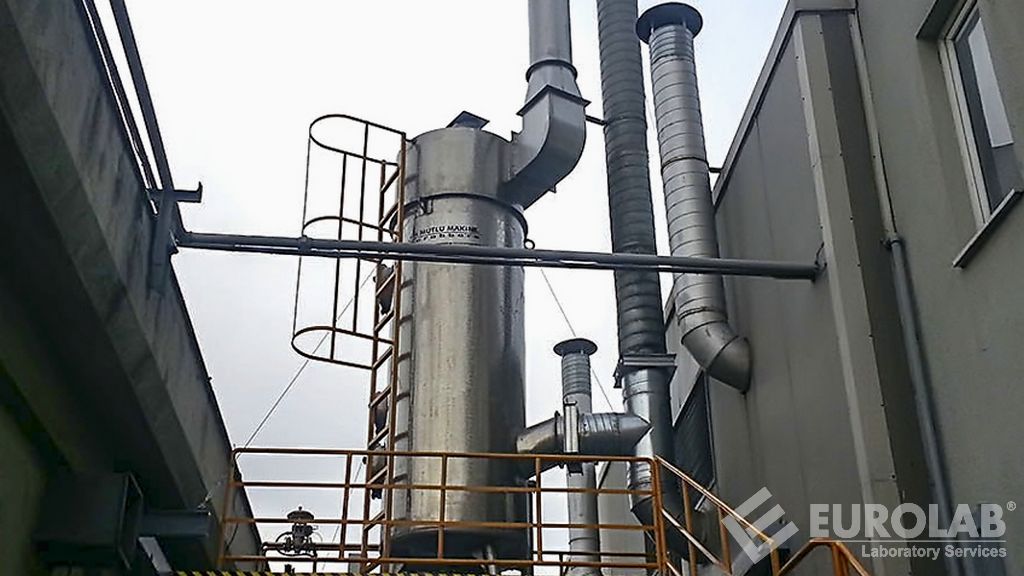
As with other gases, the composition of the flue gas depends on the type of fuel and combustion conditions, for example the air ratio value. Most of the flue gas components are air pollutants and therefore, before the gas is released into the air, it must be removed or minimized by special cleaning procedures in accordance with legal regulations. For example, the flue gas produced when fossil fuels such as coal and crude oil are burned contains significant amounts of sulfur derivatives. In fact, when carbonaceous fuels such as fossil fuels are burned, about 90 percent of the sulfur in the feedstock is converted to sulfur dioxide, which is formed under normal temperature conditions of the furnace and oxygen. However, if there is excess oxygen in the environment, sulfur dioxide is oxidized to sulfur trioxide and at higher temperatures (about 800 degrees), sulfur trioxide is formed.
In many industrial processes, flue gases are released into the atmosphere. Most of these are classified as emission sources and require continuous emission monitoring. There are international standards for monitoring these emissions.
A chimney must be properly designed to control draft and gases from combustion in a boiler or furnace. This is negative gauge pressure, measured relative to atmospheric pressure.
One of the methods used for velocity determination in flue gas is velocity determination with S type pitot tube. This method is for determining the average velocity and volumetric flow rate of a gas stream.
Among the numerous tests, measurements, analyses, and evaluations our organization provides for businesses in various sectors, we also offer flue gas velocity determination services using S-type pitot tubes, thanks to our trained and expert staff and advanced technological equipment.
To get an appointment, to get more detailed information or to request an evaluation, you can ask us to fill in our form and reach you.

