

The most important issue during a fire is life safety. Smoke, toxic gases, ease of ignition, heat release and flame propagation are some of the factors that contribute to fire hazard. All of these factors are taken into account in the assessment of a material's potential hazard. However, in previous years, the production of smoke and harmful gases from burning materials was thought to be less important than ignition and flame propagation. Statistics show that inhalation of products from the combustion of materials is also a serious factor causing deaths. Smoke is also a factor that creates poor visibility in the environment and makes escape difficult.
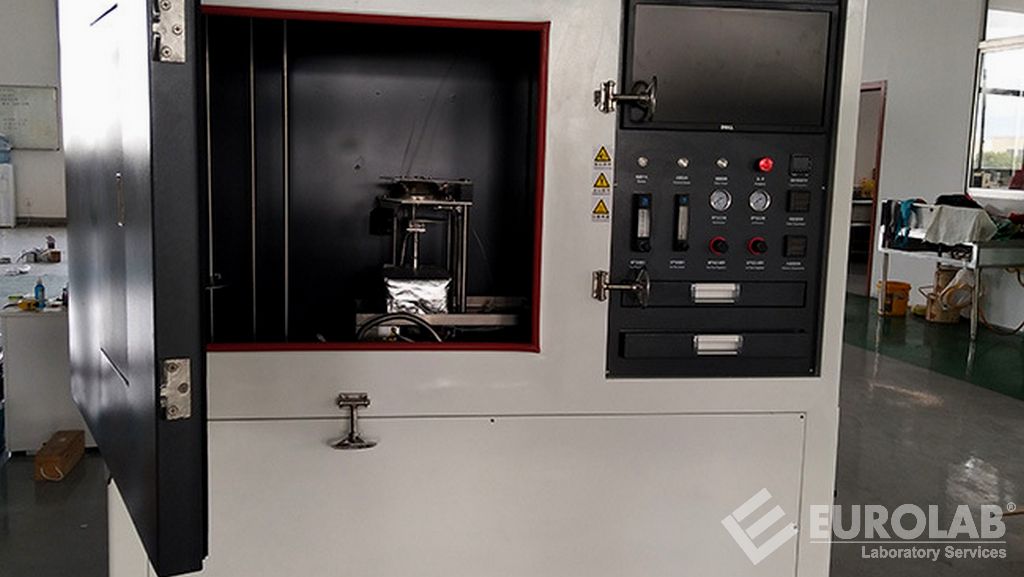
Smoke density and concentration of toxic gases depend on variables such as amounts and types of materials burned, heat exposure conditions, air temperatures, air velocities, enclosure volumes and dimensions, and ventilation. Most of these variables are interrelated and time dependent. In order to evaluate and compare the smoke generation potential of different materials, it is necessary to control as many variables as possible.
Smoke is suspended solid or liquid particulate matter resulting from the combustion or decomposition of any material. Smoke is most commonly measured in terms of light attenuation in a photometer. Smoke density is measured by a method based on the attenuation of light by the smoke, and the results are given as optical density rather than light absorption or transmittance. Smoke measurements are also expressed in terms of specific optical density, taking into account the light path length, chamber volume, and exposed sample surface area.
Soot, or carbon deposits, is a mass of impure carbon particles resulting from the incomplete combustion of hydrocarbons. As an airborne pollutant, soot has many different sources, all resulting from a type of pyrolysis. Burning coal, internal combustion engines, power plant boilers, ship boilers, central steam-heat boilers, waste incineration plants , fires, wildfires, fireplaces, and ovens are all sources of soot. However, soot exposure is a serious health risk, contributing to various types of cancer and lung diseases.
Our organization also provides smoke density (smudge) determination services with its trained and expert staff and advanced technological equipment, among the numerous test, measurement, analysis and evaluation studies it provides for businesses in various sectors.
To get an appointment, to get more detailed information or to request an evaluation, you can ask us to fill in our form and reach you.

