
The standard "ASTM C1519-10 Standard test method for evaluating the durability of building construction sealants by laboratory accelerated weathering procedures" developed by the American Society for Testing and Materials (ASTM) describes a test method for determining the durability of a sealant based on its ability to function in cyclic motion by maintaining adhesion and cohesion after repeated laboratory accelerated weathering exposures. This test method describes two laboratory accelerated weathering procedures for evaluating the durability of a sealant.

This test method includes the procedure to evaluate or compare, or both, the durability of sealants when subjected to accelerated weathering and cyclic motion in a joint.
Sealant installation procedures, design considerations, and movement during cure affect aging processes and are fundamental to the success of any sealant. These factors are not addressed in this test method.
The amount, type, and frequency of movement experienced by a sealant during its life depends largely on the materials used in construction and the orientation of the joint to sunlight, as well as many other factors that may or may not be uniform or consistent. Climatic exposures vary with the orientation of the building and shading, as well as local and regional climatic conditions. Climates at a given location can vary from year to year due to differences in solar radiation, temperature, precipitation, and atmospheric conditions. Additionally, the quality and intensity of solar radiation at the earth's surface varies with geographic location, season, time of day, and cloud cover.
Changes in results can be expected when operating conditions are changed within the acceptable limits of this test method. Therefore, all test results using this test method should be accompanied by a report of the specific operating conditions. ASTM G151 applies for detailed information on cautions applicable to the use of results obtained according to this test method.
Laboratory exposure results cannot be directly generalized to estimate an absolute rate of deterioration due to natural wear because the acceleration factor is material dependent and can be significantly different for each material and for different formulations of the same material. However, exposure of a similar material with known outdoor performance, a control, along with the test specimens allows comparison of durability to the control under test conditions. Evaluation in terms of relative durability also greatly increases the agreement in test results between different laboratories.
The results of this procedure depend on care taken to operate the equipment in accordance with ASTM G154 and ASTM G155 standards. Important factors include regulation of line voltage, removal of salt or other deposits from the water, temperature control, humidity control, condition and age of burners and filters in xenon arc equipment, and age of lamps in fluorescent UV equipment.
Additional information on sources of variability and strategies for addressing variability in the design, conduct, and data analysts of laboratory accelerated exposure tests is included in ASTM G141.
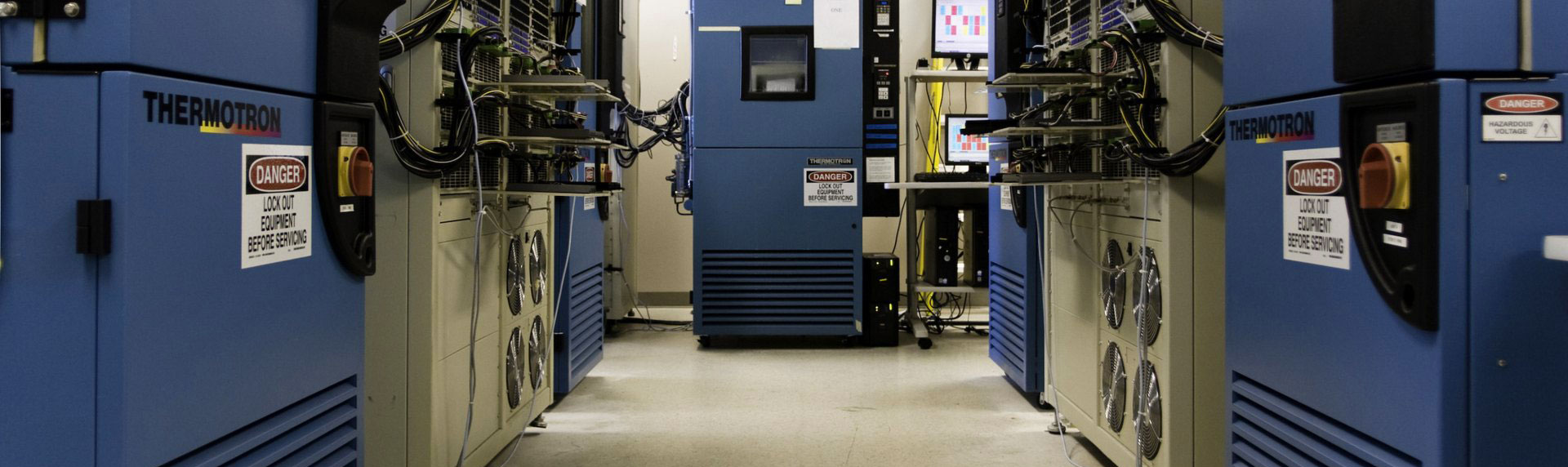
For this procedure, specimens are prepared where the sealant to be tested has bonded to two parallel contact surfaces. This procedure uses the same type of specimens, the same dimensions, and the same preparation and curing as described in ASTM C719. While any substrate can be specified and used, this procedure has been developed with anodized aluminum substrates. After curing, the specimens are placed in a simulated wear chamber for 4 weeks. After removal from the wear chamber, they are placed in a cyclic motion machine and subjected to 719 cyclic extension and compression strokes at room temperature according to the ASTM C6 method. Any degree of extension and compression may be used. After the motion cycles, the sealant is blocked open at the recommended extension and inspected for defects. The wear cycle, followed by the motion test and inspection, is repeated as frequently as specified. After each cycle, the number of cycles is recorded, as well as the failure mode, i.e., cohesive or adhesive, the amount of failure, the depth of any cracks or breaks, and any other relevant observations such as sealant deformation and blister formation.
When preparing test specimens, the sealant to be tested is bonded to two parallel contact surfaces as described in ASTM C719. The user must specify the number of specimens. Unless otherwise specified, anodized aluminum substrates are used. For each specimen, two supports and two spacers are assembled and placed on the non-adhesive substrate as described in ASTM C719. The sealant manufacturer's instructions are followed, such as whether or not to use a primer. The gaps created by the supports and spacers are filled with preconditioned sealant for 23 hours at 2 degrees plus/minus 24 degrees. The following precautions should be taken: air bubbles are prevented, the first sealant is expelled from the tube, cartridge or dispenser, the sealant is pressed against the contact surface of the supports, and the sealing surfaces are cut flush with the surface of the supports and spacers.
Our organization, which has been trying to support businesses from every sector with its testing, measurement, analysis and evaluation studies carried out in a wide range for years, has a strong staff that closely follows the developments in the world in the field of science and technology and constantly improves itself. In this context, testing services are also provided to businesses in accordance with the "ASTM C1519-10 Laboratory accelerated weather resistance procedures and standard test method for evaluating the durability of building construction sealants" standard.
To get an appointment, to get more detailed information or to request an evaluation, you can ask us to fill in our form and reach you.

