Dynamic Hardness Tests
The dynamic stiffness of a material is a measure of the speed of recoil produced by a rapidly falling mass containing a recess. Hardness applied to most materials, particularly metals, has been defined in many ways by physicists, metallurgists, and engineers. Among these definitions, resistance to permanent indentation is widely accepted today.
The general categories or types of hardness tests are as follows:
- Static indentation test: This is the most common type of static indentation test. A ball, diamond cone, or diamond of a particular shape is forced into the material being tested. The relationship of the test force to the area or depth of the indentation is a measure of hardness. Rockwell, Brinell, Knoop, Vickers and ultrasonic hardness tests are of this type. This test shows how materials deform in the plastic range after they pass their elastic limit and achieve a permanent set.
- Scratch test: One material can scratch another. The Moh scale is of this type. The Moh scale is still used today to classify minerals. The scale consists of 10 original minerals randomly numbered from one to 10 (eg diamond 10, apatite 5, calcite 3, talc 1).
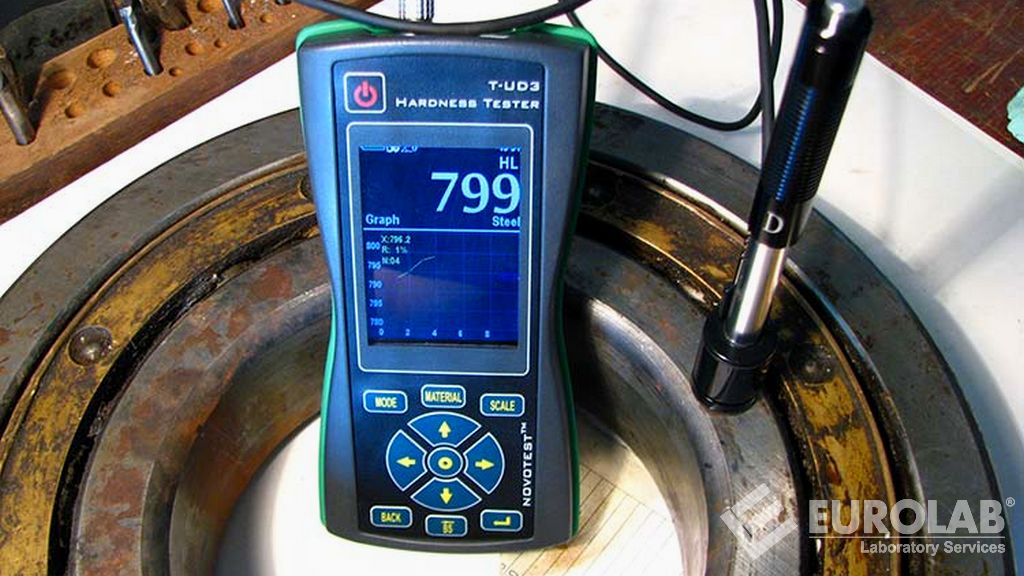
- Dynamic hardness test: The dynamic hardness of a material is a measure of the rebound rate produced by a rapidly falling mass containing a recess. In this most commonly used test, a diamond-tipped hammer in a graduated glass tube is allowed to drop under its own weight onto the test specimen from a fixed height. The resulting recoil is measured on a graduated glass scale.
- Abrasive and cutting hardness: There are two types of this method, related to a material's resistance to abrasion and its cutting ability. The abrasive mode usually requires the specimen to be mounted on a rotary table and is subject to the wear effect of the abrasive wheel applied at a given pressure. The cutting mode is an indicator of the machinability of metals and includes variables such as sharpness, speed and amount of pressure applied to the cutting tool.
- Electromagnetic (Eddy current): This test uses the principle of electro-magnetism. An electric current is applied to a coil and with the frequency of the current in the coil It creates an electromagnetic field that builds and collapses together.
Our organization also provides dynamic hardness testing services with its trained and expert staff and advanced technological equipment, among the numerous test, measurement, analysis and evaluation studies it provides for businesses in various sectors.