
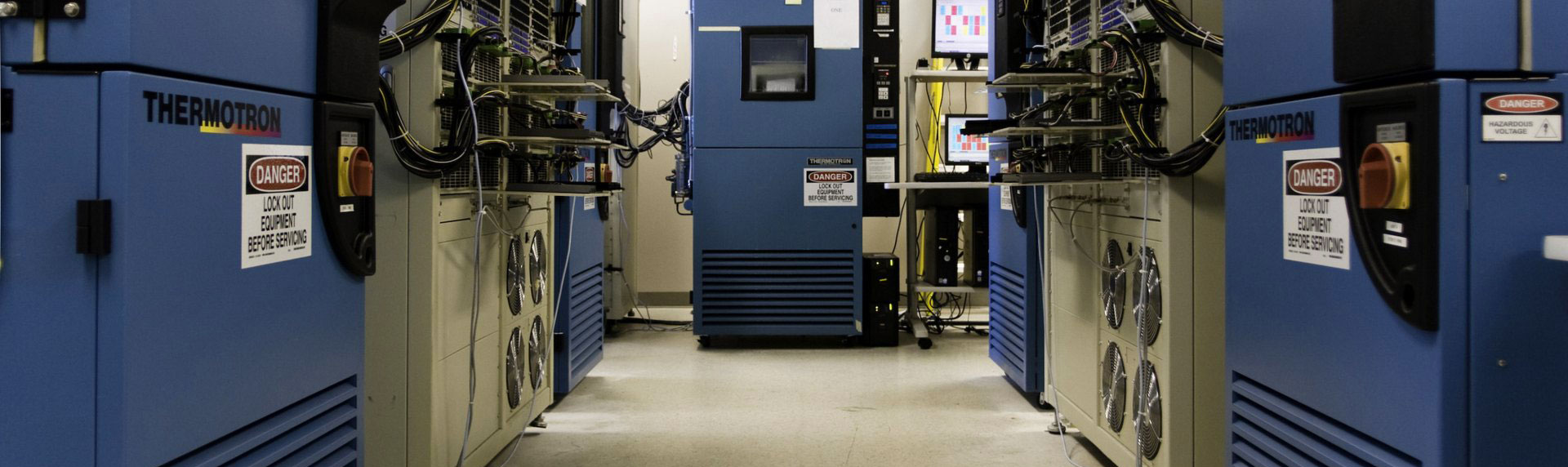
Radiated emission testing involves measuring the electromagnetic field strength of emissions unintentionally produced by an electronic product. Emissions are specific to switching voltages and currents in any digital circuit. This test is carried out to determine how large the emissions are and whether they comply with the emission limits.
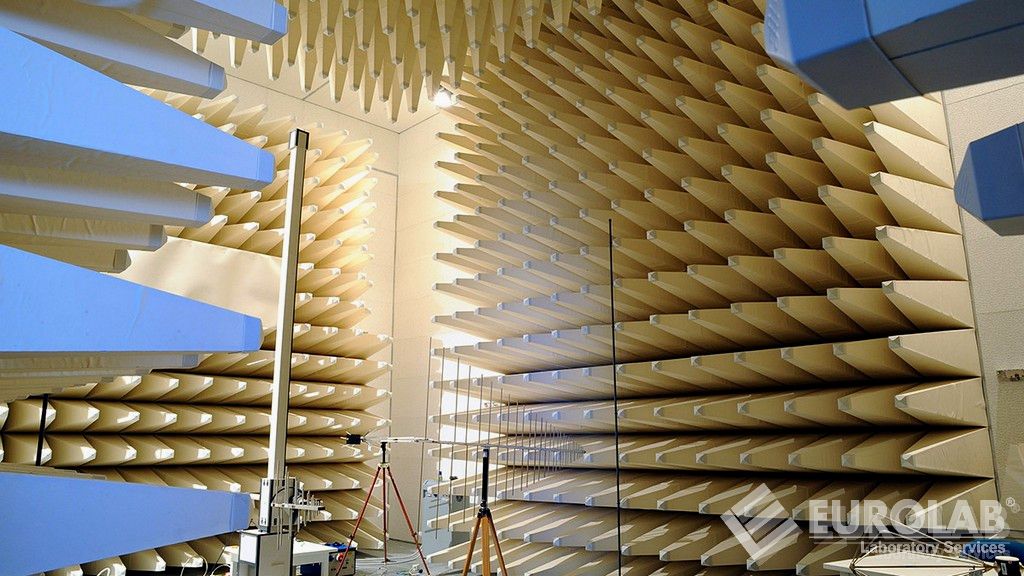
Electromagnetic waves do not propagate from a product in a beautiful spherical pattern. Emissions tend to be quite directional. That's why in tests carried out in advanced laboratories, the receiving antenna receives both the signal directly from the product under test and a bounce off the ground. In order to increase the measurement accuracy, the ground is coated with an electromagnetically reflective, aluminum, steel, wire mesh and similar surface. The receiving device scans the frequency band of interest and looks for emissions close to the limits. Using a process called maximization, the laboratory focuses on each of these emissions and measures the amplitude of the field strength.
There are two main types of test fields used to measure emissions from electronic products. The purpose of this is to accurately measure the emissions from the product and ensure that they comply with the relevant limits.
The limits of radiated emissions vary by geographic region and product type. The borders of Europe and North America are very close, but the borders of Europe are somewhat stricter in certain frequency bands. If the product has an industry-specific standard, such as military, automotive, or aerospace, the limits are often much stricter and harder to pass.
In short, radiated emission testing is used to measure the electromagnetic field strength of emissions unintentionally produced by an electrical or electronic product. One of the most common types of EMC (electromagnetic compatibility) testing is radiated emission testing. Electronic devices with significant radiated emissions can interfere with the normal operation of other nearby devices. For these reasons, understanding the cause and magnitude of radiated emissions is necessary to minimize them and to utilize fundamental design techniques. Sources of radiated emission include radio frequency flux over interconnects and cables. Traditionally, radiated emission is measured using only an antenna sensitive to the electric field.
Our organization also provides radiated emission testing services with its trained and expert staff and advanced technological equipment, among the numerous test, measurement, analysis and evaluation studies it provides for businesses in various sectors.
To get an appointment, to get more detailed information or to request an evaluation, you can ask us to fill in our form and reach you.

