
The “IEC EN 60068-2-2 Environmental test - Part 2-2: Tests - Test B: Dry heat” standard, which is based on a European standard and later published by the International Electrotechnical Commission (IEC), describes dry heat tests that can be applied to both heat-dissipating and non-heat-dissipating samples.

The purpose of the test method described is to determine the ability of components, equipment or other items to be used, transported or stored under elevated temperature. These dry heat tests do not allow the evaluation of the ability of the samples to withstand or perform during temperature changes. In this case, the standard “IEC 60068-2-14 Environmental test - Part 2-14: Tests - Test N: Temperature change” must be followed.
In the IEC EN 60068-2-2 standard, dry heat tests are classified as follows:
The test methods described in this standard are normally designed for samples that maintain temperature stability during the testing.
For the purposes of this standard, the following terms and definitions apply in addition to those given in IEC 60068-5-2:
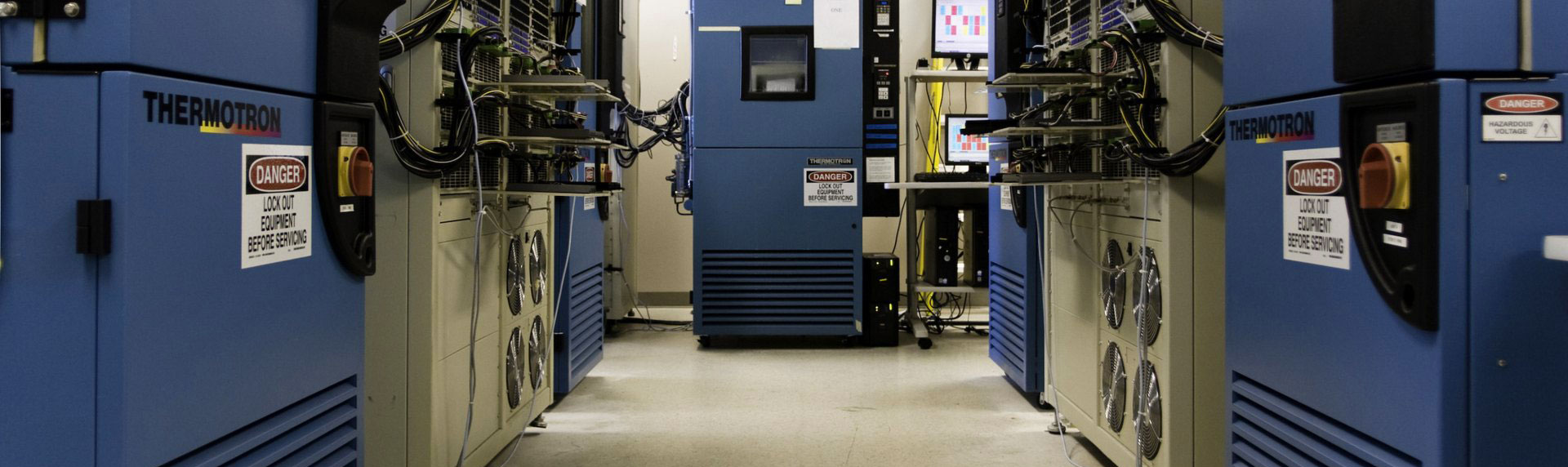
Temperature chambers used for non-heat dissipating samples and for tests on heat dissipating samples must be constructed and validated in accordance with IEC 60068-3-5 and IEC 60068-3-7. Further information on dry heat and cold tests is available in IEC 60068-3-1 and IEC 60068-1.
For a sample to be considered as heat dissipating, the hottest point on its surface, measured under free air conditions, i.e. low air velocity circulation, must be more than 5 K above the ambient temperature of the surrounding atmosphere after temperature stability has been achieved. When the relevant specification requires a storage or transport test or does not specify a load applied during the test, the dry heat test Bb applies.
When determining the high or low air velocity in the test chamber, the sample is opened or electrically charged as specified for the high temperature at which the test is to be carried out, at a minimum air velocity of 0,2 m/s under standard atmospheric conditions for measurements and testing. When temperature stability of the sample is reached, the temperature of a series of representative points around or on the sample is measured using a suitable monitoring device. The temperature increase at each point is then noted. The chamber air flow is opened and when temperature stability is reached, the temperature of the representative points is measured again. If the temperatures differ by more than 5 K from those measured without air flow or by a value specified in the relevant standard, this value is noted in the test report and the test chamber is considered to have high velocity circulation. The sample is then closed and the loading conditions are removed.
Tests with sudden temperature change are applied to tests with gradual temperature change, while in Bb, Bd and Be tests with gradual temperature change, the sample is introduced into the test chamber, the latter is at laboratory temperature. Then the temperature in the chamber is gradually increased so that there is no harmful effect on the test sample due to temperature change.
When testing heat dissipating samples, the Bd and Be tests describe procedures for testing heat dissipating samples with low air velocity circulation. This is to allow for localized hot spots within the sample similar to those seen in installed applications.
The air temperature in the chamber is measured by temperature sensors located so far from the sample that the effect of scattering should be negligible. Appropriate precautions should be taken to avoid heat radiation affecting these measurements.
For storage and transport tests, equipment may be tested with the packaging in place. However, since these tests are steady-state tests, the equipment will eventually stabilize at room temperature. The packaging should be removed unless the relevant standard requires it to remain in place or heating elements are included in the packaging.
Among the numerous testing, measurement, analysis and evaluation studies that our organization has carried out for businesses in various sectors, it also provides testing services defined in the “IEC EN 60068-2-2 Environmental testing - Part 2-2: Tests - Test B: Dry heat” standard with its trained and expert staff and advanced technological equipment.
To get an appointment, to get more detailed information or to request an evaluation, you can ask us to fill in our form and reach you.

