

The “ANSI/ISEA 138 American national performance and classification for impact-resistant gloves” standard, published jointly by the American National Standards Institute (ANSI) and the International Safety Equipment Association (ISEA), describes the testing, classification and labeling requirements for work gloves that provide back protection.
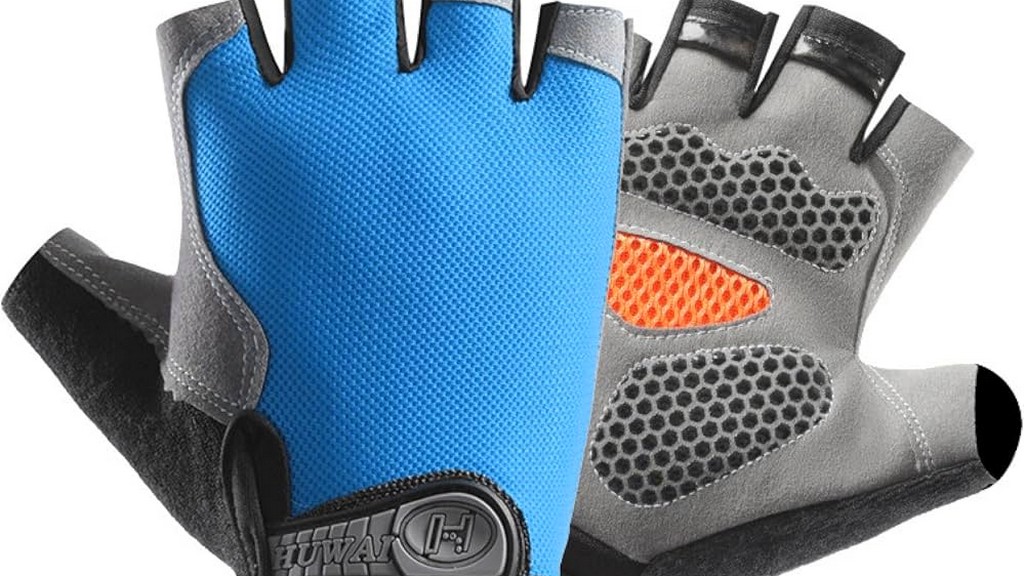
The second most common body part injured in industrial manufacturing is the hand. Injuries to the hands in the workplace can occur from cuts and punctures from work equipment or from crushing of the hand by heavy machinery. Although not fatal, hand injuries can be distressing for both the workplace and the injured person.
Glove standards include the ANSI/ISEA 138 standard as well as the “ANSI/ISEA 105 American National Standard for Hand Protection Classification.” The ANSI/ISEA 105 standard covers cuts, abrasions, chemical resistance, and flame resistance, while the ANSI/ISEA 138 standard covers impact resistance in work gloves. This standard focuses on protecting the back of the hand, particularly by dispersing impact from the knuckles and fingers. This standard for impact-resistant gloves is very useful for those working in the cargo handling, automotive, heavy equipment, and construction industries.
The ANSI/ISEA 138 standard goes into depth and defines impact levels using an impact protection scale. The scale is 1 to 3, with Level 1 being for people who encounter fewer potential impacts, while Level 3 is for people who encounter more impacts in their workplace. An impact-resistant glove can be assigned multiple numbers on the scale, but the glove is assigned the lowest number. So if a glove has a performance level of “3” for finger protection and a performance level of “2” for knuckle protection, it is generally rated as a performance level of “2.” The difference between the levels is measured in kilonewtons (kN). While this value decreases with each level, it does not mean that the glove can take less force. In fact, it means the opposite. A lower recorded peak transmitted force means that more energy is absorbed by the glove’s back of the hand material. In short, a lower kN measurement for each performance level means that the glove is safer against impacts.
Meanwhile, the European standard “DIN EN 13594 Protective gloves for professional motorcyclists – Requirements and test methods” only requires the joints to be tested for impact absorption. In contrast, the ANSI/ISEA 138 standard allows the finger protection to be tested as well as the joints. For the middle and little fingers, the test area is measured 5 cm from the fingertip. For the index finger, ring finger and thumb, the test area is 2,5 cm from the fingertip.
Impact gloves are commonly used in the automotive industry, heavy equipment and construction operations, cargo handling, oil and gas, and towing/hauling industries. Compliant gloves are evaluated for their ability to dissipate impact energy across the knuckles and fingers and are divided into three performance levels. Employers can reliably compare different impact gloves equally when making their selection.
The procedure for performing impact tests described in the ANSI/ISEA 138 standard is as follows:
Based on the results, gloves are assigned a Level 1, Level 2 or Level 3 rating. All performance levels are displayed directly on the gloves to provide a simple visual of performance level.
The lower the force transmitted through the glove, the stronger the protection. Level 3 provides the highest protection, Level 1 the lowest.
Among the numerous tests, measurements, analyses and evaluation studies that our organization has carried out for businesses in various sectors, our organization also provides certification and testing services defined in the “ANSI/ISEA 138 American national performance and classification for impact-resistant gloves” standard with its trained and expert staff and advanced technological equipment.
To get an appointment, to get more detailed information or to request an evaluation, you can ask us to fill in our form and reach you.

