

The European standard “EN 1627 Pedestrian doors, windows, curtain walls, railings and shutters - Burglary resistance - Requirements and classification” describes the requirements and classification systems for the burglary resistance properties of pedestrian doors, windows, curtain walls, railings and shutters.
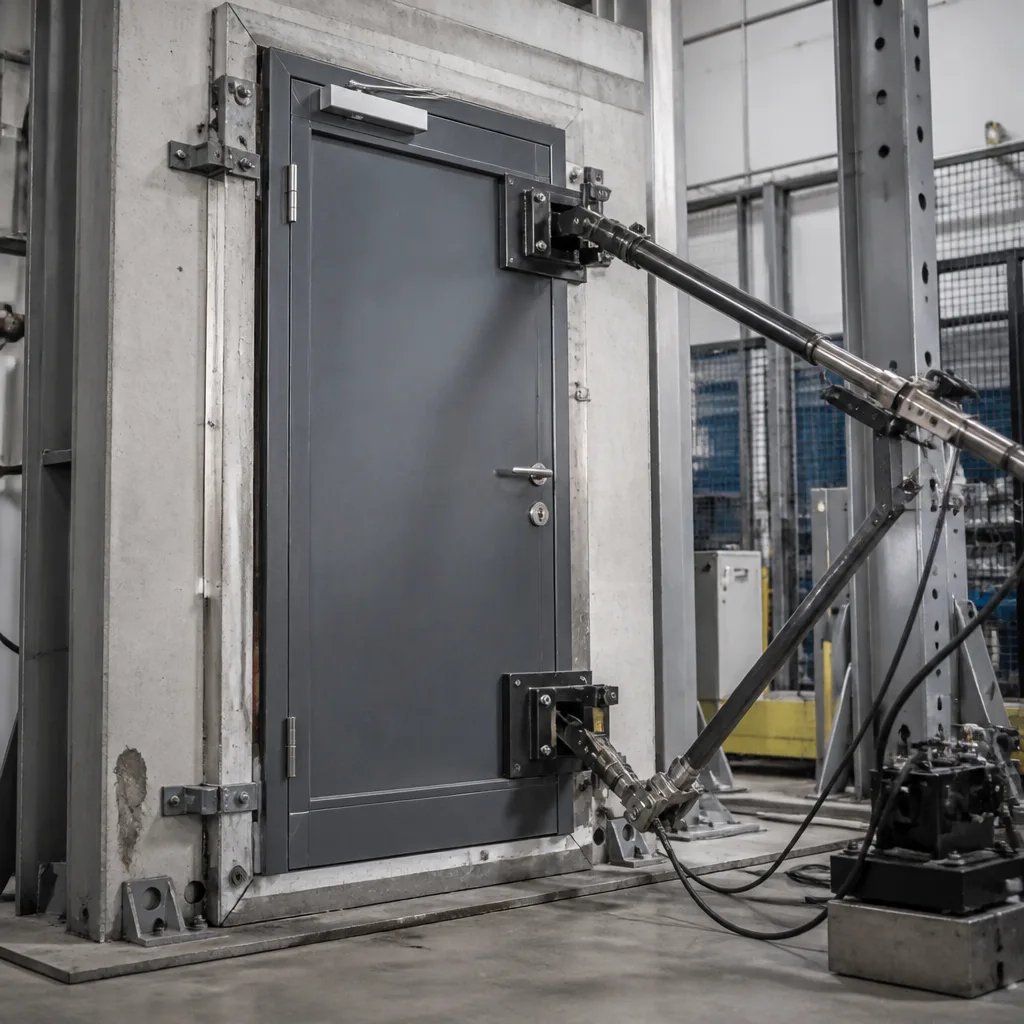
This standard applies to the following opening functions: swivel, tilt, fold, swivel-tilt, top or bottom hung, sliding (horizontal and vertical), hinged (horizontal and vertical), protruding and rolling, as well as non-opening structures. It also covers products containing elements such as mailboxes or ventilation grilles. It specifies the requirements for the burglary resistance of a building product.
This standard does not directly cover the resistance of locks and cylinders to pickpocketing.
Construction hardware consists of components of the products mentioned above and cannot be classified as such under this standard.
This standard, unlike EN 13241, does not apply to walls and roofs, as well as doors, passageways and barriers, designed to provide safe access for goods and tools that people access or use in industrial, commercial or residential areas.
It is important to protect structural elements that vehicles can access or pass through with appropriate measures such as barriers, extendable ramps, and the like.
Requirements for an electronic security system (e.g., an access control system) for controlling electromechanical locks and strike plates according to the EN 14846 standard are outside the scope of this standard.
According to the EN 14846 standard, locks and strike plates require an access control system (similar to a lock cylinder) for authorized and secure access. Signal transmission (e.g., cabling) between the lock and the access control system must also be considered.
The EN 1627 standard provides a common method for evaluating how well doors, windows, curtain walls, grilles, and shutters can withstand forced entry attempts.
The EN 1627 standard applies to:
This standard covers products that may include accessories such as ventilation grilles or mailboxes. However, it does not classify locks or cylinders against direct pickpocketing attacks and is not applicable to walls, roofs, or industrial vehicle entry doors covered under other standards.
The primary aim of the EN 1627 standard is to establish a consistent method for determining the resistance of construction products to attempted burglaries. This standard helps manufacturers in the following areas:
For customers, the EN 1627 standard provides confidence that certified products have been tested against realistic forced entry scenarios.
The EN 1627 standard refers to three important auxiliary standards:
These four standards together form the European burglary resistance testing system.
One of the most important features of the EN 1627 standard is the resistance class (RC) system. This standard defines six resistance classes:
As the RC level increases, the required resistance duration and the complexity of the attack tools also increase.
The products are evaluated through various stages.
The products must withstand the attack for the specified resistance period in order to obtain certification.
The EN 1627 standard evaluates the entire structure, not just a single component. Typical elements evaluated include:
The entire assembly must function as a burglar-resistant unit.
To obtain a resistance rating (RC), the product must pass all required tests, including:
Failure to pass any of the required tests will prevent certification from being granted in the claimed resistance class.
Certified products conforming to the EN 1627 standard are widely used in the following areas:
Higher resistance classes (RC4–RC6) are commonly preferred for facilities requiring enhanced physical security.
EN 1627 certification offers several advantages:
It demonstrates independently verified resistance to theft.
Manufacturers can ensure EN 1627 standard compliance by using the following materials:
Performance depends not only on the materials, but on the entire system.
Even a certified product can lose its burglary resistance if installed incorrectly. Therefore, the standard emphasizes the following:
The EN 1627 standard is commonly used by:
The advantages offered by this standard are as follows:
For many years, our organization, with its competent and experienced staff, has been understanding the needs of its clients, providing the advanced testing services they require, and assisting them in the establishment, implementation, and improvement of management systems. Within this framework, we also provide testing services in accordance with the EN 1627 standard.
To get an appointment, to get more detailed information or to request an evaluation, you can ask us to fill in our form and reach you.

