

The European standard “EN 417 Non-refillable metallic gas cartridges for liquefied petroleum gases, with or without valves, for use with portable appliances - Construction, inspection, testing and marking” describes the material, construction, inspection and marking requirements for non-refillable metallic gas cartridges, with or without valves, for use with portable appliances that comply with the requirements of the standard “EN 521 Technical specification for specific liquefied petroleum gas appliances - Portable vapour pressure liquefied petroleum gas appliances”.
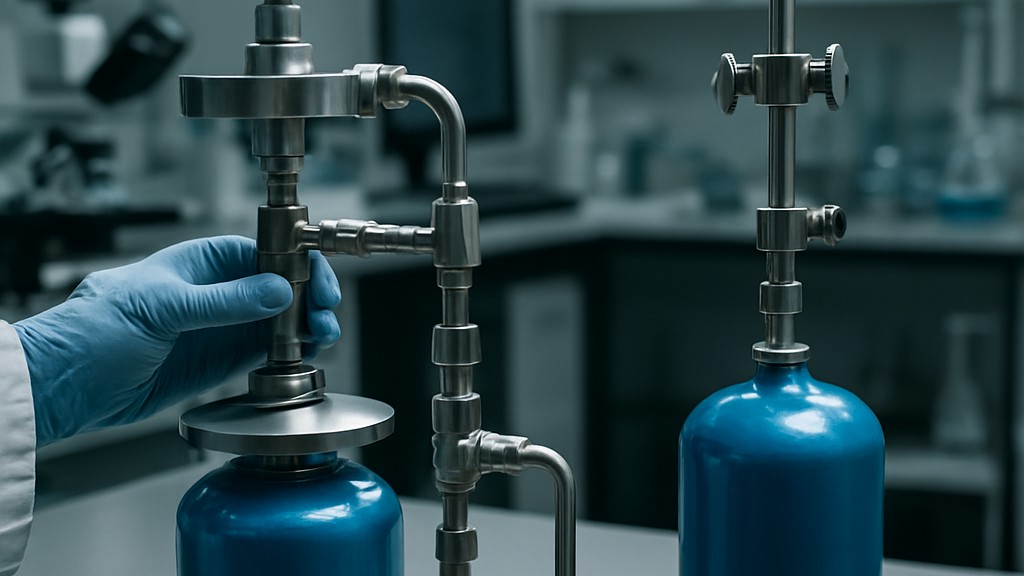
Non-refillable metallic gas cartridges are single-use, sealed containers made of metal (usually steel or aluminum) designed to hold liquefied petroleum gases such as butane, propane, or isobutane.
This standard applies to cartridges designed to contain coked liquefied petroleum gas or stabilized mixtures of liquefied petroleum gas with propadiene or methyl acetylene or dimethyl ether or equivalent, with a total capacity of between 50 ml and 1,000 ml, provided that the pressure developed by the contents of the cartridge at 50°C does not exceed 13,2 bar. However, coking of these gases is optional for cartridges with a total capacity not exceeding 150 ml.
This standard does not apply to aerosol dispensers manufactured, filled, tested and marked in accordance with Directive 2008/47/EEC. It also does not apply to devices with an integral non-replaceable gas container or to the cartridges used to fill such containers (e.g. lighters).
The gas cartridge body and valve cup, if present, must be made of metal, excluding the sealing material. The composition and mechanical properties of the metal for the cartridge body must be detailed in a document provided by the material manufacturer.
The materials used for the container, valve, any internal lining, external coatings, internal leak restrictors, and seals must be compatible with the gases to be held by the cartridge and must withstand reasonably foreseeable mechanical, thermal, and chemical conditions likely to occur during use and storage. Gas cartridges designed to contain mixtures of liquefied petroleum gas and methylacetylene must not be manufactured from materials containing more than 70 percent copper.
In this standard, design and construction requirements are described as follows:
Pierceable cartridges, on the other hand, must not be equipped with valve caps. Pierceable cartridges must be equipped with an internal leak limiter. For Type 200 cartridges (86 mm internal diameter, containing approximately 190 g of gas), the dimensions specified in the standard must be maintained. Other pierceable cartridge capacities, sizes, and shapes are permitted, provided they cannot be inserted into, and are not pierced by, devices designed for Type 200 cartridges.
The EN 417 standard is a European standard that specifies the requirements and test methods for non-refillable metallic gas cartridges used with portable devices such as camping stoves, lanterns, and heaters. It covers the construction, materials, design, safety, and testing of disposable (non-refillable) gas cartridges. It is generally applicable to cartridges filled with gases such as butane, propane, or isobutane. The aim is to ensure that the cartridges are safe to use, withstand pressure, and are properly sealed to prevent leaks. This standard is particularly relevant to gas cartridge manufacturers, safety and quality inspectors, and manufacturers and users of outdoor equipment that rely on portable gas fuel.
The main test methods specified in this standard for non-refillable metallic gas cartridges are:
Our organization, which has been supporting businesses across all sectors for years through a wide range of testing, measurement, analysis, and evaluation activities, boasts a strong team of employees who closely follow global developments in science and technology and are constantly improving themselves. In this context, we also provide testing services in accordance with the standard "EN 417 Non-refillable metallic gas cartridges for liquefied petroleum gases, with or without valves, for use with portable devices - Construction, inspection, testing, and marking."
To get an appointment, to get more detailed information or to request an evaluation, you can ask us to fill in our form and reach you.

