

The standard “IEC 60825-4 Safety of laser products - Part 4: Laser guards” developed by the International Electrotechnical Commission (IEC) describes laser guards surrounding the process zone of a laser processing machine, requirements for permanent and temporary (e.g. for service), and specifications for registered laser guards.
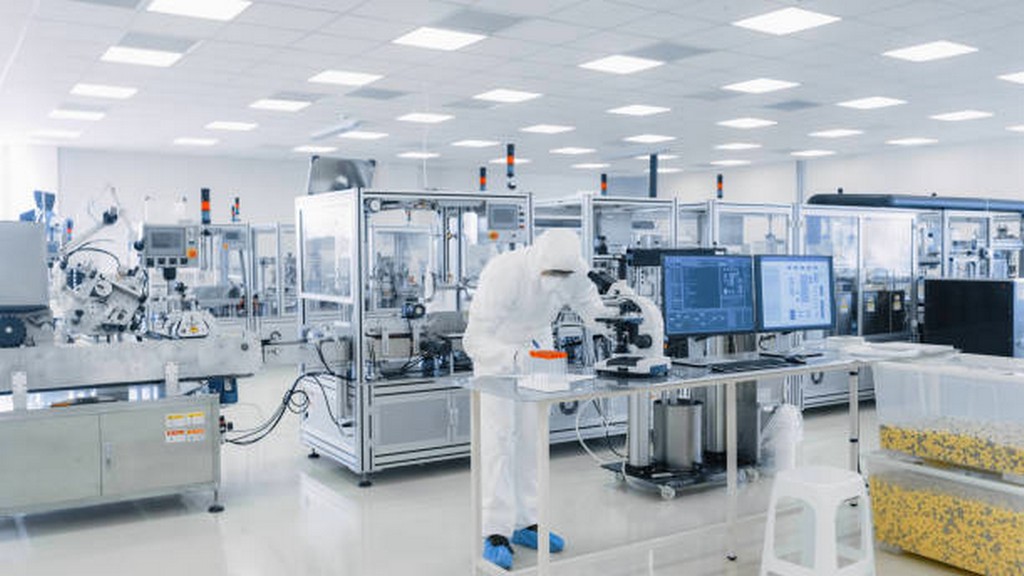
This standard applies to all component parts of an enclosure, including transparent (visibly transmitting) screens and viewing windows, panels, laser curtains and walls. Requirements for beam path components, beam stops and other parts of the protective enclosure of a laser product that do not enclose the process zone are contained in “IEC 60825-1 Safety of laser products - Part 1: Equipment classification and requirements”.
In addition, this standard specifies:
For the purposes of this standard, the following definitions apply in addition to those given in IEC 60825-1:
A laser guard must meet the ISO 12100-2 standard with regard to the general requirements for guards as well as the more specific requirements regarding its location and method of fastening. Furthermore, a laser guard must not give rise to any associated hazards on or beyond its rear surface when exposed to laser radiation up to the foreseeable exposure limit in its intended location. Examples of associated hazards are: high temperature, release of toxic substances, fire, explosion, electricity. The evaluation of the foreseeable exposure limit is included in the standard annex (Annex B).
When the front surface of a laser guard is exposed to laser radiation within the foreseeable exposure limit, the laser guard shall prevent the laser radiation accessible from its rear surface from exceeding the accessible emission limit of class 1 at any time during the maintenance inspection interval. The minimum value of the maintenance inspection interval for automatic laser processing machines is 8 hours. This requirement shall be met for the intended life of the laser guard under expected operating conditions. This requirement implies both low transmission of laser radiation and resistance to laser-induced damage.
Some materials may lose their protective properties due to aging, exposure to ultraviolet radiation, certain gases, temperature, humidity, and other environmental conditions. In addition, some materials transmit laser radiation under high-intensity laser exposure even when there is no visible damage.
Active laser guards The active guard protection time exceeds the laser termination time by the foreseeable exposure limits. Generation of the active guard termination signal results in a visible or audible warning. Manual reset is required before laser emission can resume.
Among the numerous testing, measurement, analysis and evaluation studies that our organization has carried out for businesses in various sectors, it also provides testing services defined in the “IEC 60825-4 Safety of laser products - Part 4: Laser protectors” standard with its trained and expert staff and advanced technological equipment.
To get an appointment, to get more detailed information or to request an evaluation, you can ask us to fill in our form and reach you.

