

The European standard “EN 1629 Pedestrian doors, windows, curtain walls, railings and shutters - Burglary resistance - Test method for determining resistance under dynamic loading” describes a test method for determining the resistance of pedestrian doors, windows, curtain walls, railings and shutters to dynamic loading in order to evaluate their burglary resistance properties.
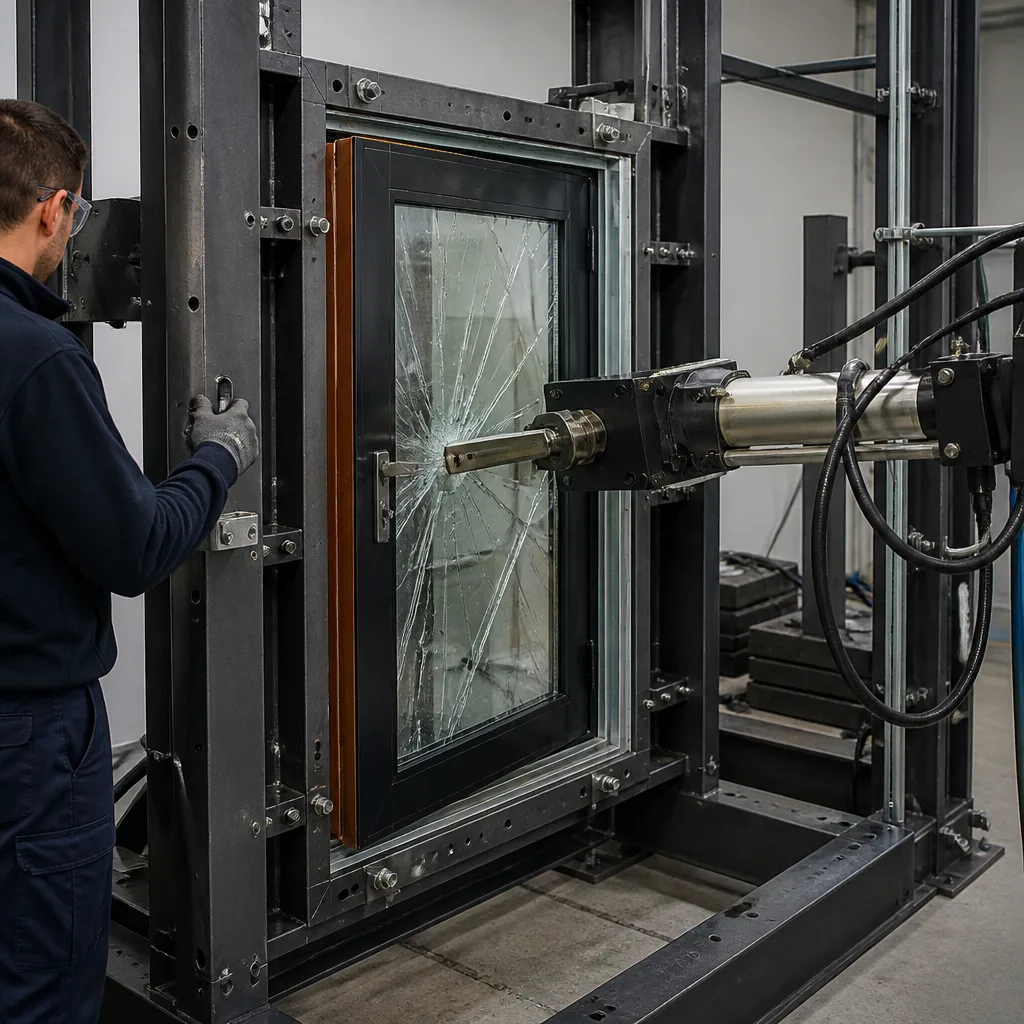
This method can be applied to the following opening functions: rotating, tilting, folding, rotating-tilting, top or bottom suspended, sliding (horizontal and vertical), protruding, hinged (horizontal and vertical), and rolling, as well as non-opening structures.
It is generally accepted that the burglary resistance performance of building products has two aspects: resistance to normal stress and the ability to remain fixed to the building.
This testing method does not evaluate the performance of the fastening to the building.
The manufacturer's installation instructions guide you on how to secure the product.
This standard, unlike EN 13241, does not apply to walls and roofs, as well as doors, passageways and barriers, designed to provide safe access for goods and tools that people access or use in industrial, commercial or residential areas.
It is important to protect structural elements that vehicles can access or pass through with appropriate measures such as barriers, extendable ramps, and the like.
The EN 1629 standard includes a test method used to determine the resistance of doors, windows, curtain walls, railings, and shutters to dynamic loading as part of burglary resistance testing. It is one of the fundamental standards in the EN 1627 series of standards used to assess the physical safety of building products.
This standard describes how construction products are subjected to impact forces simulating unauthorized entry attempts using body force or heavy objects.
The primary purpose of the EN 1629 standard is to determine whether a security product can withstand dynamic impact loads that may occur during an attempted burglary. This standard helps manufacturers and testing laboratories evaluate the following aspects:
The EN 1629 standard, unlike static load tests, focuses on instantaneous impact energy rather than slowly applied forces. This standard applies to:
This standard covers numerous opening mechanisms, including:
However, it does not evaluate how the product is secured to the building structure. Installation performance is addressed separately through the manufacturer's installation instructions and relevant standards.
The EN 1629 standard is a component of a complete burglary resistance assessment:
These standards, together, determine whether a product meets a specific durability class.
In short, the EN 1629 standard evaluates how well a product withstands sudden impacts. This test simulates the following situations:
Dynamic loading differs from static loading for the following reasons:
Typical equipment used in tests includes:
The pendulum applies controlled pulse energy to predetermined points.
Generally, EN 1629 standard testing follows these steps:
The product is valid if it meets the following conditions:
Minor cosmetic damage is generally acceptable if safety performance is maintained.
The EN 1629 standard contributes to the evaluation of burglary resistance classes as defined in the EN 1627 standard. These are:
Higher grades require products to withstand more severe dynamic impacts and more rigorous static and manual impact tests.
The EN 1629 standard is widely used in the following areas:
Testing according to the EN 1629 standard offers several advantages:
Typical products tested using this method include:
Meanwhile, the EN 1629 standard does not cover the following:
These features are addressed by other standards.
In conclusion, the EN 1629 standard is designed for dynamic load testing used to evaluate the burglary resistance of pedestrian doors, windows, curtain walls, railings, and shutters. By simulating realistic impact forces encountered during forced entry attempts, it ensures that security products can maintain their protective functions under dynamic stress. Together with the EN 1627, EN 1628, and EN 1630 standards, it forms part of a robust and internationally accepted system for classifying and certifying the burglary resistance of building components.
For many years, our organization, with its competent and experienced staff, has been understanding the needs of its clients, providing the advanced testing services they require, and assisting them in the establishment, implementation, and improvement of management systems. Within this framework, we also provide testing services in accordance with the EN 1629 standard.
To get an appointment, to get more detailed information or to request an evaluation, you can ask us to fill in our form and reach you.

