

The European standard “EN 1303 Building hardware - Lock cylinders - Requirements and test methods” applies to cylinders and keys for locks normally used in buildings and designed for use with cylinders, having a maximum operating torque of 1,2 Nm.
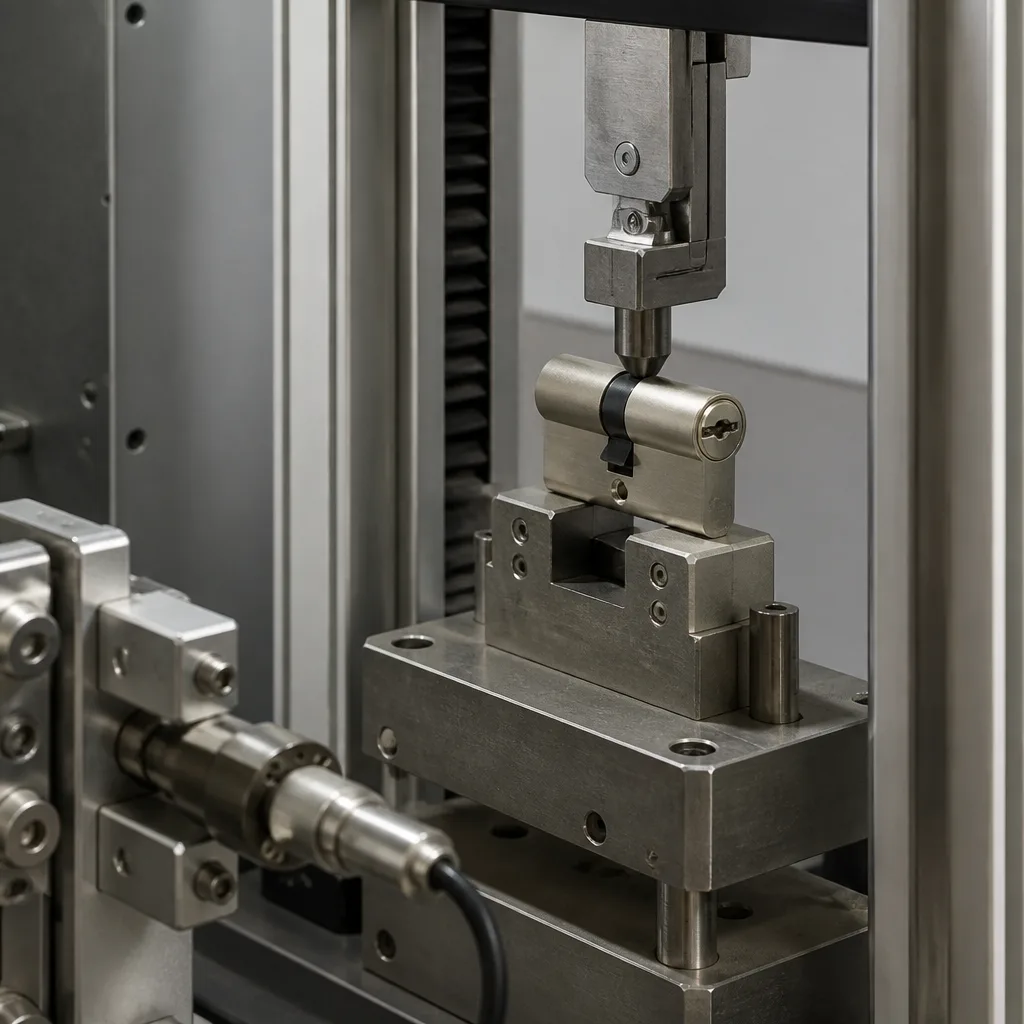
This standard specifies performance and other requirements for the strength, safety, durability, performance, and corrosion resistance of cylinders and their original keys. Based on performance testing, it defines a usage category, three durability ratings, three fire resistance ratings, and four corrosion resistance ratings; six key-related safety ratings based on design requirements; and five ratings based on performance tests simulating an attack.
This standard includes satisfactory operational tests at various temperatures. It specifies the test methods to be used on cylinders and protective measures associated with these cylinders, as recommended by the manufacturer.
Corrosion resistance is specified with reference to the EN 1670 standard requirements regarding the corrosion resistance of building equipment.
The suitability of cylinders for use in fire or smoke door assemblies is determined by fire performance tests carried out in addition to the performance tests required by this standard. Since suitability for use in fire doors is not a requirement in all cases, the manufacturer has the option of stating whether the cylinder meets these additional requirements. If such a claim is made, the cylinders must comply with the requirements in Annex A.
Assessing the fire resistance of first-class doors is outside the scope of this standard document.
Sometimes additional functionalities may be needed in the design of the cylinder. Buyers should ensure that the products are suitable for their intended use.
In short, the EN 1303 standard defines the performance requirements and test methods for lock cylinders used in buildings. By ensuring cylinders possess consistent durability, safety, corrosion resistance, and other important characteristics, it allows architects, specifiers, locksmiths, and consumers to objectively compare products.
Lock cylinders are critical components of door security. The EN 1303 standard provides a standardized way to evaluate the following aspects:
Products certified according to this standard have an 8-digit classification code, making it easy to understand their capabilities at a glance. Each position in the code represents a specific performance characteristic:
For example, a code like 160B0C5D indicates a cylinder suitable for fire doors, featuring high durability, corrosion resistance, strong key security, and excellent resistance to impact.
The latest revision of this standard has improved the classifications (particularly for fire and intrusion resistance) compared to the previous version. It has introduced more detailed classifications for burglary resistance and adjusted the requirements to address modern security threats.
The following use the EN 1303 standard:
The EN 1303 standard focuses specifically on the cylinder, not the entire lock, door, or assembly. General door security often combines this with standards such as EN 12209 (for locks) or PAS 24 (for advanced security doors). A high EN 1303 rating is excellent, but it should be part of a complete security system.
The EN 1303 standard is essential because it standardizes the performance, durability, and safety requirements of cylinders used in locks. These cylinders are small but crucial components that determine whether a key can securely open a door. This standard is considered important for the following reasons:
Consequently, the EN 1303 standard is the benchmark for quality lock cylinders throughout Europe. When purchasing a cylinder, always look for the 8-digit code and verify whether it meets the requirements (e.g., high durability for apartments, strong impact resistance for commercial properties, fire rating for escape routes).
For many years, our organization, with its competent and experienced staff, has been understanding the needs of its clients, providing the advanced testing services they require, and assisting them in the establishment, implementation, and improvement of management systems. Within this framework, we also provide testing services in accordance with the EN 1303 standard.
To get an appointment, to get more detailed information or to request an evaluation, you can ask us to fill in our form and reach you.

