GB/T 24195 Corrosion of Metals and Alloys Cyclic Accelerated Corrosion Tests under Acidic Salt Spray, “Dry” and “Wet” Conditions
The standard “GB/T 24195 Corrosion of metals and alloys under acidic salt spray, cyclic accelerated corrosion tests under “dry” and “wet” conditions” published by the National Standards of the People’s Republic of China describes accelerated corrosion test methods for comparing the corrosion resistance of materials in outdoor salt pollution/acid environments without permanent or temporary corrosion protection: Method A, Method B and Standard M specify test equipment. These test methods include cyclic testing of samples under acidic, salty, “dry” and “wet” test conditions.
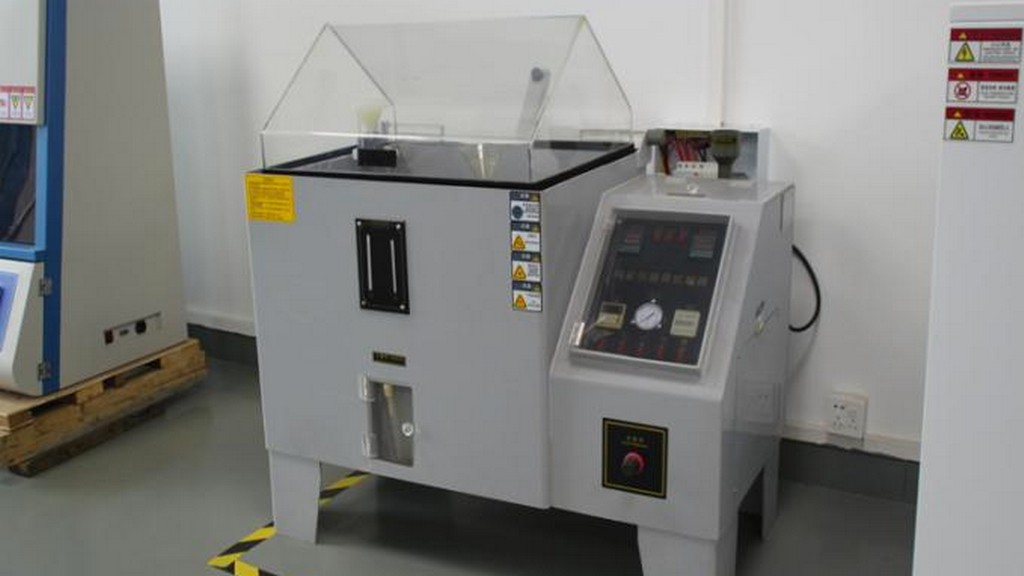
Compared to traditional accelerated corrosion tests such as wood testing, the test methods described here have a great advantage. These tests can simulate well the corrosion that occurs, such as corrosion in salt pollution / acid environment. This method is also very useful for appearance corrosion.
Method A is applicable to: Jincheng and its alloys, gold elbow plating, cathodic plating, anode terbium plating and inorganic plating on gold material.
Method B is suitable for: Steel plate, anode coating, steel plate anode coating with bamboo conversion coating.
All parts of the equipment that come into contact with salt spray or the test solution while the tests are being performed should be corroded by the test solution and the test solution should have little effect on the corrosion rate.
Test equipment generally includes the following parts.
- Exposure box: The volume of the storage box shall not be less than 0,4 m3. For the storage box, it is necessary to ensure that the acid salt is evenly distributed during the acid salt test period. The top of the reed body shall be used to prevent the droplets condensing upwards on the table from dripping onto the sample powder during the test. The size and shape of the reed body shall be adequate for the test period, and the deposition of the solution on the reed body shall meet the requirements described in this standard. The standard annex contains the schematic diagram and relevant setup diagrams of the recovery chamber for accelerated cycle corrosion tests under acid salt spray, “dry” and “wet” conditions (Annex B).
- Humidity and temperature control: This control system ensures that the temperature and humidity in the comb are kept within the specified range. The temperature measurement should be made at least 100 mm away from the box.
- Spraying device: The spraying device consists of a clean air supply device that controls the power and humidity, a brine tank, and one or more atomizers. The compressed air supplied to the atomizer first passes through the filter to remove oil and solid matter. The atomization power should be 70 kPa to 170 kPa, and the pressure should be 98 kPi.
- Air saturator: In order to prevent the water in the fog droplets from evaporating, the air should be humidified through a saturated tower with a water temperature of 10 degrees Celsius before entering the sprayer. During the acid salt spray test, verify the appropriate temperature according to the pressure used and the type of spray nozzle, and adjust the temperature to ensure that the cane salt precipitation and precipitation concentration are within the specified range. The water level is automatically adjusted to ensure sufficient humidity. Sprayers should be made of inert material such as glass or plastic. The baffle is used to prevent the spray from hitting the sample, which makes the salt spray separation tower more stable and helps to achieve a stable salt spray distribution in the box. The liquid level of the acid salt solution at the liquid end should be dynamically maintained to ensure that the salt spray can be stably transported during the test.
- Salt spray collection equipment: At least two salt spray collectors are placed in the bismuth and europium reed. The purpose of installing a salt spray collector in a cylinder or similar container of approximately 80 cmXNUMX, made of clean glass or other chemically inert material, in the form of a clean leak, is to ensure that the salt is collected. If the salts are within the specified range, at least one container should be placed in the sample storage area of the box close to the nodule and one away from the nodule to ensure that only sufficient quantities of sample are collected.
- Air dryer: It consists of a heating device and a fan and is used to provide dry air with the specified humidity during the drying phase of the test.
- Exhaust system: The gas is discharged from the pit through the exhaust system. It is necessary to ensure that the gas is not affected by atmospheric reflection when it is discharged through the building exit. It is best to apply appropriate exhaust gas treatment methods before discharging the gas. The test equipment must have an appropriate drainage system to ensure that the solution is not discharged directly into the normal civil drainage system.
Among the numerous tests, measurements, analyses and evaluation studies that our organization has carried out for businesses in various sectors, our organization also provides testing services defined in the standard “GB/T 24195 Corrosion of metals and alloys: acidic salt spray, cyclic accelerated corrosion tests under “dry” and “wet” conditions” with its trained and expert staff and advanced technological equipment.



