

The European standard “EN 581-f3 Outdoor furniture - Seating and tables for camping, home and work use - Part 3: Mechanical safety requirements for tables” describes the minimum requirements in terms of safety, robustness and durability for all types of outdoor tables for adults, regardless of the material, design/construction or manufacturing process. The following are outside the scope of this standard:
For the purposes of this standard, the following terms and definitions apply:
Tests should be carried out as specified in the EN 1730 standard.
The safety, strength, and durability requirements have been defined as follows:
For test sequences and parameters, the order listed in the table provided within the standard must be followed. Tests performed according to this table will be considered to have met the safety, strength, and durability requirements under the following conditions:
The product should not tip over when subjected to stability tests.
In the world of outdoor living, there's no better patio or garden arrangement than a sturdy and stylish table. Outdoor tables withstand the rigors of daily use. The method for determining that these tables won't wobble, collapse, or break under pressure is defined in the EN 581-3 standard, which sets the benchmark for mechanical safety in such furniture. This standard helps manufacturers, retailers, and consumers ensure that tables designed for camping, home, or contract use can withstand the rigors of outdoor living.
The EN 581 series of standards forms the basis of outdoor furniture safety. These standards address the unique challenges of outdoor furniture, which, unlike indoor furniture, must withstand weather conditions, uneven surfaces, and heavy loads.
These standards have been harmonized under the EU General Product Safety Directive. This compliance is not material-dependent, covers everything from wooden picnic tables to stylish metal cafe sets, and assumes that they can be used by adults up to 110 kg.
The EN 581-3 standard does not specify design or materials, but it ensures that the table, regardless of its construction—whether extendable dining tables, compact sets, or long banquet tables—performs reliably.
Key exceptions include electrical safety, resistance to environmental degradation (such as UV light or humidity), and street furniture. The latest update has brought clarity by addressing differences in extendable or smaller table types to make the tests more precise and applicable.
Essentially, the EN 581-3 standard aims to prevent accidents caused by mechanical failures by leveraging real-world data on outdoor furniture accidents. It includes rigorous mechanical assessments to verify that tables will not unexpectedly cut, jam, or collapse.
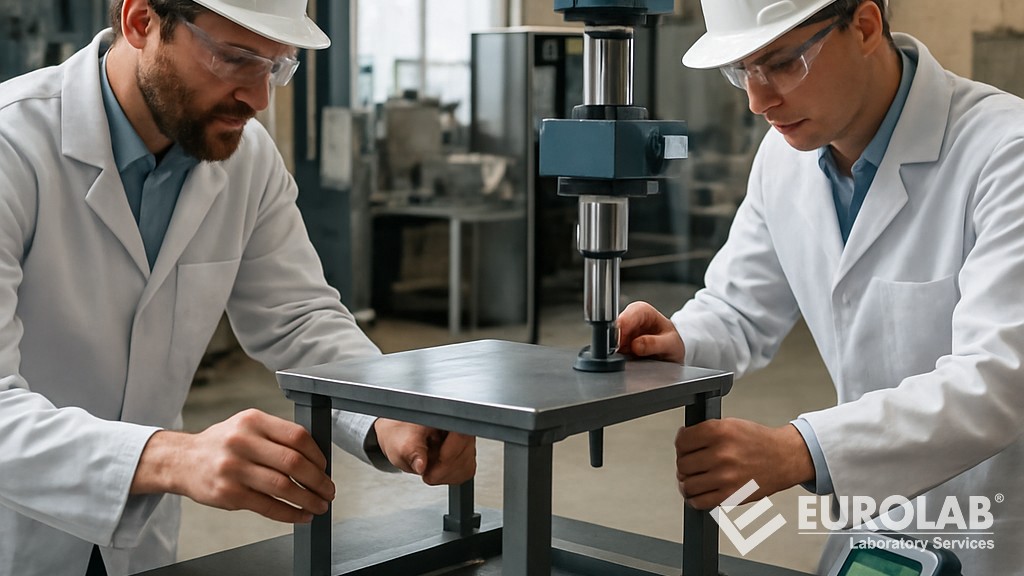
The EN 581-3 standard describes a series of mechanical tests carried out in controlled laboratories, simulating daily and extreme use. These are typically performed on fully assembled tables, after being conditioned to mimic outdoor exposure. The main tests are:
For many years, our organization, with its competent and experienced staff, has been understanding the needs of its clients, providing the advanced testing services they require, and assisting in the establishment, implementation, and improvement of management systems. Within this framework, we also provide testing services to businesses in accordance with the “EN 581-3 Outdoor furniture – Seating and tables for camping, home and work use – Part 3: Mechanical safety requirements for tables” standard.
To get an appointment, to get more detailed information or to request an evaluation, you can ask us to fill in our form and reach you.

