

The standard "ASTM D6786 Standard Test Method for Particle Counting in Mineral Insulating Oils Using Automatic Optical Particle Counters," published by the American Society for Testing and Materials (ASTM), describes a test method for determining particle concentration and particle size distribution in mineral insulating oils. This method is suitable for testing oils with viscosities of 6 to 20 mm2/s at 40°C. This test method is specific to liquid automatic particle analyzers that use the light-quenching principle.
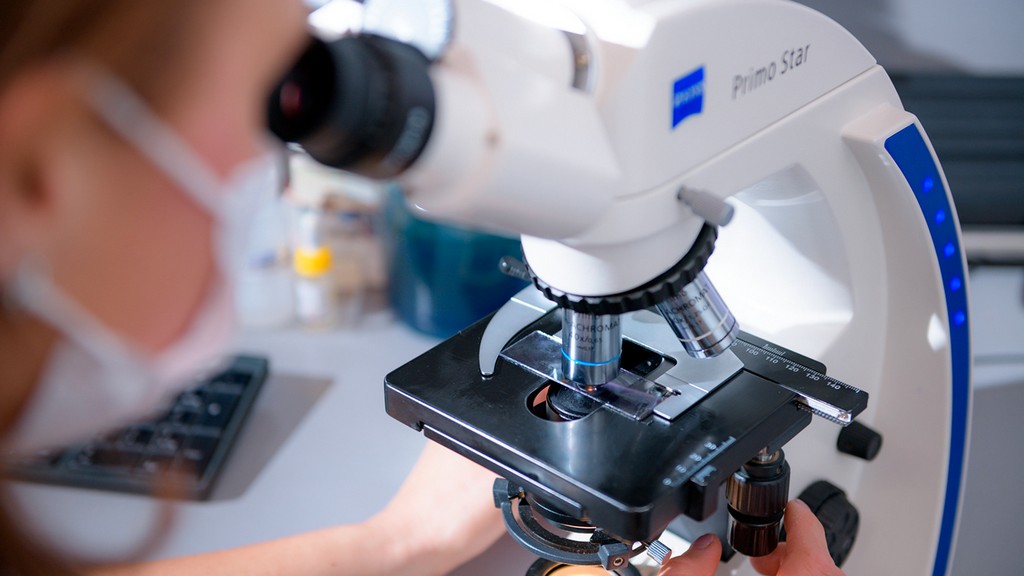
Particles in insulating oil can have an adverse effect on the dielectric properties of the liquid, depending on the particle size, concentration, and structure. These particles can originate from external contaminants, oil degradation byproducts, or internal materials such as metals, carbon, or cellulose fibers.
Particle counts provide a general indication of contamination levels and can be useful in assessing the condition of certain types of electrical equipment. Particle counts can also be used to determine filtering efficiency during oil processing.
If more specific information about the structure of the particles is needed, other tests such as metal analysis or fiber identification and counting should be performed.
Insulating oils cool and electrically insulate transformers, high-voltage capacitors, and other electrical equipment. Even particles in these liquids, even if they are too small to be seen with the naked eye, can reduce the oil's performance and lifespan and damage expensive system components. This test method determines the particle count and distribution in insulating liquids. Using an automated optical particle counter, the tests determine particle counts in the following size classes: minimum 4 µm, 6 µm, 10 µm, 14 µm, 21 µm, 38 µm, and 70 µm.
Samples are stored in suitable particle vials for particle analysis. The sample vial is shaken to redistribute particles in the oil, after which the oil is placed in an automatic particle counter where particle numbers and size distributions are determined using the light-dampening principle.
As particles pass through the instrument's sensing region, the amount of light reaching the detector is blocked. This signal is converted into an equivalent reflected arc diameter based on calibration with a NIST-traceable liquid.
Different interferences may occur during the test:
Accurate sampling is crucial for particle analysis. A sample should be taken from the liquid to be tested in accordance with ASTM D923.
ASTM D6786 provides a standard procedure for determining the concentration and size distribution of particles in mineral insulating oils. This test method is critical for evaluating the quality and performance of insulating oils used in electrical equipment such as transformers, where particulate contamination can significantly affect dielectric properties.
This standard specifies a method for measuring particle concentration and size distribution in mineral insulating oils with viscosities between 6 mm²/s and 20 mm²/s at 40°C. This test is specific to liquid automatic particle analyzers that use the light-suppression principle and provide accurate and reproducible results.
Particles in insulating oil, such as external contaminants, oil degradation byproducts, or internal materials (e.g., metals, carbon, or cellulose fibers), can adversely affect the oil's dielectric properties. The presence, size, and concentration of these particles can adversely affect the performance of electrical equipment. ASTM D6786 provides a general measure of contamination levels useful for:
The ASTM D6786 standard test method includes these steps:
ASTM D6786 is widely used in industries that maintain electrical equipment, particularly transformers, where insulating oil quality is critical. By monitoring particulate contamination, operators can:
The ASTM D6786 standard is important because it directly impacts the performance, reliability, and safety of electrical equipment, such as transformers, that rely on mineral insulating oils. The primary reasons for its importance are:
In short, maintaining the quality of mineral insulating oils is critical for protecting electrical equipment, optimizing maintenance, and ensuring operational safety and efficiency in industries dependent on high-voltage systems.
As a result, ASTM D6786 is a fundamental standard for evaluating particulate contamination in mineral insulating oils and ensuring the reliability and safety of electrical equipment. By providing a consistent method for particle counting, it helps industries produce high-quality insulating oils and optimize equipment performance.
Our organization, which has been operating for many years and meticulously follows global developments in science and technology, conducts testing, measurement, and analysis in a wide range of areas for businesses in every sector with a skilled team and extensive infrastructure. In this context, we also provide testing services in accordance with ASTM D6786 Standard Test Method for Particle Counting in Mineral Insulating Oils Using Automatic Optical Particle Counters.
To get an appointment, to get more detailed information or to request an evaluation, you can ask us to fill in our form and reach you.

