

The European standard “EN 1335 Office furniture - Office chair” consists of the following sub-sections published under the same title:
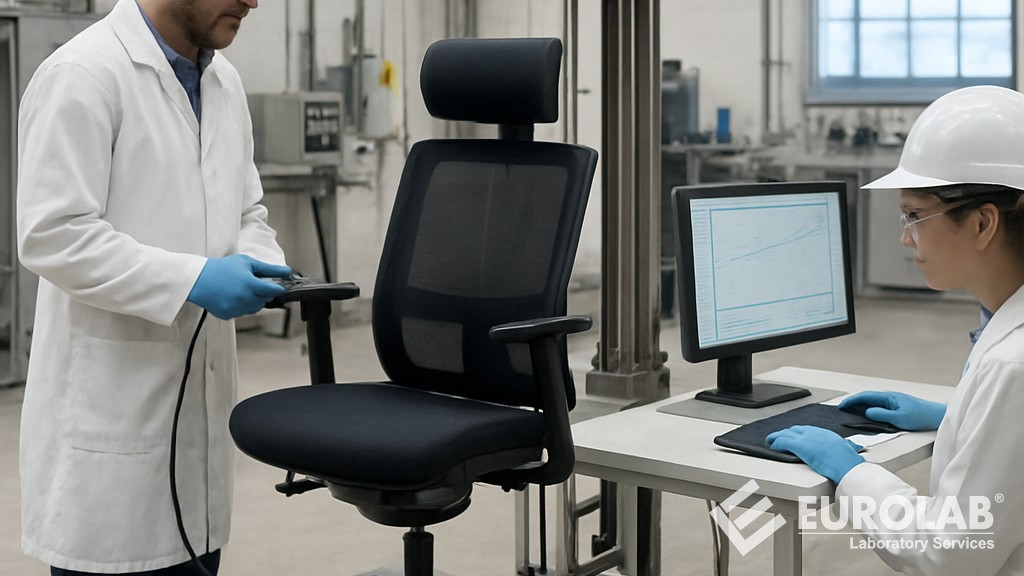
Measurement conditions should be as specified in ISO 24496, with the exception stated in this standard. The decision rule for assessing whether a result is satisfactory is that the measured value is within the requirement (i.e., less than or equal to the upper limit, greater than or equal to the lower limit), regardless of the measurement uncertainty. The table in the appendices contains values for maximum measurement uncertainties (Appendix D). Test equipment must comply with ISO 24496. The chair setup must comply with ISO 24496. Chair dimensions are determined in the order specified in the table entitled “Sequence of measurement determination and measurement procedure”.
The primary aim of the EN 1335-1 standard is to define minimum and adjustable dimensions for office chairs to accommodate a wide range of adult body sizes in the European population. This helps reduce the risk of musculoskeletal problems, fatigue, and discomfort resulting from poor sitting posture. This standard applies to office work chairs designed for general office use (typically up to 8 hours a day) and does not cover child seats or specialized seats (e.g., for medical or industrial settings).
This standard states:
This standard does not cover safety, strength, or durability, as these are addressed in EN 1335-2 and EN 1335-3 standards.
The EN 1335-1 standard defines ranges and minimum values for critical dimensions to support ergonomic fit. Examples of typical requirements (exact values vary depending on the chair type):
The chair must be designed to minimize the risk of injury to the user. All parts of the chair that the user comes into contact with during use must be designed to prevent physical injury and property damage. These requirements are met if:
Movable and adjustable parts must be designed to prevent injuries and unintended operation. Adjustment devices must be operable from the seated position in the chair. It must not be possible for any load-bearing part of the chair to unintentionally loosen.
Chair parts should not have accessible cutting and pinching points created by reinforced mechanisms (e.g., springs, gas shock absorbers, and motorized systems).
There should be no accessible cutting and pinching points created by loads applied during normal use. Cutting and pinching points are unacceptable if there is a risk of injury caused by the user's weight during normal movements and actions, for example, when using levers and crank arms.
All applicable tests must be performed on the same sample. The chair must be subjected to a stability test according to EN 1022 standard and in the order given in the table. Furthermore, the chair must be subjected to a strength and durability test according to EN 1728 standard and in the order given in the table. Except for the armrest downward static load test (center test) to be performed before and after the stability test, the chair must be subjected to a stability test after the strength and durability tests.
The EN 1335-2 standard aims to minimize the risk of injury or malfunction from mechanical problems during typical office use. It applies to chairs designed for general office work, typically used by users up to 8 hours a day and weighing up to 110 kg. For heavier users or more intensive use (e.g., 24/7 shift work), manufacturers need to implement higher loads or additional testing.
This standard does not cover:
The EN 1335-2 standard defines a series of mechanical tests that simulate real-world stresses. Chairs must pass these tests without permanent deformation, cracking, part loosening, or loss of function beyond acceptable limits. The main test categories are:
Loads, masses, and cycle numbers are specified in the standard. Tests utilize defined test cylinders, back dummies, and drop/impact devices to simulate user movements and accidental impacts. Chairs are implicitly classified according to their performance: passing the standard means they are suitable for normal office use within the specified limits.
The tests are designed to be applied to a fully assembled and ready-to-use piece of furniture. The tests consist of applying forces to various parts of the product that simulate normal functional use as well as misuse that is reasonably expected to occur. The tests are designed to evaluate properties regardless of materials, design/structure, or manufacturing processes.
Test results are valid only for the product tested. When applying test results to other similar products, it is important that the test sample is representative of the production model.
Tests conducted according to this standard aim to demonstrate the product's ability to provide satisfactory service in its intended environment. Safety requirements are specified in EN 1335-2, and additional loads, masses, and cycles for functional tests are listed in Annex C.
Tests are designed for units/components that are not in use. However, when properly justified, they can be used for fault investigation.
Aging and deterioration assessment is not included. The tests are not designed to evaluate the durability of the flooring, i.e., the filling materials and sheathing.
The EN 1335-3 standard defines precise, repeatable mechanical testing procedures to verify that an office chair can withstand the stresses of normal daily use and will not fail in a way that could lead to injury or excessive wear. These procedures are typically applied to chairs designed for general office work, used by users for up to 8 hours a day and weighing up to 110 kg.
Tests are conducted on fully assembled, ready-to-use chairs. They cover only mechanical aspects (excluding electrical, fire, or upholstery-specific component tests unless they affect overall performance). They do not include separate type approval tests for individual seat components (e.g., gas shock absorbers or wheels may have their own standards). Tests simulate real-world conditions: repeated sitting/standing, impacts, turning, and attempted tipping.
This standard includes a comprehensive suite of tests that directly support most of the pass/fail criteria in the EN 1335-2 standard. The main categories are:
Standardized equipment is used in the tests: test masses, dummy test kits, impact bags, cylinders, and calibrated loading devices. Passing criteria include the absence of structural failure, excessive permanent deformation, mechanisms not loosening beyond limits, and continued safe operation.
This standard clarifies specific terms and measurement interpretations. It was created because testing laboratories, manufacturers, and certification bodies sometimes interpret certain definitions differently, leading to inconsistent results.
The main focus areas are:
This standard does not introduce new requirements, new chair types, new tests, or updates regarding safety/durability aspects. It is purely supplementary and informative.
For many years, our organization, with its competent and experienced staff, has been understanding the needs of its clients, providing the advanced testing services they require, and assisting them in the establishment, implementation, and improvement of management systems. Within this framework, we also provide testing services to businesses in accordance with the "EN 1335 Office furniture - Office chair" standard.
To get an appointment, to get more detailed information or to request an evaluation, you can ask us to fill in our form and reach you.

