

ANSI/UL 746C Polymeric Materials - Use in Electrical Equipment Assessments
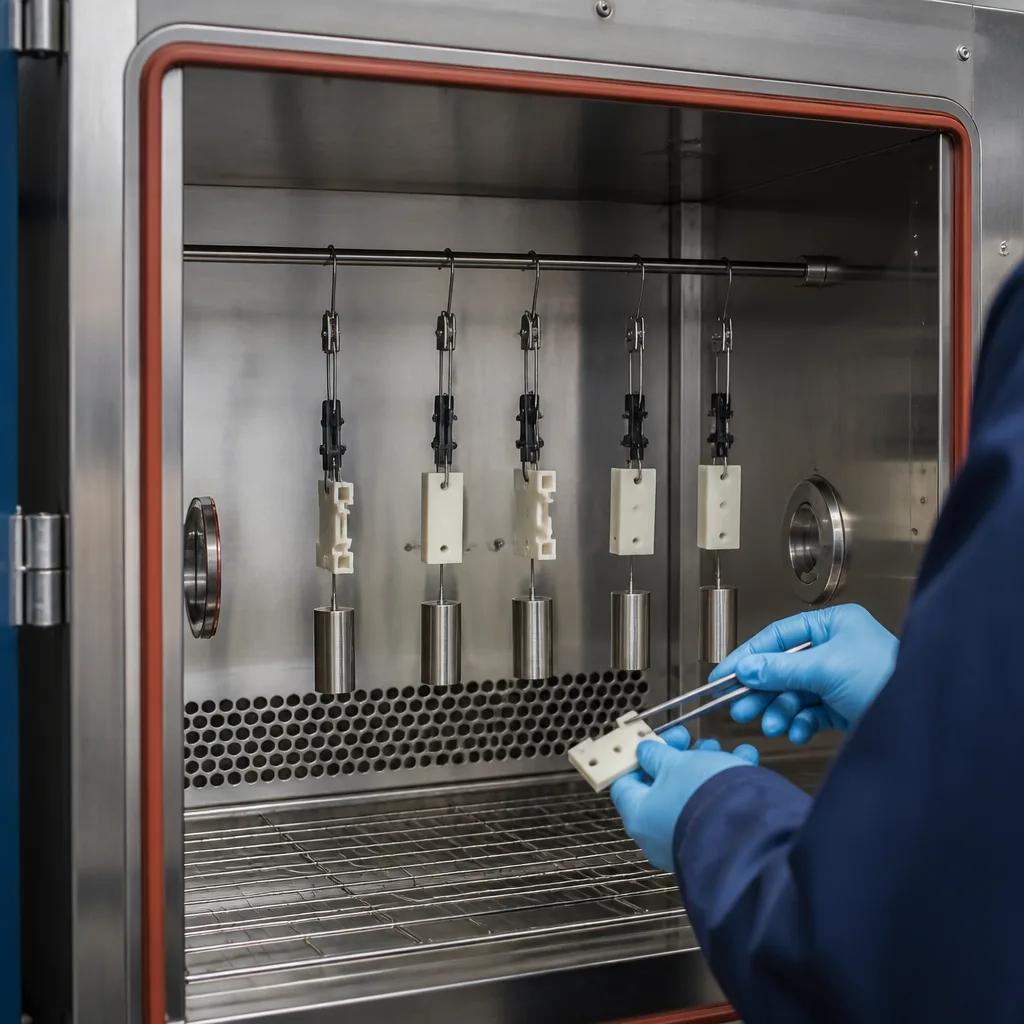
The “ANSI/UL 746C Polymeric materials – Use in electrical equipment evaluation” standard, developed jointly by the American National Standards Institute (ANSI) and Underwriter Laboratories (UL), covers parts made of polymeric materials used in electrical equipment and describes various test procedures and their use in testing such parts and equipment.
These requirements do not cover specific insulation systems within the scope of the requirements in the “UL 1446 Insulation Materials Systems Standard - General”. Here, test procedures are provided for the evaluation of polymeric materials in specific applications. These test procedures include references to data obtained from small-scale property tests performed under standard conditions and other practical evaluation methods.
A product that incorporates new or different features, characteristics, components, materials, or systems than those included in the requirements of this standard and that poses a risk of fire, electric shock, or injury to persons should be evaluated using appropriate additional component and end-product requirements deemed necessary to maintain the initially acceptable level of safety intended for the purposes of this standard.
A product whose characteristics, qualities, components, materials, or systems conflict with the specific requirements or provisions of this standard cannot be considered compliant with this standard. Where appropriate, revisions to the requirements are proposed and adopted in accordance with the methods used for the development, revision, and implementation of this standard.
UL 746C is a key safety standard focusing on the evaluation of polymeric (plastic) materials used in electrical equipment. The primary goal of this standard is to ensure that plastics used in electrical devices can withstand environmental stresses over time without compromising safety or performance.
The UL 746C standard addresses how plastic materials behave when exposed to the following real-world environmental conditions:
This standard is particularly important for materials used in outdoor electrical enclosures, connectors, insulation systems, and housings.
The UL 746C standard evaluates how materials degrade over time when exposed to environmental factors. Plastics can become brittle, change color, or lose mechanical strength, leading to electrical hazards.
This standard complements it by taking into account long-term aging effects under combined environmental conditions. A key outcome of the described test method is the assignment of outdoor suitability ratings:
These ratings are widely used in sectors such as solar energy, telecommunications, and industrial equipment.
The UL 746C standard includes various test procedures to simulate environmental exposure:
These tests ensure that the materials maintain their electrical insulation and structural integrity throughout their service life.
The UL 746C standard is commonly used in the following areas:
The UL 746C standard is necessary because of a simple fact: plastics do not remain the same over time, especially outdoors, and this can quickly become dangerous in electrical systems. Here are the main reasons why this standard is important.
This standard ensures that materials continue to function safely not only when they are new, but also after years of exposure.
This is especially important for sectors such as solar energy, telecommunications, and industrial infrastructure.
Without the UL 746C standard, products may pass laboratory tests but fail in real outdoor conditions.
In short, the UL 746C standard is essential because it bridges the gap between laboratory performance and real-world durability. It ensures that plastic materials used in electrical equipment remain safe, stable, and reliable over time, even under environmental stress.
In conclusion, the UL 746C standard plays a critical role in ensuring the durability and safety of polymeric materials used in electrical equipment, especially in outdoor environments. By simulating long-term exposure to environmental stressors, it helps manufacturers design products that remain safe, reliable, and compliant throughout their lifecycle.
For many years, our organization, with its competent and experienced team, has been understanding the needs of its clients, providing the advanced testing services they require, and assisting them in the establishment, implementation, and improvement of management systems. Within this framework, we also provide testing services compliant with the ANSI/UL 746C standard.
To get an appointment, to get more detailed information or to request an evaluation, you can ask us to fill in our form and reach you.

