

The ISO 3104 standard, developed by the International Organization for Standardization (ISO), defines two test procedures for determining the kinematic viscosity of both clear and opaque liquid petroleum products by measuring the time it takes for them to flow under gravity through a calibrated glass capillary viscometer:
Dynamic viscosity is calculated using the density of the liquid of the measured kinematic viscosity. The kinematic viscosity range covered in this test method is from 20 mm150/s to 0,2 mm2/s over a temperature range of 300.000 degrees to 2 degrees.
The result obtained with the test method described here depends on the behavior of the sample and is primarily intended for application to liquids where shear stress and shear rates are proportional. However, if the viscosity changes significantly with shear rate, different results are obtained from viscometers of different capillary diameters. Procedure and precision values are included for residual fuel oils that behave differently under certain conditions.
Many petroleum products and some non-petroleum materials are used as lubricants, and correct equipment operation depends on the appropriate viscosity of the fluid used. In addition, the viscosity of many petroleum fuels is important for estimating optimum storage, transportation and operating conditions. In this regard, correct determination of viscosity is essential for many product specifications.
For the purposes of this standard, the concept of kinematic viscosity refers to the resistance to flow of a fluid under gravity, dynamic viscosity, the ratio between the applied shear stress of a fluid and the shear rate. Dynamic viscosity is a measure of a fluid's resistance to flow or deformation. The concept of density, on the other hand, expresses the mass value per unit volume of a substance at a certain temperature.
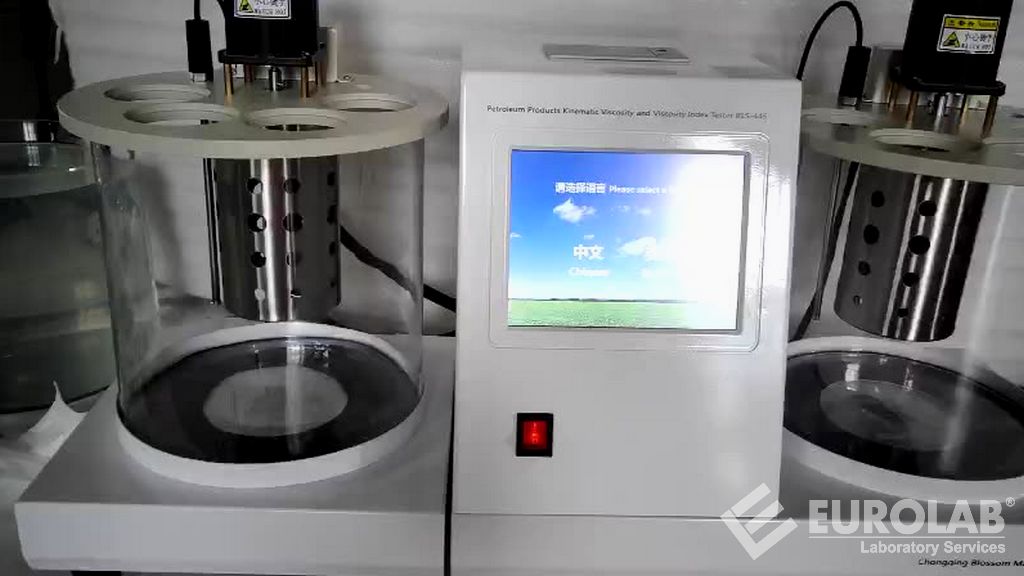
Our organization, among the numerous tests, measurements, analyses, and evaluations it provides for businesses in various sectors, also offers testing services for determining the kinematic viscosity and calculating the dynamic viscosity of transparent and opaque petroleum liquids within the scope of the ISO 3104 standard, thanks to its trained and expert staff and advanced technological equipment.
To get an appointment, to get more detailed information or to request an evaluation, you can ask us to fill in our form and reach you.

