

The EN ISO 354 standard, developed by the International Standards Organization (ISO), defines a method for measuring the sound absorption coefficient of acoustic materials used as wall or ceiling applications in an echo chamber, or the equivalent sound absorption area of objects such as furniture, people or space absorbers. This standard is not intended to measure the absorption characteristics of weakly damped resonators. The results obtained are used for comparison purposes and for design calculations related to room acoustics and noise control.
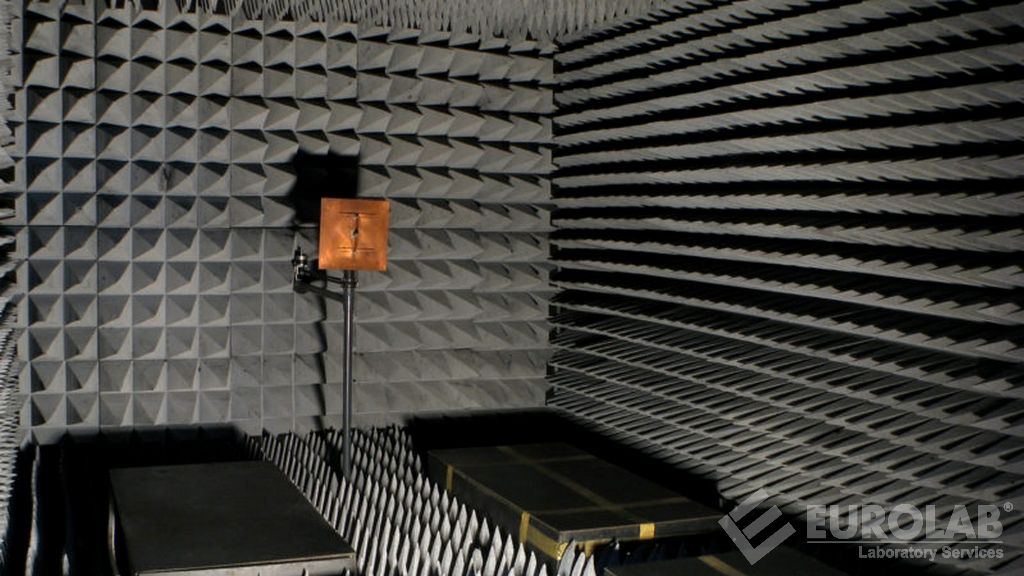
The purpose of this international standard is to ensure uniformity in the measurement methods and conditions of sound absorption in echo chambers.
The sound absorption coefficient is used to evaluate the sound absorption efficiency of materials. It is the ratio of absorbed energy to incident energy. According to this standard, the sound absorption coefficient is the ratio obtained by dividing the equivalent sound absorption area of a test sample by the area of the test sample.
The sound absorption coefficient of materials is related to frequency and varies according to different frequencies. The sound absorption coefficient frequency characteristic curves are used to fully display the sound absorption characteristics of different frequencies.
During measurements of sound absorption, a sufficient area of material is placed in a reverberating chamber and the decay time is measured at different frequencies before and after the test material is placed in the chamber. The difference between these two measurements allows the absorption (sound absorption) to be calculated.
Generally, acoustic products have an absorption coefficient that details how effective they are at absorbing sound energy, converting it into heat, and releasing less energy into the room across a range of frequencies. This number ranges from zero (no sound absorption) to 1.0, where all of the sound hitting the material is absorbed. If the number is less than 1, it means that only a portion of the sound is absorbed at a given frequency, and the rest is either reflected or passes through the material. It is not possible for a material to have an absorption coefficient greater than 1.0.
Among the numerous test, measurement, analysis and evaluation studies it provides for businesses in various sectors, our organization also provides services for measuring sound absorption in an echo chamber within the scope of EN ISO 354 standard, with its trained and expert staff and advanced technological equipment.
To get an appointment, to get more detailed information or to request an evaluation, you can ask us to fill in our form and reach you.

