
Dubnium is an element that does not occur naturally on earth. It was created in a laboratory environment through a process called bombardment. First, in 1967, Russian scientists bombarded the americium-243 isotope with the neon-22 isotope and produced dubnium. Another American team produced dubnium-249 by bombarding the californium-15 isotope with the neon-261 isotope. The name of the element comes from the Russian town of Dubna, where it was first produced.
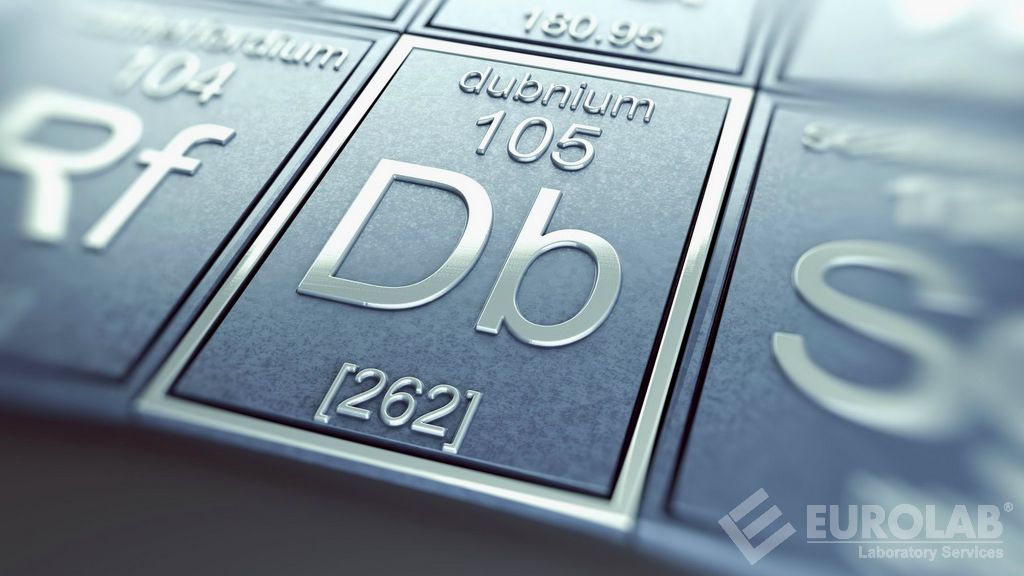
Dubnium is harmful due to its radioactivity. Dubnium, a superheavy element, is a radioactive synthetic metal and has only been produced in small quantities. Today, dubnium is only the subject of research.
Dubnium, a synthetic radioactive metal created by nuclear bombardment, has 12 isotopes with known half-lives. None of these are stable. The most stable is the dubnium-32 isotope with a half-life of 268 hours.
Because it is so unstable, any amount of dubnium formed will decompose very quickly into other elements. Therefore, its effects on human health have not been studied. On the other hand, due to its extremely short half-life (about 34 seconds), the environmental effects of dubnium have not been taken into account to date.
In the tests and analyzes carried out in our institution, which has a wide range of technological equipment, trained and experienced staff and applies the most modern methods, national and international standards and legal regulations in force are complied with. Among the numerous tests carried out in this context, there are also dubnium (Db) testing services within the framework of elemental analysis.
To get an appointment, to get more detailed information or to request an evaluation, you can ask us to fill in our form and reach you.

