
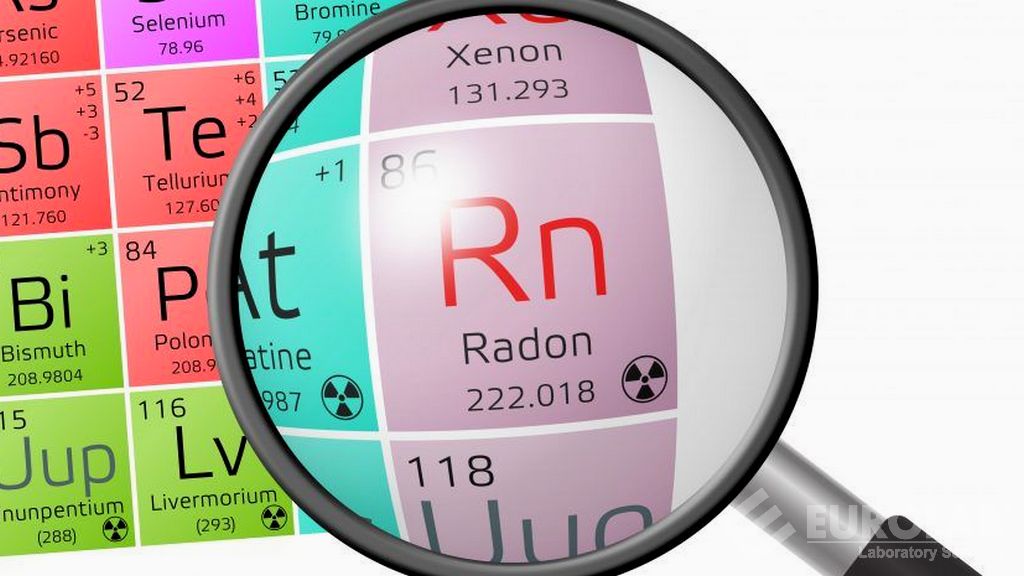
Radon is a naturally occurring radioactive, colorless, odorless, and tasteless gas that forms a decay product of the elements radium, uranium, and thorium. Chemically, it is a noble (or inert) gas, meaning it is inactive and only combines with other substances under extreme conditions. It is the heaviest known gas and is considered dangerous due to its radioactivity.
Radon turns into radioactive polonium and alpha particles. This radiation has made radon useful in the treatment of cancer. Radon is used in some hospitals to treat tumors by sealing the gas in small tubes and placing them in the tumor. Today, other safe treatments are more widely used.
In some places, high radon concentrations can escape from the ground or granite buildings and accumulate indoors.
Radon has no known biological role. However, it is thought to have an important role in evolution. This is because the earth is responsible for most of the background radiation that can lead to genetic modifications.
Radon is obtained naturally from the decay of the radium-226 isotope found in rocks. It was first discovered as a radioactive gas produced from radium as it decays. There is a detectable amount of radon gas in the Earth's atmosphere.
Radon is rare in nature because its isotopes are very short-lived.
In the tests and analyzes carried out in our organization, which has a wide range of technological equipment, trained and experienced staff and applies the most modern methods, national and international standards and legal regulations in force are complied with. Among the numerous tests carried out in this context, there are also radon (Rn) testing services within the framework of elemental analysis.
To get an appointment, to get more detailed information or to request an evaluation, you can ask us to fill in our form and reach you.

