

Tellurium, a relatively rare element, possesses semiconductor electrical properties that make it suitable for electronic applications. Today, tellurium is recovered primarily from anode sparks associated with the electrolytic refining of copper, as a byproduct of nonferrous metal mining. For many years after its initial discovery, tellurium was considered an experimental material with little commercial value. Today, it is used as an alloying additive in steel and nonferrous alloys to improve processing properties and stabilize cast iron.
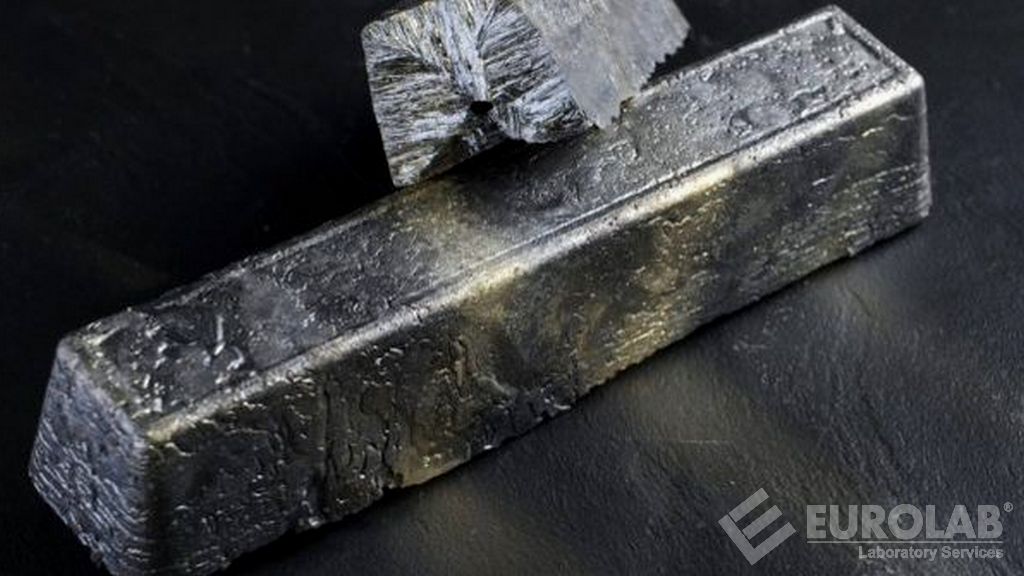
Today, tellurium is used in cadmium telluride thin-film solar cells, which are becoming increasingly efficient and cost-effective. In addition, tellurium in the form of semiconductor bismuth tellurium is used in thermoelectric cooling devices for military and electronic applications such as cooling infrared detectors, integrated circuits, laser diodes and medical instruments.
Tellurium use is 40 percent in solar photovoltaics, 30 percent in thermoelectric devices, 15 percent in metallurgy, 5 percent in rubber applications, and 10 percent in other applications.
Global demand for tellurium has increased significantly in recent years, due to increases in solar cell production and thermoelectronic devices.
In the tests and analyzes carried out in our institution, which has a wide range of technological equipment, trained and experienced staff and applies the most modern methods, national and international standards and legal regulations in force are complied with. Among the numerous tests carried out in this context, there are also tellurium (Te) testing services within the framework of elemental analysis.
To get an appointment, to get more detailed information or to request an evaluation, you can ask us to fill in our form and reach you.

