
Zirconium is a hard, silvery-colored metal that is highly resistant to corrosion. Zirconium does not absorb neutrons, making it an ideal material for use in nuclear power plants. Over 90% of zirconium is used in this way. Nuclear reactors can have more than 100 meters of zirconium alloy tubing. Zirconium, along with niobium, is a superconductor at low temperatures and is used to make superconducting magnets.
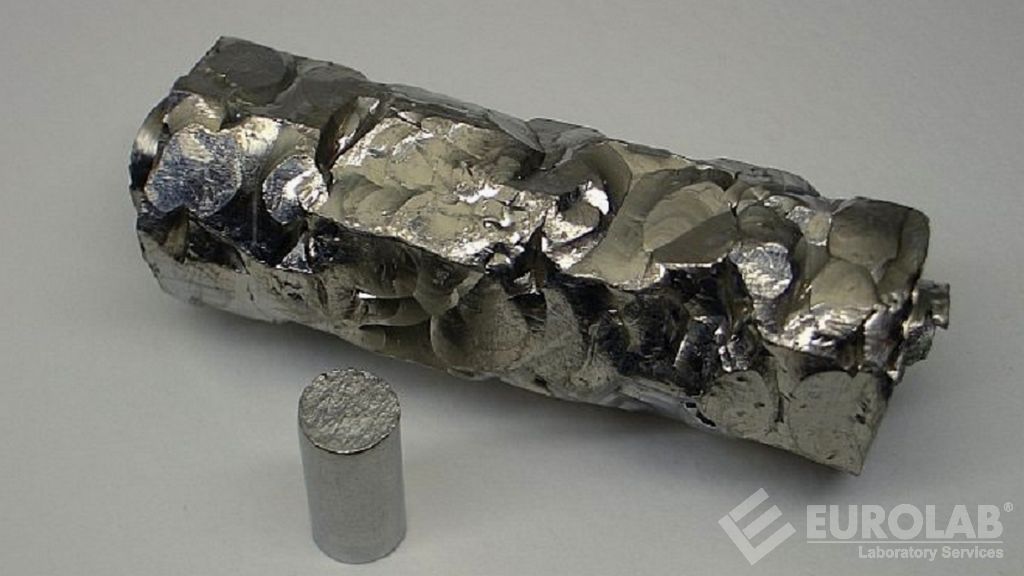
The zirconium metal is protected by a thin layer of oxide, making it exceptionally resistant to corrosion by acids, alkalis and seawater. For this reason, it is used extensively in the chemical industry.
Zirconium oxide is used in ultra-strong ceramics. It is used in the construction of crucibles to withstand heat shock, furnace linings, cast bricks, abrasives and the glass and ceramic industries.
It is also used in cosmetics, antiperspirants, food packaging, and making microwave filters.
Zircon mixed with vanadium or praseodymium makes blue and yellow pigments for ceramic glaze.
Zirconium has low toxicity.
Zirconium is found in about 30 mineral species, the most important of which are zircon and baddeleyite.
In the tests and analyzes carried out in our organization, which has a wide range of technological equipment, trained and experienced staff and applies the most modern methods, national and international standards and legal regulations in force are complied with. Among the numerous tests carried out in this context, there are also zirconium (Zr) testing services within the framework of elemental analysis.
To get an appointment, to get more detailed information or to request an evaluation, you can ask us to fill in our form and reach you.

