
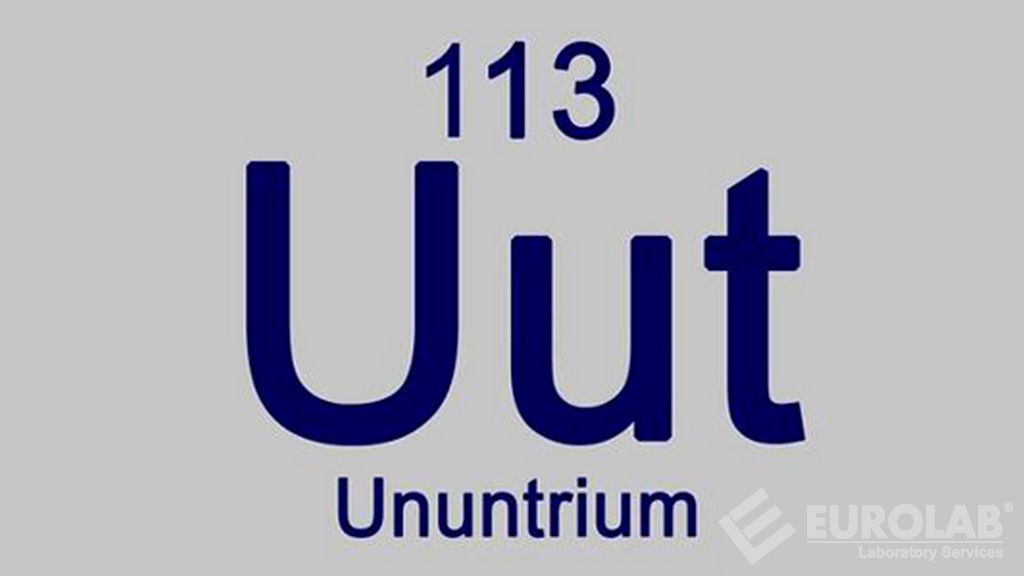
Unutrium was first discovered in 2003 by a group of Russian and American scientists in Russia. As of today, the element in question does not meet the criteria for discovery. For this reason, the element was tentatively called ununtrium until a formal name was given. As a result of its position on the periodic table, ununtrium would be expected to be classified as one of the other metals. Few elements have been synthesized to confirm this.
Ununtrium is a synthetic radioactive metal created by nuclear bombardment and has only been produced in very small quantities. To obtain ununtrium, calcium-48 atoms are bombarded with americium-243 ions in a heavy ion accelerator. This element has also been created using a cold fusion reaction between bismuth and zinc ions.
Unutrium has 278 isotopes with known half-lives and mass numbers 286 to 6. None of these are stable. The most stable isotope is ununtrium-286, with a half-life of 19.6 seconds.
Unutrium is a synthetic element, meaning it is not found in nature, but is instead produced in a laboratory environment for only a short time. It is estimated to be a very dense solid at room temperature. Despite being a metal, ununtrium may exhibit some properties of a transition metal.
In the tests and analyzes carried out in our organization, which has a wide range of technological equipment, trained and experienced staff and applies the most modern methods, national and international standards and legal regulations in force are complied with. Among the numerous tests carried out in this context, there are also ununtrium (Uut) testing services within the framework of elemental analysis.
To get an appointment, to get more detailed information or to request an evaluation, you can ask us to fill in our form and reach you.

