

Ununseptium was discovered in 2010 by a group of Russian and American scientists in Russia. As of today, the element in question does not meet the criteria for discovery. For this reason, the element was tentatively called ununseptium until a formal name was given.
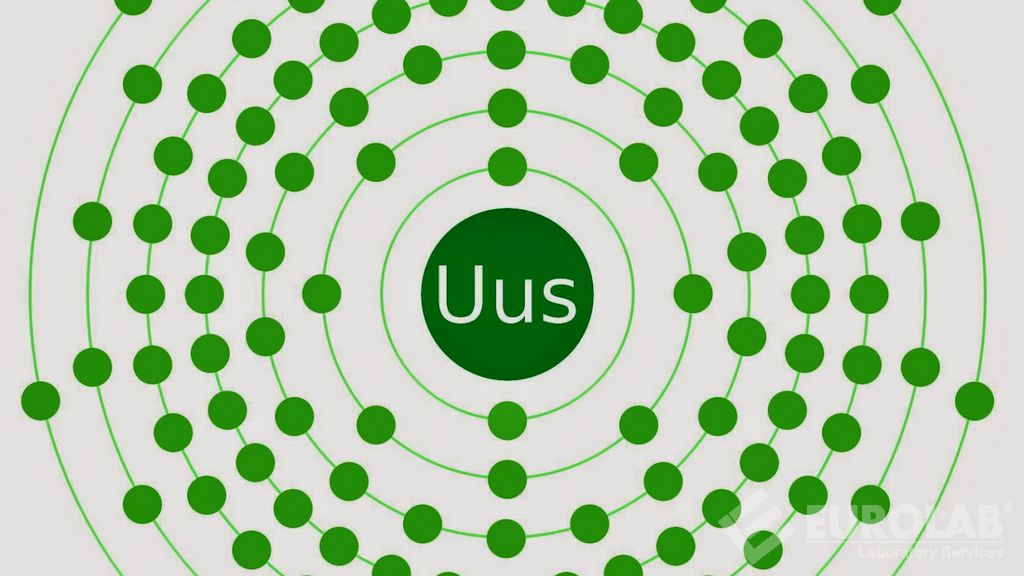
Studies have resulted in the identification of the isotopes of ununseptium-293 and ununseptium-294. Both isotopes are unstable. The approximate half-life of the ununseptium-293 isotope is 14 ms and that of the ununseptium-294 isotope 78 ms. Scientists created the element ununseptium by bombarding berkelium-249 atoms with calcium-48 ions.
Ununseptium is considered harmful due to its radioactive nature. However, it has not been properly researched to provide specific details about its health effects.
The fundamental properties of this element are: it is radioactive, it is expected to possess the characteristic chemical properties of halogens, and the effects of relative electrons can lead to partial metalloid properties. For example, it is assumed that the element ununseptium, unlike other halogens, will not form anions and will not reach high oxidation states. Conversely, its properties such as melting and boiling points and initial ionization energy are considered to be consistent with those of halogens.
Today, the element ununseptium has no application outside the field of scientific research.
In the tests and analyzes carried out in our organization, which has a wide range of technological equipment, trained and experienced staff and applies the most modern methods, national and international standards and legal regulations in force are complied with. Among the numerous tests carried out in this context, there are also ununseptium (Uus) testing services within the framework of elemental analysis.
To get an appointment, to get more detailed information or to request an evaluation, you can ask us to fill in our form and reach you.

