
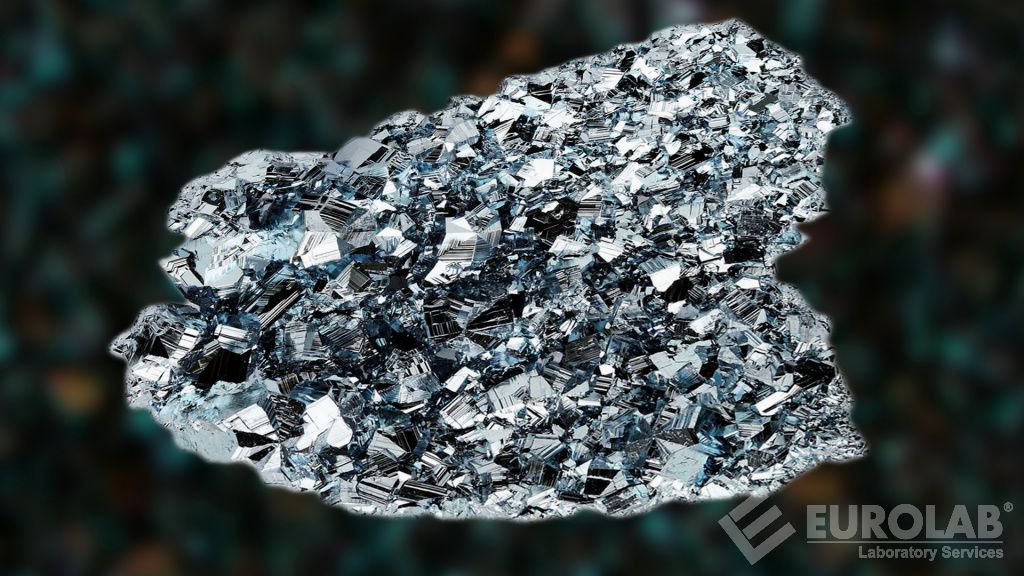
Osmium is a shiny, bluish-white, hard metal that resists corrosion. It is one of the densest elements on earth. In fact, it is twice as dense as lead. It can be brittle even at high temperatures. Among the platinum group, osmium has the highest melting point and lowest vapor pressure. Osmium tetroxide is a highly toxic, strong oxidizing agent with a strong odor.
Osmium has only a few commercial uses. Due to its density, osmium is often alloyed with other precious metals to make products such as instrument pivots, phonograph needles, and electrical contacts. When naturally combined with iridium, it is used in fountain pen nibs. Tetroxide, obtained from the metal in powder or spongy form, can be used to detect fingerprints and to stain fatty tissues for microscope slides.
Osmium has no known biological role. The metal is non-toxic, but its oxide is volatile and very toxic, causing lung, skin and eye damage.
Osmium is found uncoupled in nature and also in the mineral osmium, an alloy with iridium. Most osmium is obtained commercially from nickel refining waste.
Osmium is produced as a byproduct of nickel refining. It can be easily obtained from processed nickel ores.
In the tests and analyzes carried out in our institution, which has a wide range of technological equipment, trained and experienced staff and applies the most modern methods, national and international standards and legal regulations in force are complied with. Among the numerous tests carried out in this context, there are also osmium (Os) testing services within the framework of elemental analysis.
To get an appointment, to get more detailed information or to request an evaluation, you can ask us to fill in our form and reach you.

