

The "ASTM D120 Standard Specification for Rubber Insulating Gloves" standard developed by the American Society for Testing and Materials (ASTM) describes the requirements for the manufacture of rubber insulating gloves to protect workers from electric shock and defines a test method.
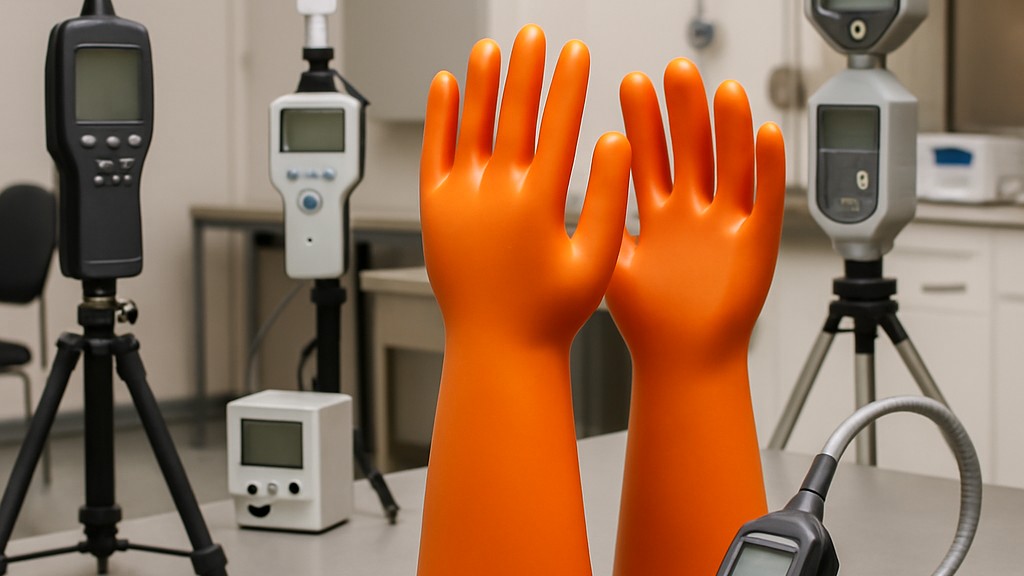
This standard provides two types of gloves: Type I non-ozone-resistant and Type II ozone-resistant gloves. Ozone resistance refers to a material's ability to resist deterioration or cracking when exposed to ozone, a reactive oxygen species found in the atmosphere. Ozone is a highly reactive gas that can attack and break down the double bonds in rubber and other elastomers. Even low concentrations (as little as 0,01 ppm) can cause visible cracking in sensitive materials over time, especially under stress.
Type I gloves are not ozone resistant. They are made of natural rubber or other materials that can degrade in ozone-rich environments. Type II gloves are ozone resistant. They are typically made of synthetic rubber, such as ethylene propylene diene monomer (EPDM) or butyl rubber, formulated to resist ozone damage.
The ASTM D120 standard includes six glove classes with different electrical properties. Classifications are based on maximum operating voltage:
The following tests will be performed within the scope of this standard:
Gloves must pass physical requirements for tensile strength, elongation, tear resistance, and puncture resistance. Each glove must pass a dielectric test at a specified voltage to ensure proper insulation. Gloves should be clearly marked with the class, size, manufacturer, and other compliance information. Gloves should be visually inspected and electrically retested regularly, typically every 6 months (or as required by OSHA or the employer's safety protocols).
This standard is commonly required by electricians, line workers, and utility workers who use high-voltage equipment or systems.
The ASTM D120 standard is important because it ensures that rubber insulating gloves that protect workers from electric shock and arc flash meet stringent safety and performance requirements. These gloves are often the last line of defense between a worker and a deadly electric current. Therefore, consistent, tested quality is critical.
The ASTM D120 standard is considered important for the following reasons:
Our organization, which has been supporting businesses across all sectors for years through a wide range of testing, measurement, analysis, and evaluation activities, has a strong team of employees who closely follow global developments in science and technology and are constantly improving themselves. In this context, we also provide testing services in accordance with the "ASTM D120 Standard Specification for Rubber Insulating Gloves" standard.
To get an appointment, to get more detailed information or to request an evaluation, you can ask us to fill in our form and reach you.

