

The standard “ EN ISO 11202 Acoustics - Noise emitted by machinery and equipment - Determination of emission sound pressure levels at a workstation and other specified locations by applying approximate environmental corrections” , which is based on a European standard and subsequently published by the International Organization for Standardization (ISO), describes a method for determining the emission sound pressure levels of machinery or equipment on-site at a workstation and other specified locations nearby. A workstation is occupied by an operator and may be located in an open area, in the room where the weld under test is operating, in a cabinet attached to the weld under test, or in an enclosure far from the weld under test. One or more specified locations may be located near a workstation or near machinery, with or without supervision. Such locations are sometimes called bystander locations.
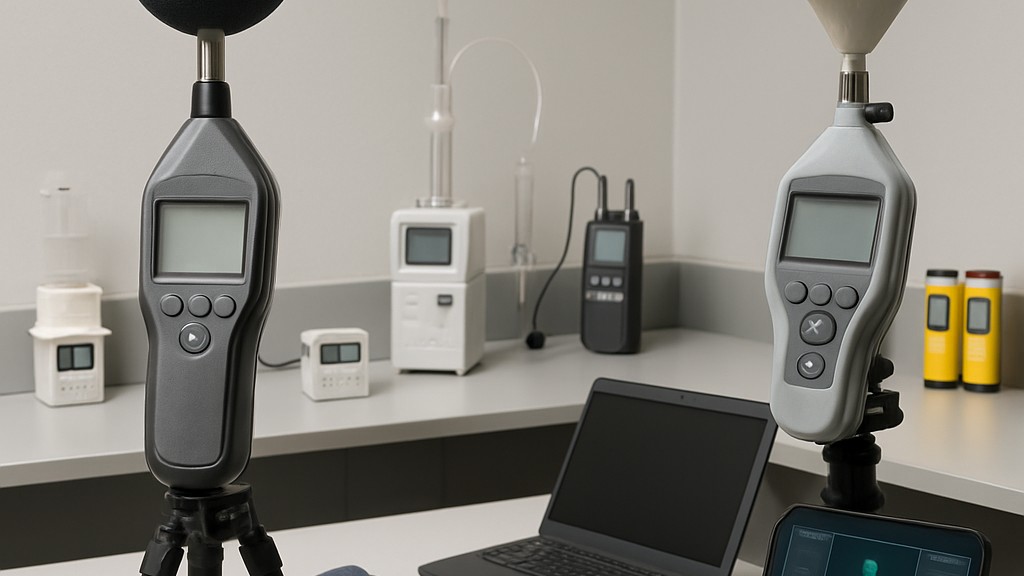
Emission sound pressure levels are determined as A-weighted levels. In addition, if necessary, levels in frequency bands and C-weighted peak emission sound pressure levels may be determined in accordance with this standard.
Methods are given for determining a local environmental correction (subject to a specified limiting maximum value) to be applied to the measured sound pressure levels to eliminate the influence of reflective surfaces other than the plane in which the source under test is located. This correction is based on the equivalent sound absorption area and radiation characteristics of the test room (source location or orientation at the workstation).
Using the method specified in this standard, results with accuracy grade 2 (engineering grade) or accuracy grade 3 (research grade) are obtained. Corrections are made for background noise and the acoustic environment as described above. Instructions are provided for the installation and operation of the source under test and for selecting microphone positions for the workstation and other specified locations. One purpose of the measurements is to allow comparison of the performance of different units of a given machine family under defined environmental conditions and standardized installation and operating conditions.
The data obtained can also be used for declaration and verification of emission sound pressure levels as specified in the ISO 4871 standard.
The method specified in this standard is suitable for all noise types (stationary, non-stationary, fluctuating, and isolated sound energy bursts) defined in ISO 12001. The method specified in this standard is valid for all noise source types and sizes.
The type of test environment affects the accuracy of determining emission sound pressure levels. Any room that meets the specified requirements is valid for this standard. These room requirements are less stringent than those in ISO 11201, particularly regarding the acoustic quality of the environment.
This standard is applicable to workstations and other specified locations where emission sound pressure levels are to be determined. Suitable locations where measurements can be made include:
In short, measurement in accordance with EN ISO 11202 is important for understanding operators' potential noise exposure and for comparing the noise emissions of different machines. The purpose of this standard is to standardize how to measure sound pressure levels under research-grade conditions when the operator is near or at the machine. It is particularly useful for:
This standard applies to all types of machinery and equipment, whether fixed or mobile, operating indoors or outdoors.
The ISO 11202 standard outlines a survey method that is a simplified measurement technique compared to engineering grade or precision grade methods. Key features include:
The described method does not require a specially prepared acoustic environment (such as an anechoic or semi-anechoic chamber), making it practical and cost-effective for on-site use.
The basic definitions in this standard are as follows:
This standard is deemed necessary for the following reasons:
In short, the ISO 11202 standard plays an important role in helping employers, safety engineers and manufacturers to assess and manage the noise emitted by machinery in the operator position by providing a standardised and practical method for sound pressure level determination.
Our organization, which has been supporting businesses across all sectors for years through a wide range of testing, measurement, analysis, and evaluation activities, boasts a strong team of employees who closely follow global developments in science and technology and are constantly improving themselves. In this context, we also provide testing services in accordance with the standard "EN ISO 11202 Acoustics - Noise emitted by machinery and equipment - Determination of emission sound pressure levels at a workstation and other specified locations, applying approximate environmental corrections."
To get an appointment, to get more detailed information or to request an evaluation, you can ask us to fill in our form and reach you.

