EN ISO 12402-5 Personal Life Jackets - Part 5: Buoyancy Aids (Level 50) - Safety Requirements
The standard EN ISO 12402-5 Personal lifejackets - Part 5: Buoyancy aids (level 50) - Safety requirements", which is based on a European standard and later published by the International Organization for Standardization (ISO), describes the safety requirements for buoyancy aids with performance level 50. This standard applies only to buoyancy aids for adults and children with a body mass greater than 25 kg, used in sheltered waters. Buoyancy aids require the active participation of the user in situations where assistance and rescue are imminent. One-piece and two-piece inherently buoyant personal lifejackets are considered to qualify as special application devices according to ISO 12402-6.
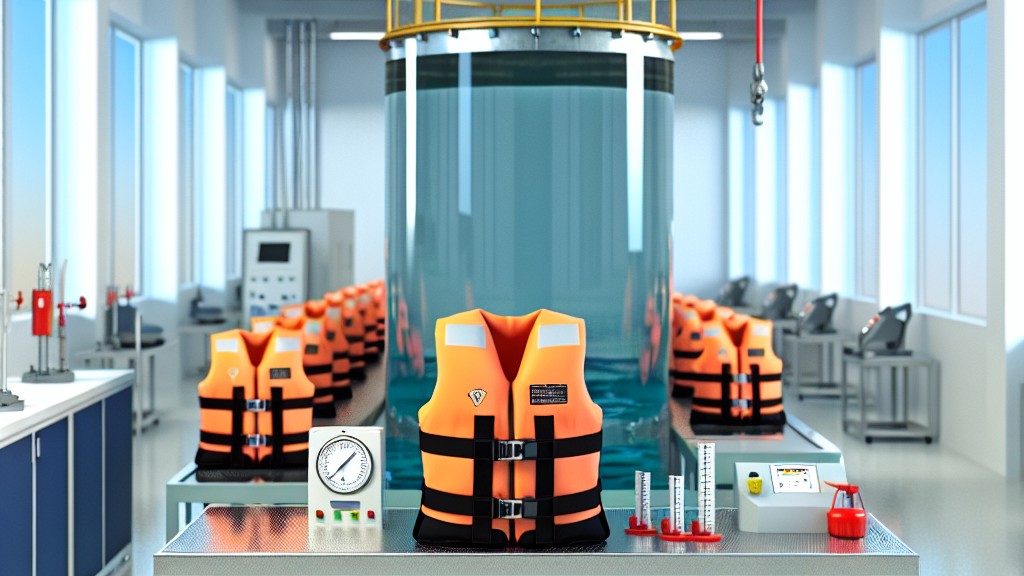
For the purposes of this standard, the following terms and definitions apply:
- A personal life jacket is a piece of equipment that, when worn correctly and used in water, provides the wearer with a certain amount of buoyancy that increases the likelihood of survival.
- Inherently buoyant refers to material that is permanently less dense than water.
- Automatic inflation is the inflation of a personal life jacket without any operation by the user while immersed in water.
- Manual inflation is the inflation of a personal life jacket that occurs when the user operates a mechanism.
- Oral inflation is inflation that occurs when the user blows air into the personal life jacket through the mouth.
- The vest type personal life jacket covers the user's upper body like a vest.
- An emergency position indicator light is a device that emits light to increase the chance of a user being found.
- A multi-chamber flotation system is a personal life jacket system in which the buoyancy to meet applicable life jacket performance requirements is provided by two or more independent chambers.
- A deck harness is a device that allows a user to be securely attached to a strong point on a ship or on the shore, preventing them from falling into the water or from being separated from the ship or shore if a fall occurs.
- A buddy line is a length of cord that can be tied or otherwise secured to another person or to that person's life jacket or other objects, thereby keeping a user in close proximity to that person or object, making it easier to locate and therefore rescue.
- A lifting ring is a device that facilitates the manual rescue of a person from water.
- A spray head is a cover placed or placed in front of a user's airways to reduce or eliminate splashing of water from waves or the like into the airways, thereby supporting the user's survival in harsh water conditions.
- A protective cover is a cover that is normally placed over the functional elements of a personal life jacket to protect it from physical damage or entanglement with external objects. A protective cover may be designed to provide additional features, i.e. to make the personal life jacket suitable for use when exposed to additional hazards, such as significant abrasion, molten metal splash, flames and fire. The inflatable chamber of an inflatable personal life jacket is an example of a functional element.
- An overpressure relief valve is a valve that can be used to prevent the possibility of damage from overpressure in an inflatable system.
In this standard, personal life jackets are classified as follows:
- Buoyancy aids: These are a garment or device that, when worn correctly, provides support without the ability to turn significantly face up and therefore may require action by the wearer to keep their face out of the water. A buoyancy aid provides suitable performance in sheltered waters and, at higher levels of support, may be suitable for use in other waters.
- Life jackets: This is a garment or device that, when worn correctly, holds the wearer in a face-up buoyancy position without additional action, with a variety of performance levels suitable for sheltered and unprotected waters. A life jacket has sufficient buoyancy distribution to return most wearers to a position where their mouth is clear of the water, even if they are exhausted.
- Special application personal life jackets: These should have equivalent performance to a life jacket or life jacket aid, but have additional features and requirements relevant to the specific applications for use. These life jackets may require additional processing by the user or may only be suitable for certain activities or user groups according to ISO 12402-6.
Our organization, which has been trying to support businesses from every sector with its testing, measurement, analysis and evaluation studies carried out in a wide range for years, has a strong staff that closely follows the developments in the world in the field of science and technology and constantly improves itself. In this context, testing services in accordance with the "EN ISO 12402-5 Personal life jacket - Part 5: Buoyancy aids (level 50) - Safety requirements" standard are also provided to businesses.



