

The European standard “EN 14594 Respiratory protective equipment - Continuous flow compressed air line breathing apparatus - Requirements, testing and marking” describes the minimum requirements for continuous flow compressed air line breathing apparatus for use with full face masks, half masks, hoods, helmets or coveralls, and for devices used in abrasive spraying processes, as respiratory protective equipment.
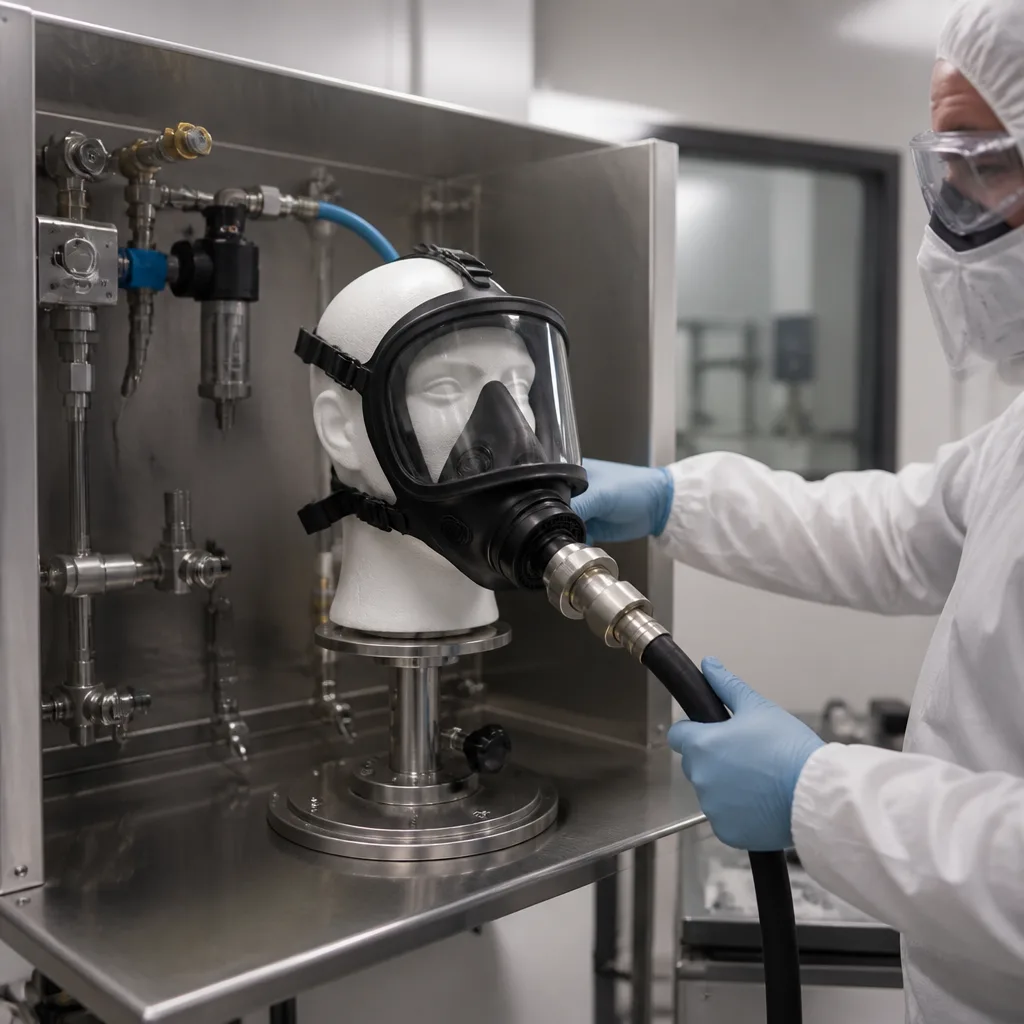
This standard covers devices used with full-face masks, half-masks, hoods, helmets, or coveralls, and includes equipment used in abrasive spraying operations. However, emergency respiratory protective equipment and diving equipment are excluded from this standard.
This standard combines design, material, and performance requirements with laboratory and practical performance tests to assess conformity.
Respiratory protective devices are classified according to the maximum inward leakage given in the table titled "Classification" within the standard and the strength requirements shown below:
The classification was determined as follows:
Class 4A respiratory protective equipment must include a full-face mask or hood/helmet/suit conforming to EN 136 standard.
Class 4B respiratory protective equipment must be a full-face mask conforming to EN 136 standard or suitable for use in abrasive spraying operations.
Respiratory protective equipment used in abrasive spraying operations must only comply with class 4B.
In short, the EN 14594 standard specifies the minimum performance, safety, testing, and marking requirements for continuous-flow compressed air line breathing apparatus used as respiratory protective equipment. This standard plays a critical role in ensuring that workers in hazardous environments can reliably breathe breathable air while maintaining their comfort and safety.
The EN 14594 standard applies to continuous flow compressed air line breathing apparatus used with:
This standard covers devices supplied with breathable compressed air via an air line and designed for occupational use. It does not apply to the following:
This includes laboratory and practical performance tests to verify compliance with the standard.
Unlike filtered respiratory devices, devices conforming to the EN 14594 standard do not clean contaminated ambient air. Instead, they deliver clean, compressed air directly to the user from an external source via an air hose.
Continuous airflow ensures the following:
The EN 14594 standard recognizes different configurations depending on the following:
Every design should provide adequate respiratory protection while ensuring user comfort and freedom of movement.
The EN 14594 standard specifies performance requirements for numerous characteristics, including:
The EN 14594 standard includes comprehensive laboratory and practical tests, such as those listed below:
Practical user tests confirm that the equipment operates effectively under realistic working conditions.
Every certified device must be permanently marked with the following information:
Producer identity
The accompanying user manual should include the following:
Equipment conforming to the EN 14594 standard is widely used in industries where airborne pollutants are too hazardous for filtered respiratory devices. These include:
The EN 14594 standard supports compliance with the essential health and safety requirements of the European Directive 2016/425 on personal protective equipment. Manufacturers seeking CE marking for continuous flow compressed air line breathing apparatus typically demonstrate compliance using this compatible standard.
Despite being highly effective, devices conforming to the EN 14594 standard require the following:
They are unsuitable for applications where a portable, independent air source is required, such as emergency escape or firefighting applications.
In conclusion, the EN 14594 standard is one of the fundamental European standards regulating air-supplied respiratory protective equipment. By setting strict requirements for design, performance, testing, marking, and user information, it helps ensure that continuous-flow compressed air breathing equipment provides reliable protection in hazardous industrial environments. Organizations using equipment compliant with this standard can improve worker safety, support regulatory compliance, and reduce the risk of occupational exposure to airborne pollutants.
For many years, our organization, with its competent and experienced staff, has been understanding the needs of its clients, providing the advanced testing services they require, and assisting them in the establishment, implementation, and improvement of management systems. Within this framework, we also provide testing services in accordance with the EN 14594 standard.
To get an appointment, to get more detailed information or to request an evaluation, you can ask us to fill in our form and reach you.

