

The European standard “EN 342 Protective clothing – Clothing and coveralls providing protection against cold” describes the requirements and test methods for clothing sets (e.g., two-piece suits or coveralls) that provide protection against the effects of cold environments at -5 degrees Celsius or below. These effects include not only low air temperatures but also humidity and air velocity. The requirements and test methods for clothing providing protection against cold environments are specified in the standard “EN 14058 Protective clothing – Clothing and coveralls providing protection against cold environments”. Furthermore, protective effects and requirements such as footwear, gloves, and separate hoods are outside the scope of this standard.
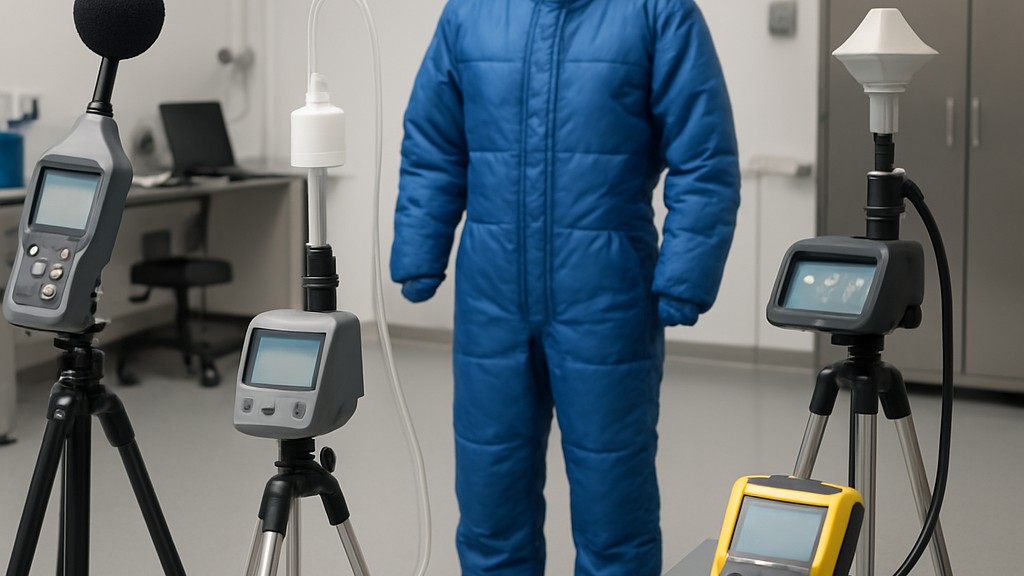
This standard is published to provide a common basis for requirements and test methods for protective clothing ensembles and cold-resistant garments in Europe for the benefit of manufacturers, test institutes, and end users. The measured properties and their subsequent classification are intended to provide an adequate level of protection under different user conditions. Thermal insulation and breathability of the suit or garment are the primary properties to be tested and marked on the label. Thermal insulation is the most important property and is measured using a full-size thermal manikin with the suit or garment and accompanying standard garments to account for the effects of layers, fit, drape, drape, and shape.
This standard differs from many other standards that only specify material properties in this respect. Insulation is tested on entire suits and garments after a specific pretreatment, eliminating the need for tests such as flexibility or abrasion during garment processing, allowing mechanical properties to be considered. Suits and garments that are frequently used can lose significant insulating capacity through washing and wear. Generally, high-quality products and well-cared-for garments are less affected in this regard.
Wind can significantly increase convective heat loss. Therefore, the breathability of outer clothing material is an important factor to consider when protecting the wearer from the cold.
When tested in accordance with this standard, the following requirements shall be met:
When tested in accordance with this standard, the requirements of the standard “ISO 13688 Protective clothing - General requirements” must be met for harmlessness.
The effective thermal insulation achieved is calculated with the formula given in the standard and must have a minimum value of 0,265 m2K/W when measured according to this standard.
The resulting effective thermal insulation value can be used to assess temperature ranges based on the values in the tables. This guide for selecting appropriate cold protection clothing is an advantage if the clothing's effective thermal insulation value is measured on a thermal manikin.
In short, the EN 342 standard is a standard that includes requirements and test methods for various types of clothing designed to protect the user in cold environments of minus 5 degrees or below, taking into account temperature, humidity and wind exposure.
This standard is designed for use in conditions around or below -5°C, including cold storage, winter outdoor work, and more. Footwear, gloves, and headgear are not covered by this standard. These must be selected individually for full cold protection compatibility.
The key performance criteria for this standard are:
Real-world performance examples include:
This standard is considered important for the following reasons:
As a result, EN 342 is a standard that ensures the reliable performance of cold-weather protective clothing in active, windy, and potentially wet conditions. By providing clear measurements of insulation, wind resistance, and optional waterproofing, it helps businesses and safety professionals select the garments that best suit their needs.
Our organization, which has been operating for many years and meticulously follows global developments in science and technology, employs a team of experienced professionals and a broad infrastructure to conduct testing, measurement, and analysis in a wide range of areas for businesses across all sectors. In this context, we also provide testing services in accordance with the EN 342 Protective Clothing - Clothing and Coveralls Providing Protection Against Cold.
To get an appointment, to get more detailed information or to request an evaluation, you can ask us to fill in our form and reach you.

