

EN ISO 20471 High-visibility clothing - Test methods and requirements," a European standard subsequently published by the International Organization for Standardization (ISO), describes the requirements for high-visibility clothing that can visually signal the wearer's presence. High-visibility clothing aims to ensure the wearer's visibility in all lighting conditions, both in daylight and when seen by vehicle or other mechanized equipment operators under headlights in the dark.
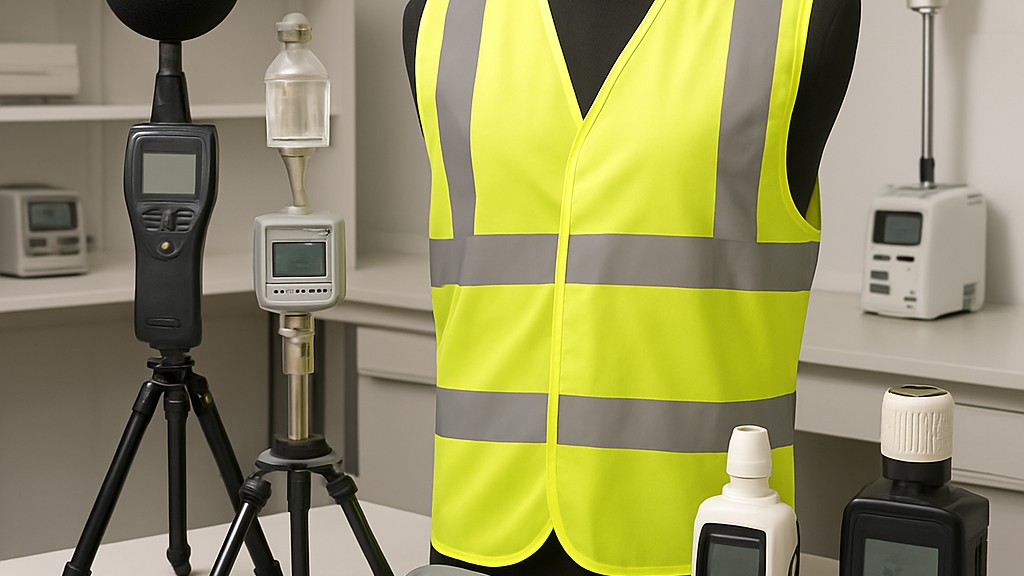
This standard also applies to performance requirements, colour and retroreflectivity, and minimum areas and placement of materials in protective clothing. However, it does not apply to medium- and low-risk situations.
The performance of visibility-enhancing materials to be used in high-risk visibility clothing is determined photometrically, along with minimum space and layout (design) requirements.
Visibility is the property that allows an object to easily attract visual attention. This property is particularly important in complex environments with visually competing objects. Visibility is determined by an object's brightness contrast, color contrast, pattern, design, and motion characteristics, as well as its relative to the ambient background against which it is viewed.
Three garment classes are defined based on three different minimum areas of visibility-enhancing, fluorescent, or combined performance materials. Each of these classes provides a different level of visibility. Class 3 provides the highest level of visibility against most backgrounds found in urban and rural environments during both day and night. Users should select the required performance class based on a risk assessment of the location or situation in which the protection provided by the garment according to this standard is required.
This standard includes requirements for risk assessment and risk analysis of high-visibility clothing. It includes possible designs illustrating the placement of retro-reflective materials. When selecting the optimal configuration of retro-reflective and fluorescent materials within clothing, ergonomic factors such as wearer fit and size, comfort, and range of motion should be considered.
This standard includes requirements for risk assessment of the conditions in which high-visibility clothing will be used. This requires consideration of factors that could affect an observer's ability to detect the presence of a person. The observer must be able to both detect and recognize the wearer and then take appropriate avoidance action. Wearing high-visibility clothing that increases visibility does not guarantee that the wearer will be visible in all conditions.
The minimum requirements specified in this standard are determined by specific test methods and their assigned measurement values. Tests are conducted partly on new materials and partly on pre-conditioned materials. Pre-conditioning (e.g., folding of retroreflective material) simulates the loading of the materials. However, laboratory tests may not always reflect real-life conditions. A garment's visibility performance will depend on its use (e.g., dirt, sunlight), care (e.g., cleaning agents, repairs), and storage (e.g., dust-free, light-proof).
In short, EN ISO 20471 is an internationally recognized standard that specifies requirements for high-visibility clothing. This clothing is vital for those working in environments where visibility is crucial for safety, such as construction sites, roadworks, emergency services, and airport operations. This standard includes requirements for high-visibility clothing that can visually signal the wearer's presence. The clothing must provide visibility in both day and night conditions when illuminated by vehicle headlights or other artificial light sources.
This standard replaces the older EN 471 standard used in Europe and has been expanded to harmonise high visibility requirements globally.
The EN ISO 20471 standard specifies requirements for three main components of high-visibility clothing:
The EN ISO 20471 standard defines three performance classes based on the minimum visible surface area of fluorescent and retro-reflective materials:
Garments may be single pieces or combinations (e.g. jacket and trousers) to meet Class 3 requirements.
In addition to materials and classification, this standard also covers the following for design and durability:
This standard is considered important for the following reasons:
High-visibility clothing significantly reduces the risk of accidents, injuries or death, especially in low-light or high-traffic areas.
This standardization is especially important for multinational operations or global supply chains.
Using unsuitable or low-visibility equipment can lead to fines, legal problems or increased risk exposure.
Consequently, the EN ISO 20471 standard plays a crucial role in worker safety by establishing clear and measurable requirements for high-visibility clothing. Employers, safety officers, and procurement managers must ensure that personal protective equipment marked in accordance with this standard meets the relevant class and durability requirements for the intended work environment.
For organizations operating globally or across multiple jurisdictions, compliance with EN ISO 20471 is an important step toward consistent and effective security practices.
Our organization, which has been operating for many years and meticulously follows global developments in science and technology, employs a team of experienced professionals and a broad infrastructure to conduct testing, measurement, and analysis in a wide range of areas for businesses across all sectors. In this context, we also provide testing services in accordance with the EN ISO 20471 High-visibility clothing - Test methods and requirements standard.
To get an appointment, to get more detailed information or to request an evaluation, you can ask us to fill in our form and reach you.

