

The BS 8467 Protective Clothing Against Chemical, Biological, Radiological and Nuclear (CBRN) Agents standard, developed by the British Standards Institute (BSI), specifies the performance requirements, classification, and test methods for personal protective clothing designed to provide protection against chemical, biological, radiological, and nuclear (CBRN) hazards. This standard was developed to ensure that emergency response teams have reliable protective clothing that allows them to work safely in hazardous environments.
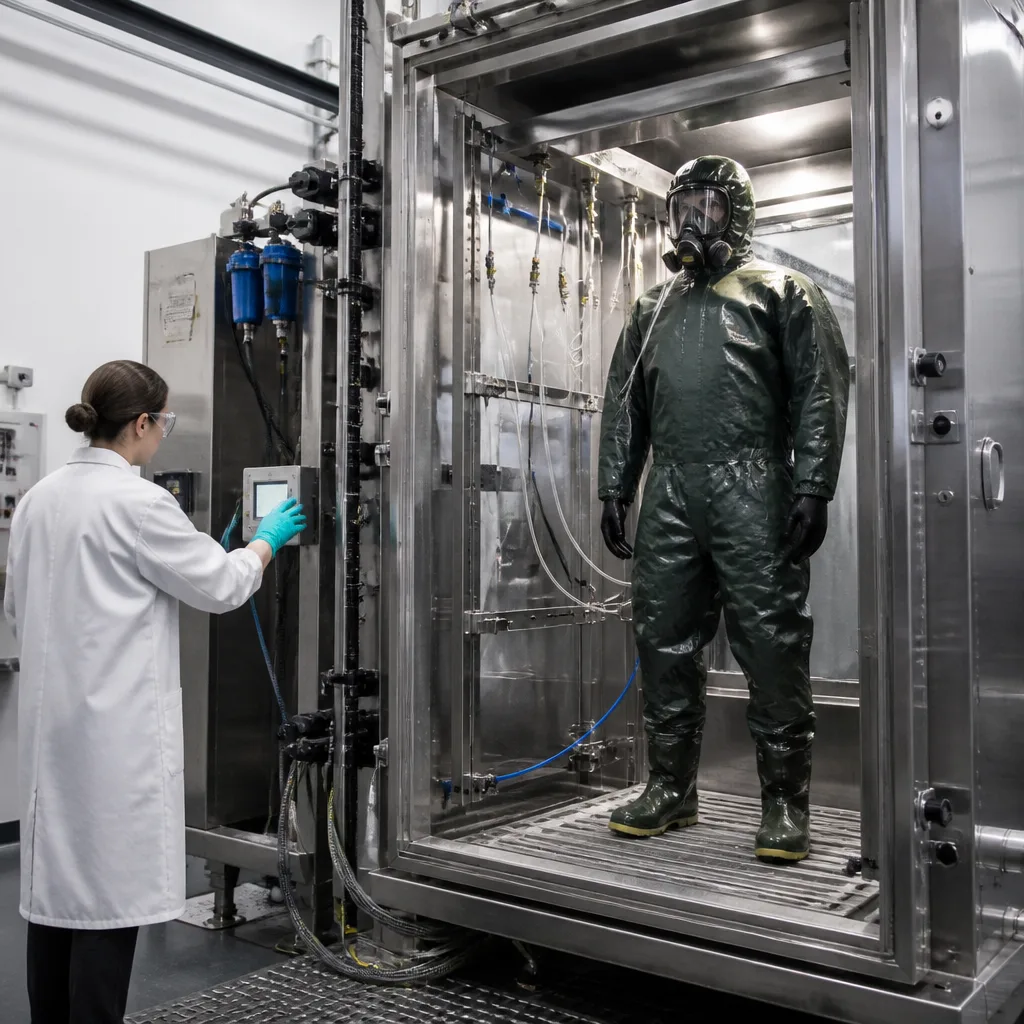
Unlike standards that evaluate individual garments, the BS 8467 standard evaluates the entire protective garment, including clothing, gloves, footwear, respiratory protection interfaces, and other components that work together to protect the wearer during emergency response operations. This standard is primarily designed for first responders such as firefighters, police officers, ambulance personnel, military support units, hazardous materials teams, and civil defense organizations.
The primary purpose of the BS 8467 standard is to establish uniform performance requirements for protective clothing used in the following situations:
This standard helps manufacturers, emergency services, testing laboratories, and suppliers assess whether protective clothing provides adequate protection under realistic operational conditions. It also promotes compatibility between clothing and respiratory protective equipment.
The BS 8467 standard applies to protective clothing designed for the following types of activities:
However, this standard does not address protection against the following:
The main focus of this standard is to prevent exposure to hazardous chemicals, biological contaminants, and radioactive particles.
The BS 8467 standard categorizes protective clothing into various categories based on the expected level of hazard:
Its features include:
Typical users include:
These categories allow organizations to select personal protective equipment appropriate to the specific hazards encountered at different stages of emergency response.
The BS 8467 standard evaluates both individual materials and complete protective equipment. Key performance areas include:
These tests ensure the garments remain protective during demanding field operations.
This systems-based approach ensures that protection is maintained while personnel perform their operational duties.
The BS 8467 standard refers to numerous laboratory and full system assessments, including those listed below:
These methods simulate realistic exposure conditions encountered during emergency response operations.
Manufacturers must provide clear information including the following:
Proper labeling helps users select the right equipment for specific hazards.
BS 8467 standard is often used in conjunction with the following standards:
Together, these standards create comprehensive protection systems for emergency response teams.
The BS 8467 standard is widely applied in the following sectors:
Organizations implementing the BS 8467 standard benefit from the following:
In conclusion, BS 8467 is one of the most important standards for chemical, biological, radiological, and nuclear (CBRN) personal protective equipment. By defining clear categories, comprehensive performance requirements, and realistic test methods, it enables emergency response organizations to procure sets of protective equipment that can protect personnel against chemical, biological, radiological, and nuclear threats. This standard's systems-based approach continues to provide a crucial framework for the design, testing, and selection of high-performance emergency response personal protective equipment.
For many years, our organization, with its competent and experienced staff, has been understanding the needs of its clients, providing the advanced testing services they require, and assisting them in the establishment, implementation, and improvement of management systems. Within this framework, we also provide testing services compliant with the BS 8467 standard.
To get an appointment, to get more detailed information or to request an evaluation, you can ask us to fill in our form and reach you.

