ASTM F2412 Standard Test Methods for Foot Protection
The ASTM F2412 Standard Test Methods for Foot Protection standard, developed by the American Society for Testing and Materials (ASTM), describes test methods for determining the resistance of footwear to various hazards that could potentially cause injury. These test methods can be used to test compliance with minimum performance requirements in established safety standards.
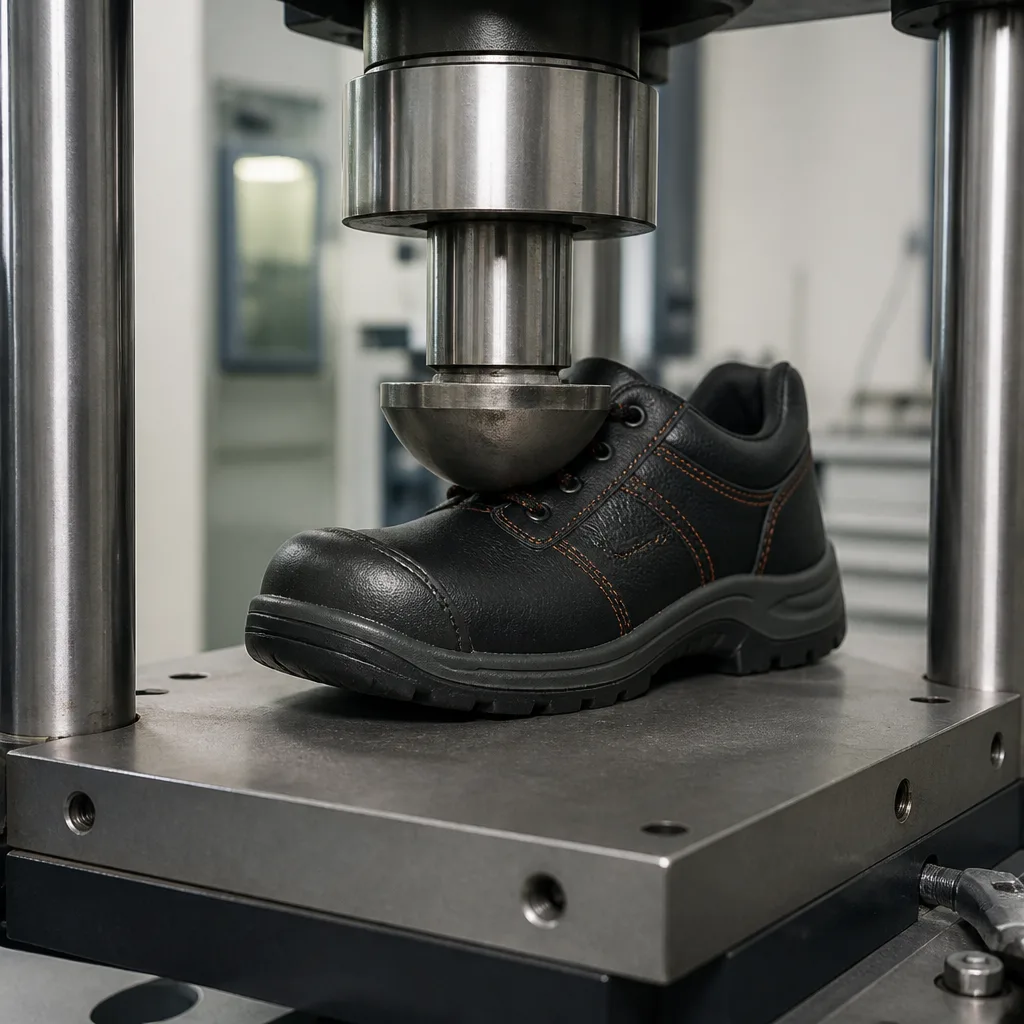
As agreed upon between the buyer and supplier, or as required by specified safety standards, these test methods may be used to determine any or all of the following:
- Impact resistance
- Compression resistance
- Metatarsal impact resistance
- Resistance to electrical conductivity
- Resistance to electrical hazards
- Static distribution performance
- Puncture resistance
These testing methods include requirements for evaluating the following performance of the shoes:
- Impact resistance of the toe area of the shoe.
- Compression resistance of the toe area of the shoe.
- Metatarsal protection reduces the likelihood of injury to the metatarsal bones in the top of the foot.
- Conductive properties that reduce the dangers that can arise from static electricity buildup and decrease the likelihood of ignition of explosives and volatile chemicals.
- Protection against electric hazards in case the user accidentally steps on live electrical wires.
- Static dissipation properties reduce the dangers of static charge buildup in situations where there is a risk of accidental contact with live electrical circuits.
- Puncture-resistant shoe devices
Any modifications to the original components of safety toe shoes, such as the replacement or addition of aftermarket insoles/additional insoles, may result in non-compliance with any or all parts of this standard and may invalidate the ASTM label. Samples or specimens of safety toe shoes must be retested for any of the following modifications:
- Changes in the materials used in the manufacture of the protective nose cap, changes in the manufacturer of the protective cap, and changes in the design of the nose cap.
- A change in the manufacturing method used in shoe production or in the factory where the shoe is produced.
- A change of more than 25 percent in the thickness of the upper or insole material.
- Changes to the outsole or midsole, including stiffness.
- A change in the shape of the mold used in shoe production.
- Changes in the material or supplier of the protective insole.
- Changes in the material or supplier of the foot protector.
In short, the ASTM F2412 standard is a key safety standard developed to evaluate and define the performance requirements for protective footwear. While the accompanying ASTM F2413 standard defines the minimum performance requirements for safety shoes and boots, the ASTM F2412 standard describes how these requirements are tested.
Work shoes are expected to protect users from hazards such as falling objects, punctures, electrical hazards, pinching, and metatarsal injuries. The ASTM F2412 standard provides laboratory testing methods to measure whether footwear components can actually withstand these hazards under controlled conditions.
Without a standardized testing method, manufacturers may make claims about safety footwear performance using inconsistent or unverified tests. The ASTM F2412 standard ensures that all products are tested using the same procedures, making results comparable and reliable.
The ASTM F2412 standard includes test methods for various protective properties:
- Impact resistance: Measures how well a shoe toe cap can withstand the impact of a falling weight without causing excessive deformation that could damage the toes.
- Compression resistance: Tests how much crushing force the toe area can withstand under static loads.
- Metatarsal protection: Evaluates the protection of the upper foot against impacts.
- Puncture resistance: Measures the resistance of sole materials to sharp objects such as nails or metal fragments.
- Electrical hazard: Tests insulation properties to reduce the risk of accidental contact with live circuits.
- Static dissipator: Measures the ability to reduce the buildup of static electricity in environments containing sensitive electronics or flammable materials.
- Conductivity: This allows the shoes to safely dissipate static electricity from the body.
- Chainsaw cutting resistance: Specific tests for forestry and tree-cutting shoes.
The ASTM F2412 standard defines detailed procedures, including the following:
- Sample preparation before testing
- Speed of force application
- Drop heights and impact masses
- Electrical voltage levels
- Pass/fail assessment criteria
- Deformation limits after testing.
For example, an impact test might involve dropping a defined weight onto the protective nose piece from a specific height and measuring the internal cavity.
The ASTM F2412 standard is widely used in industries requiring personal protective equipment, including:
- Construction
- Production
- oil and gas
- Mining
- Storage
- Infrastructure
- Logistics
- Heavy equipment operations
Employers typically require footwear that is certified according to ASTM F2413 and tested according to ASTM F2412.
A simple way to distinguish between these two standards is this:
- The ASTM F2412 standard specifies how footwear should be tested.
- The ASTM F2413 standard specifies the performance levels that footwear must meet.
Manufacturers typically test footwear according to ASTM F2412 standard methods, then label suitable products according to ASTM F2413 standard categories.
The ASTM F2412 standard is essential because it provides formal, repeatable testing methods used to verify that protective footwear performs as claimed. This standard is considered important for the following reasons:
- It provides real protection: This standard defines precise laboratory tests for hazards such as impact, compression, puncture, and electrical risk, so safety claims must be supported by measurable results.
- It establishes a common testing language: Different laboratories or manufacturers might test shoes in different ways. This standard ensures that everyone uses them in the following ways:
- Same test forces
- The same conditions
- Same pass/fail limits
- Reduces workplace injuries: Foot injuries from falling objects, sharp parts, or electrical exposure are common in industrial settings. This standard standardizes testing to ensure footwear provides reliable minimum protection, thus directly reducing the risk of injury.
- Personal protective equipment certification systems build trust: Safety shoes are a part of personal protective equipment. This standard increases confidence for workers and employers by ensuring they are based on scientifically defined mechanical and electrical tests.
In conclusion, the ASTM F2412 standard forms the technical backbone of modern safety footwear certification and ensures that protective footwear is consistently tested before being released to the market.
For many years, our organization, with its competent and experienced team, has been understanding the needs of its clients, providing the advanced testing services they require, and assisting them in the establishment, implementation, and improvement of management systems. Within this framework, we also provide testing services in accordance with the ASTM F2412 standard.



