EN 50508 Multi-Purpose Insulating Rods for Electrical Operations in High Voltage Installations
Multi-purpose insulating rods are used to remotely operate high-voltage (over 1 kV) live equipment, such as opening and closing switchgear and removing and replacing fuses. They are also used to perform pre-dead work operations such as voltage verification, grounding, and short-circuiting. In all these cases, the rod serves two primary functions: to reach the part of the installation that needs to be operated and to protect workers from the risk of electrical injury by ensuring a level of insulation and maintaining a safe distance between the worker and the live or potentially live installation. Additional protection can be added to achieve an adequate level of safety, depending on the operating and maintenance procedures adopted. The multi-purpose insulating rod is used in accordance with the EN 50110 standard.
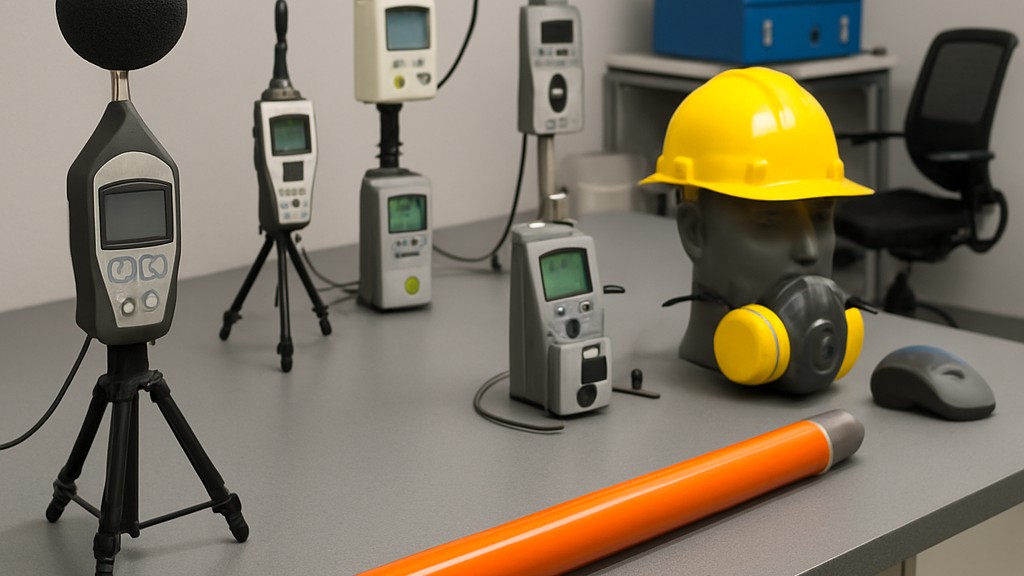
The European standard "EN 50508 Multi-purpose insulating rods for electrical work in high-voltage installations" describes the requirements and test methods that multi-purpose insulating rods designed to perform a range of operations in high-voltage installations using appropriate attached tools must meet. For example, connecting and disconnecting disconnectors or other equipment operated by the rod, or replacing fuses using an attached tool. Such operations include:
- Verification of the absence of voltage using a detector as a separate device in accordance with standard EN 61243-1
- Grounding and short-circuiting installations using devices conforming to EN 61230 standard
- Installing insulating screens to provide protection against adjacent live parts
- Testing and measurement
- No further operation or verification of the electrical installation, provided that the mechanical requirements do not exceed those secured by the rod design and the worker remains at a safe distance.
- Rescue of the victims.
This standard applies to insulating rods made of a single continuous pipe or rod or multiple sections of pipe or rod connected together for use in electrical systems, both indoors and outdoors, at alternating current voltages of 1 kV to 765 kV, frequencies of 50 Hz or 60 Hz, and normal temperatures of minus 25 degrees to plus 55 degrees and relative humidity of 20 percent to 93 percent.
The annex to this standard includes considerations for use under wet conditions (Annex B).
It is common practice to use insulating rods in direct current installations with the same nominal voltage. This use must comply with national regulations.
This standard does not apply to:
- Bars covered by the EN 60832 standard
- Telescopic rods within the scope of the EN 62193 standard
- Rods with movable inner or outer operating rods, such as those used directly for fuse replacement
- Single purpose rods, often specifically designed to cover a single operation as a complete piece of equipment such as voltage detectors covered by the EN 61243-1 standard.
Unless otherwise stated, all voltages defined in this standard refer to phase-to-phase voltage values for three-phase systems. For other systems, the applicable phase-to-phase or phase-to-earth (ground) voltages should be used to determine the operating voltage.
The requirements for materials in this standard are determined as follows:
- Pipes and rods made of insulating material used in the design of insulating rods must meet the requirements of EN 60855 or EN 61235 standards.
- The cross-section of these tubes or rods may be circular or non-circular depending on physical or ergonomic reasons applicable to the rods.
- The cap may be made of a non-conductive or conductive, or even metallic, material.
- The insulation element may consist of one or more parts.
- Conductive elements, whether externally insulated or not, between the boundary mark and the hand guard are accepted if the minimum length of the insulating element shown in the table is maintained.
- The landmark must be permanent and clearly recognizable to the user.
- The hand guard must be an insulating disc with a diameter larger than the pipe or a marking with the same characteristics as the boundary marking but a different color than the boundary marking. The tape must include the wording "hand limit" in the national language.
- Rods to be used in wet conditions may contain additional non-conductive elements in the form of disks.
In this standard, the dimensional requirements are determined as follows:
- To meet the requirements of this standard and ensure easy use by a single worker, the following distances and combinations for the bar are recommended:
- Single section bar, total length 1,5m, 2m, 2,5m and 3m.
- Bar with multiple sections, nominal length of each section 1 m, 1,5 m, 2 m, 2,5 m and 3 m.
- In sections with end fittings, the nominal length is calculated as the total length of the member from one end to the other, minus the part intended to be placed in the other section.
- Other sizes and combinations are permitted by prior agreement between the manufacturer and the customer, provided they pass applicable tests.
- The length of the insulation element must meet the values specified in the table.
- In sections with end fittings, the insulation length should be measured taking into account only the useful insulating part of the section relative to the total length of the insulating element.
- The insulating element is considered to be the length constructed with the pipe according to the electrical requirements of EN 60855 or EN 61235 standards.
- The pipe diameter should be between 19 mm and 51 mm. Recommended diameters are 32 mm or 39 mm, depending on the length of the rod.
- The minimum length of the handle must be in accordance with the table so that the worker can use it properly.
- In order for the worker to have a good grip, the outer circumference of the handle should not exceed 175 mm.
- The minimum width of the border mark is 20 mm.
- An assembled club should not have more than one boundary mark. If the club has more than two sections, the boundary mark should be on the head. If the boundary is not marked on the club, the head should be considered the boundary mark.
- If the hand guard is a guard, it must have a minimum height of 20 mm. If the hand guard is a band, it must be 20 mm wide.
- It is defined by the dimensions and structural features of the work tool pins that connect the work tool to the head.
In this standard, the mechanical requirements are specified as follows:
- All elements of the rod, different sections, the handle and the head, must be firmly fastened together.
- The header must be securely fastened to the top of the bar.
- The sections must be joined together by means of a solid connection that will not allow the bar sections to become loose accidentally.
- With interchangeable instrument heads, inserting and removing instruments should not require excessive effort.
- The hand guard housing, if fitted, must be securely fastened.
- The rod assembled in accordance with the operating instructions must also meet the following mechanical requirements.
- The rod should be designed to provide good control of the tool. The rod should be designed to allow controlled movement of the head within the setup. When used with accessories, the resulting deflection should be as small as possible.
- At low temperatures, fasteners must be resistant to mechanical impacts.
- The entire bar must be resistant to falls.
- The rod must be able to withstand the torsional force required for its use.
This standard also describes the electrical requirements and marking requirements.
Our organization, which has been supporting businesses across all sectors for years through a wide range of testing, measurement, analysis, and evaluation activities, has a strong team of employees who closely follow global developments in science and technology and are constantly improving themselves. In this context, we also provide testing services to businesses in accordance with the EN 50508 standard for "Multi-purpose insulating rods for electrical operations in high-voltage facilities."



