

The standard “ISO 5349 Mechanical vibration - Measurement and evaluation of human exposure to manually transmitted vibration”, which is based on a European standard and later published by the International Organization for Standardization (ISO), consists of the following subsections published under the same title:
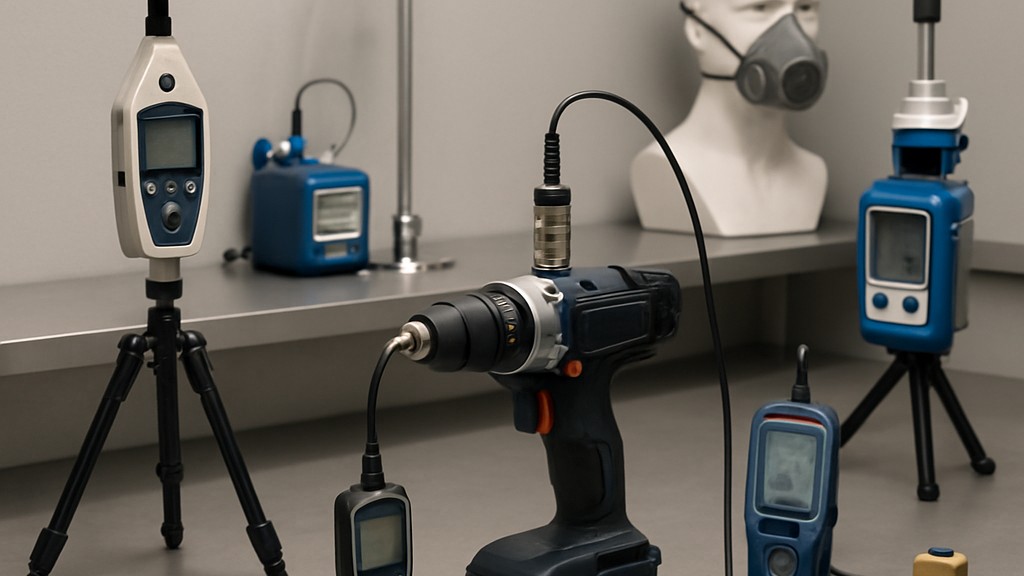
This standard is applicable to periodic and random or aperiodic vibration. Temporally, this standard is also applicable to repeated shock-type stimulation (impact). The time dependence of human response to repeated shocks is not fully known. Application of this standard to such vibrations should be undertaken with caution.
This standard provides guidance for the assessment of manually transmitted vibration exposure, expressed in terms of frequency-weighted vibration acceleration and daily exposure duration. It does not define safe vibration exposure limits. Annex C deals with the approximate relative importance of various characteristics of vibration exposure believed to produce health effects.
The method specified in this standard takes into account the following factors known to influence the effects of exposure to hand-transmitted vibration under working conditions:
Other factors that may influence the effects of vibration exposure but for which there are not yet standardized methods for reporting are listed in Annex D.
Measurement of manually transmitted vibration should be performed using instrumentation that complies with the requirements of ISO 8041. This equipment should be checked for correct operation before and after use. Calibration should be traceable to a recognized standard maintained by an accredited laboratory.
A vibration transducer may be an accelerometer designed for general vibration measurements (for non-percussive instruments) or it may be specifically designed for large peak accelerations, such as those produced by percussive instruments. Vibration transducers must be able to withstand a range of vibration magnitudes and have stable characteristics. The transducer dimensions must not interfere with machine operation and must be such that the measurement point can be located.
An operator's work at a workplace consists of a series of operations, some of which may be repetitive. Vibration exposure can vary significantly from one operation to another due to the use of different power tools or machines or the different operating modes of a power tool or machine. To assess daily vibration exposure, it is first necessary to identify the operations that are likely to contribute significantly to overall vibration exposure. Then, procedures for measuring vibration exposure for each of these operations must be determined. The methods used will depend on the characteristics of the work environment, the work routine, and the vibration source.
The EN ISO 5349 standard is essential primarily because it provides internationally accepted guidelines for assessing the risk of hand-arm vibration exposure. This is important for protecting worker health and ensuring workplace safety. The key reasons for this standard's importance are:
The ISO 5349 standard helps prevent these by providing measurement techniques and exposure assessment methods.
Ultimately, the ISO 5349 standard is essential to manage occupational risks associated with hand-arm vibration, promote worker safety, ensure legal compliance, and enable standardization of exposure assessment worldwide.
Our organization, which has been supporting businesses across all sectors for years through a wide range of testing, measurement, analysis, and evaluation activities, has a strong team of employees who closely follow global developments in science and technology and are constantly improving themselves. In this context, we also provide testing services to businesses in accordance with the ISO 5349 Mechanical vibration - Measurement and evaluation of human exposure to manually transmitted vibration standard.
To get an appointment, to get more detailed information or to request an evaluation, you can ask us to fill in our form and reach you.

