

The ISO 20345 standard, published by the International Organization for Standardization (ISO) , describes the basic and optional requirements for general-purpose safety footwear. For example, mechanical risks, slip resistance, thermal risks, and ergonomic design are covered by this standard. This standard also describes the requirements for safety footwear equipped with custom insoles, bespoke safety shoes, or custom-made safety shoes. This standard does not cover high visibility due to interaction with clothing and work environment conditions.
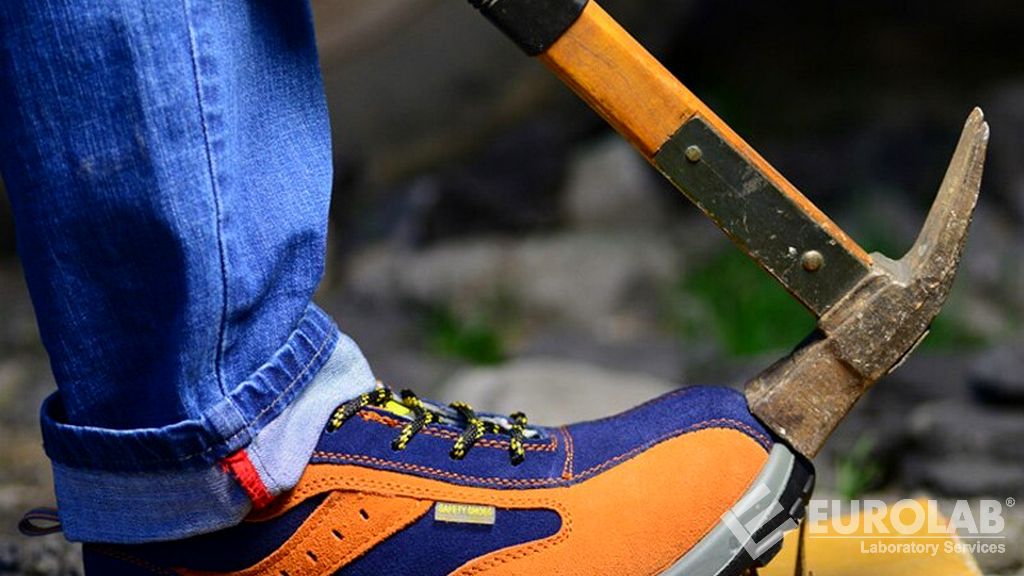
Specific risks are covered by complementary business-related standards. For example, shoes for firefighters, electrically insulated shoes, shoes that protect against chain saw injuries or chemicals, molten metal splashes, and protection for motorcycle riders.
For the purposes of this standard,
Before choosing safety shoes for workers, a risk assessment of the workplace should be carried out. The results of this assessment show which hazards workers need to be protected from and allow to choose the most suitable safety shoes.
The following hazards should be considered during a risk assessment :
Our organization also provides testing services for safety shoes as personal protective equipment, within the scope of ISO 20345 standard, with its trained and expert staff and advanced technological equipment, among the numerous test, measurement, analysis and evaluation studies it provides for businesses in various sectors.
To get an appointment, to get more detailed information or to request an evaluation, you can ask us to fill in our form and reach you.

