OSHA 1910 Occupational Health and Safety Standards
The Occupational Safety and Health Administration (OSHA) plays a crucial role in ensuring workplace safety throughout the United States. Among its numerous regulations, the OSHA 1910 standards stand out as a core set of rules specifically designed for general industry. These standards aim to prevent workplace injuries, illnesses, and deaths by establishing detailed requirements for employers and employees.
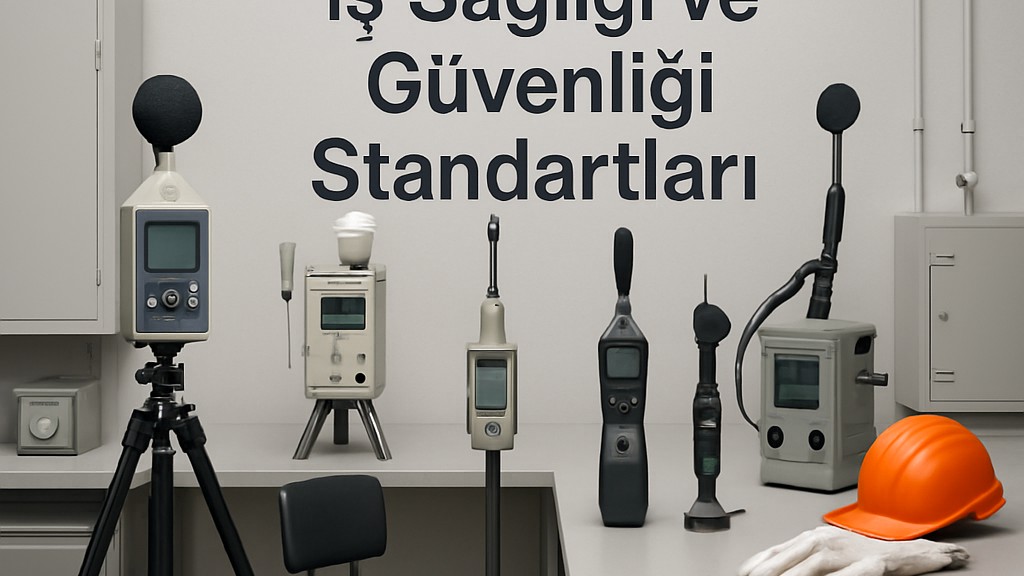
These standards fall under 29 CFR Part 1910 of the Code of Federal Regulations. These standards are part of OSHA's general industry regulations, which cover most workplaces not related to construction, agriculture, or marine. These standards cover a wide range of safety and health issues applicable to a variety of workplaces, including factories, warehouses, hospitals, and retail stores.
The “OSHA 1910 Occupational Safety and Health Standards” developed by the Occupational Safety and Health Administration (OSHA) consists of several subsections:
- Subsection A - General
- Subpart B - Adoption and expansion of established federal standards
- Subsection D - Walking and working surfaces
- Subsection E - Exit routes and emergency planning
- Subsection F - Self-propelled platforms, manlifts and vehicle-mounted work platforms
- Subsection G - Occupational health and environmental control
- Subpart H - Hazardous materials
- Subpart I - Personal protective equipment
- Subpart J - General environmental controls
- Subsection K - Medical and first aid
- Subsection L - Fire protection
- Subpart M - Compressed gas and compressed air equipment
- Subsection N - Material handling and storage
- Subsection O - Machinery and machinery protection
- Subpart P - Hand and portable power tools and other handheld equipment
- Subsection Q - Welding, cutting and soldering
- Subpart R - Special industries
- Subsection S – Electricity
- Subpart T - Commercial diving operations
- Subsection U - COVID-19
- Subsection Z - Toxic and hazardous substances
Compliance with OSHA 1910 standards helps:
- Preventing workplace accidents and injuries
- Increasing employee morale and productivity
- Reducing insurance and legal costs
- Avoiding OSHA fines and warnings
Fines for non-compliance can be very high and, in serious cases, may include criminal charges.
Employer responsibilities under OSHA 1910 standards are as follows:
- Identify and assess workplace hazards
- Providing appropriate personal protective equipment
- Training employees on safety procedures
- Keeping accurate records of injuries and illnesses
- Demonstrate the OSHA approach to occupational safety and health
Ultimately, OSHA 1910 standards serve as a comprehensive guide for maintaining a safe and healthy workplace in general industry. Employers and safety professionals must stay current on these standards to ensure regulatory compliance and protect their employees. Proper implementation not only helps avoid legal consequences but also fosters a culture of safety and responsibility.
The standards defined under the heading “Subsection G - Occupational health and environmental control” are:
- OSHA 1910.94 Ventilation - Protecting Workers from Airborne Hazards requires workers to be protected from hazardous airborne contaminants such as dust, fumes, mist, vapors, and gases that can originate from various industrial processes. Proper ventilation is a cornerstone of industrial hygiene and plays a crucial role in maintaining indoor air quality and protecting worker health.
This standard outlines minimum ventilation requirements to control exposure to harmful airborne substances in the workplace. This includes the design, operation, and maintenance of ventilation systems used during operations such as abrasive blasting, grinding, and spray finishing.
This standard is divided into three main parts:
- Abrasive blasting: This section governs ventilation for processes such as sandblasting or shot blasting, where fine particles are released into the air. Enclosed spaces or blast booths must be ventilated. Exhaust ventilation systems must be capable of capturing dust at the source. Personal protective equipment, such as respirators and protective clothing, must be provided when necessary. Air from ventilation must be adequately filtered before being returned to or exhausted outdoors.
- Grinding, polishing, and finishing: This section covers operations that generate fine dust or particles, particularly from metal or other materials. Dust collection systems must capture particles as they are generated. Hoods and ducts must be designed to prevent dust escape. Collected dust must be disposed of safely to prevent fire or health hazards.
- Spray coating: This section covers processes that involve atomizing paint, varnish, or other coatings. Spray booths or spray rooms must be ventilated to prevent the accumulation of flammable vapors or toxic materials. Ventilation must comply with National Fire Protection Association (NFPA) standards. Filters and deflectors must be used to capture overspray. Spray booths must contain explosion-proof electrical components.
Proper ventilation under OSHA standard 1910.94:
- It reduces exposure to harmful particles and gases in the air.
- It prevents respiratory diseases such as silicosis, asthma and chemical pneumonitis.
- It controls fire and explosion risks.
- Ensures regulatory compliance with both OSHA and NFPA.
The OSHA 1910.95 Occupational Noise Exposure Standard is vital for industries like manufacturing, construction, warehousing, and transportation, where loud equipment and machinery are common. Excessive noise in the workplace is not only disruptive but can also cause permanent hearing loss, impair concentration, and increase the risk of accidents. To address this issue, the 1910.95 Standard was developed, which includes requirements for controlling occupational noise exposure in general industry.This standard sets limits on permissible noise exposure levels and requires employers to implement controls and a hearing conservation program when employees are exposed to noise at or above certain thresholds. The goal is to prevent hearing damage from sustained or sudden high noise levels.
This standard specifies the permissible noise exposure limit (time-weighted average noise limit) as follows: 90 decibels for an 8-hour workday. For every 5-decibel increase, the permissible exposure time is halved. For example, 4 hours for 95 decibels, 2 hours for 100 decibels, and 1 hour for 105 decibels.
If employees are exposed to noise of 85 decibels or more, employers must implement a hearing conservation program that includes:
- Noise monitoring: Workplace noise is identified and measured.
- Audiometric testing: Basic and annual hearing tests are performed.
- Hearing protection: Complimentary hearing protection (e.g., earplugs or ear muffs) is provided. These must be worn and used appropriately.
- Training: Employees receive annual training on noise hazards and protective measures.
- Record keeping: Records are kept of noise exposure measurements and hearing test results.
If exposure exceeds the 90 decibel time-weighted average, employers should attempt to reduce noise by:
- Engineering controls (e.g. soundproofing, equipment modification)
- Administrative controls (e.g., rotation of workers to limit exposure time)
Hearing loss is one of the most common work-related illnesses and is entirely preventable. Compliance with this standard
- Protects employee health
- Reduces liability and workers' compensation claims
- Improves communication and security
- Avoids high OSHA fines
OSHA standard 1910.96 Ionizing radiation describes safety precautions for workers working with or around ionizing radiation, including radioactive materials, X-rays, gamma rays, and radiation from nuclear sources. This standard protects workers from the potentially harmful effects of radiation exposure in general industrial environments.Ionizing radiation has enough energy to remove tightly bound electrons from atoms, creating ions. Common sources include:
- X-ray devices
- Nuclear measuring devices
- Radiographic testing equipment
- Sealed radioactive sources (used in industrial radiography, medical diagnosis and similar fields)
Exposure to high levels of ionizing radiation can cause serious health problems, including radiation sickness, increased risk of cancer, and genetic damage.
This standard specifies requirements for protecting workers from ionizing radiation in workplaces not covered by the U.S. Nuclear Regulatory Commission. Key provisions include:
- Radiation dose limits: Employers must ensure that workers are not exposed to ionizing radiation above the limits specified in Section 20. These limits include:
- 5 rem (0,05 Sv) per year for whole body exposure
- Lower limits for specific organs (eyes, extremities) and the public
- Exposure monitoring: Employers must monitor radiation levels in areas where workers may receive more than 25 percent of the annual dose limit. The use of dosimeters may be required.
- Control measures: Employers must implement appropriate controls such as:
- Protection (e.g. lead barriers)
- Distance (keeping workers away from the source)
- Time (limiting exposure time)
- Enclosures for radioactive materials or remotely operated vehicles
- Marking and labeling: Radiation areas should be clearly marked with appropriate warning signs. Containers containing radioactive materials should be appropriately labeled.
- Recordkeeping: Employers must maintain records of employee radiation exposure and training. Employees should be informed of their exposure levels annually or upon request.
The OSHA 1910.96 standard is important for the following reasons:
- Protects workers from radiation-related illnesses.
- Ensures employers use scientifically determined exposure limits.
- Supports compliance with legal regulations.
- It helps establish safe protocols in high-risk industrial and medical environments.
While the OSHA 1910.97 Non-ionizing Radiation standard places significant emphasis on ionizing radiation (such as X-rays or radioactive substances), non-ionizing radiation is much more prevalent in everyday workplaces, such as microwaves, radiofrequency energy, lasers, and ultraviolet light. This standard addresses radiofrequency and microwave radiation in general industry, aiming to limit exposure and prevent related health hazards.Non-ionizing radiation does not have enough energy to ionize atoms or molecules. Types include:
- Radiofrequency radiation (30 kHz - 300 GHz)
- Microwave radiation (300 MHz - 300 GHz)
- Infrared, visible and ultraviolet light
- Lasers
- Magnetic fields
This standard focuses specifically on exposure to radiofrequency and microwave radiation.
Non-ionizing radiation refers to occupational exposure to electromagnetic radiation in the frequency range of 10 MHz to 100 GHz. This includes many industrial and commercial radiofrequency sources, such as:
- Radar equipment
- Communication transmitters
- Microwave heating and drying systems
- Some welding equipment
This standard specifies maximum permissible exposure levels based on field strength, power density and frequency. Limits are specified for:
- Electric field intensity
- Magnetic field intensity
- Power density
The baseline threshold is 10 mW/cm2 averaged over a 0,1 hour (6 minute) period for frequencies between 10 MHz and 100 GHz.
Exposure levels should be averaged over 6 minutes and measured at a distance of 5 cm from the exposed body surface. Short-term peak exposures exceeding the average limit are acceptable if the average remains below the threshold value.
Employers must ensure compliance with exposure limits by using:
- Engineering controls (e.g. shielding, barriers, distance)
- Administrative controls (e.g., limiting exposure time, scheduling work when transmitters are off)
- Personal protective equipment where applicable
Overexposure may cause:
- Thermal injuries (tissue heating, burns)
- Cataracts due to high levels of eye exposure
- Interaction with implanted medical devices (e.g., pacemakers)
Although non-ionizing radiation does not cause ionization or cancer, prolonged or intense exposure can still pose serious safety risks.
The affected sectors are:
- Telecommunication
- Broadcasting (TV and radio stations)
- Radar operations (military, aviation)
- Industrial heating and drying
- Semiconductor manufacturing
Our organization, which has been supporting businesses across all sectors for years through a wide range of testing, measurement, analysis, and evaluation activities, has a strong team of employees who closely follow global developments in science and technology and are constantly improving themselves. In this context, we also provide testing services in accordance with OSHA 1910 Occupational Health and Safety Standards.



