

The standard “EN IEC 61482-1-1 Live work - Protective clothing against thermal hazards of electric arc - Part 1-1: Test methods - Method 1: Determination of arc rating (ELIM, ATPV and/or EBT) of clothing materials and protective clothing using open arc,” which is based on a European standard and subsequently published by the International Electrotechnical Commission (IEC), describes a test method for determining the arc rating of flame-retardant clothing materials and clothing or clothing groups designed for use in workwear in the event of an electric arc hazard.
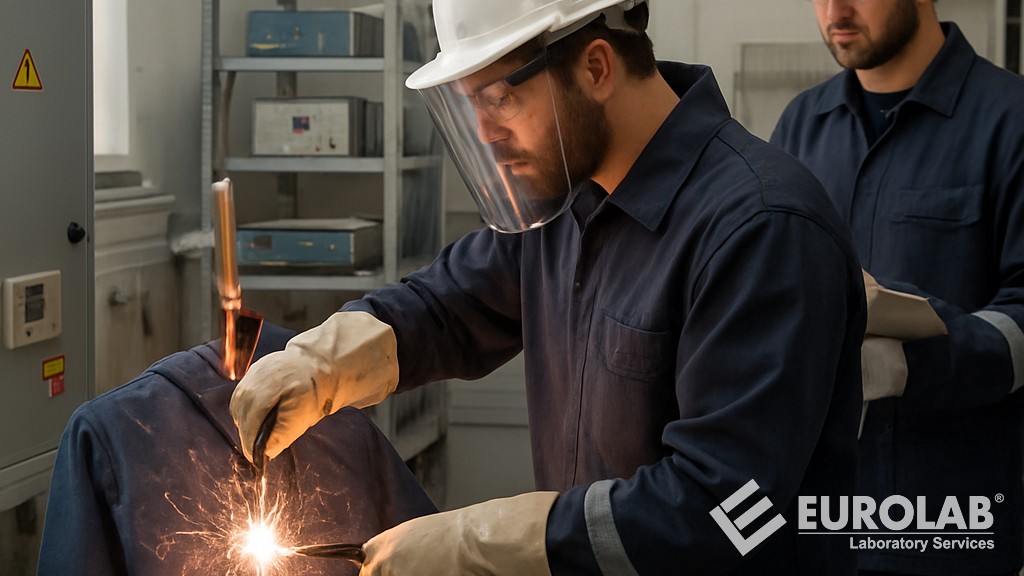
This method, using an open arc under controlled laboratory conditions, is used to determine the ELIM, ATPV, or EBT values of materials, garments, or garment groups.
The user can, if desired, classify the arc protection performance into arc protection levels according to the ELIM, ATPV, and/or EBT values that best suit the different hazard and risk levels that may arise from the user's risk analysis.
This standard is not intended to classify the arc protection performance of materials and clothing into arc protection classes. The procedures for determining these arc protection classes (APC1 and APC2) are contained in the EN IEC 61482 1-2 standard, which uses a restricted arc for testing.
This test method is not designed for and is not suitable for evaluating whether materials or clothing are flame-resistant, as addressed in the EN IEC 61482-2 standard.
Effects other than the thermal effects of an electric arc, such as noise, light emissions, pressure increase, hot oil, electric shock, physical and mental shock, or toxic effects, are not covered by this standard. Additionally, protective clothing used in work that intentionally utilizes electric arcs (e.g., arc welding, plasma torch) is not covered by this standard.
In the high-risk world of electrical work, where voltages rise rapidly and the risk of disaster lurks at every connection, protective clothing serves as a vital shield. Among the international standards designed to mitigate these hazards, the EN IEC 61482-1-1 standard stands out as a cornerstone for testing materials against the intense thermal attack of an electric arc. This standard ensures that flame-retardant fabrics and clothing can withstand the intense heat and energy released during an arc flash—a sudden and explosive discharge that can vaporize metal and ignite clothing within milliseconds. As electrical systems become increasingly complex in sectors such as utilities, manufacturing, and construction, understanding this standard is vital for prioritizing worker safety.
An electric arc explosion occurs when an electric current passes through the air between conductors, generating temperatures exceeding 20.000 degrees Celsius—hotter than the surface of the sun. This phenomenon releases not only thermal energy but also blinding light, deafening noise, and molten debris, often leading to severe burns, blindness, or worse. According to global safety reports, arc explosions cause hundreds of workplace injuries each year, highlighting the need for robust protective measures.
The EN IEC 61482-1-1 standard addresses how clothing materials and full garments absorb and dissipate this energy, specifically tackling thermal hazards. This standard complements broader standards such as EN IEC 61482-2, which contains general requirements for protective clothing, and EN IEC 61482-1-2, which uses box testing for confined arc scenarios. While these standards do not cover electric shock, noise, or toxic fumes, they form the basis of worldwide arc-rated personal protective equipment certification.
The scope of this standard is precise: it details laboratory procedures for measuring a material's arc rating (a measure of its ability to protect against second-degree burns). It applies to flame-retardant textiles, clothing, and multi-layer systems designed for workers exposed to arc risks. Specifically, it does not cover assessments for flame resistance (EN IEC 61482-2 standard) or non-thermal effects such as pressure waves or hot oil. Users are encouraged to align arc ratings with site-specific hazard analyses rather than rigid classifications, allowing for individual levels of protection.
The following key changes were made in the latest update of this standard:
These revisions reflect a shift towards more realistic and conservative testing that ensures personal protective equipment performs reliably under challenging conditions.
At the heart of the EN IEC 61482-1-1 standard is the open arc test, a simulated arc flash performed in a controlled environment. This method mimics a free-floating arc by replicating unpredictable real-world events.
While testing is being done,
During testing, energy levels are gradually increased until the material reaches its performance threshold. Electrodes behind the panels record the transmitted heat, while video and thermal imaging document ignition, melting, or fracture. The process relies on the Stoll curve, which compares heat flux to exposure time and defines the onset of second-degree burns.
The EN IEC 61482-1-1 standard is a lifeline for electrical workers, transforming abstract risks into measurable safety measures.
For many years, our organization, with its competent and experienced staff, has been understanding the needs of its clients, providing the advanced testing services they require, and assisting them in the establishment, implementation, and improvement of management systems. Within this framework, we also provide testing services compliant with the EN IEC 61482-1-1 standard.
To get an appointment, to get more detailed information or to request an evaluation, you can ask us to fill in our form and reach you.

