

The ASTM F1001 standard, “Selection of Chemicals for the Evaluation of Protective Clothing Materials,” published by the American Society for Testing and Materials (ASTM), provides a recommended list of both liquid and gaseous chemicals for use in testing programs to evaluate protective clothing materials. Results from testing programs using these lists of test chemicals are not intended for the definitive characterization of protective clothing materials.
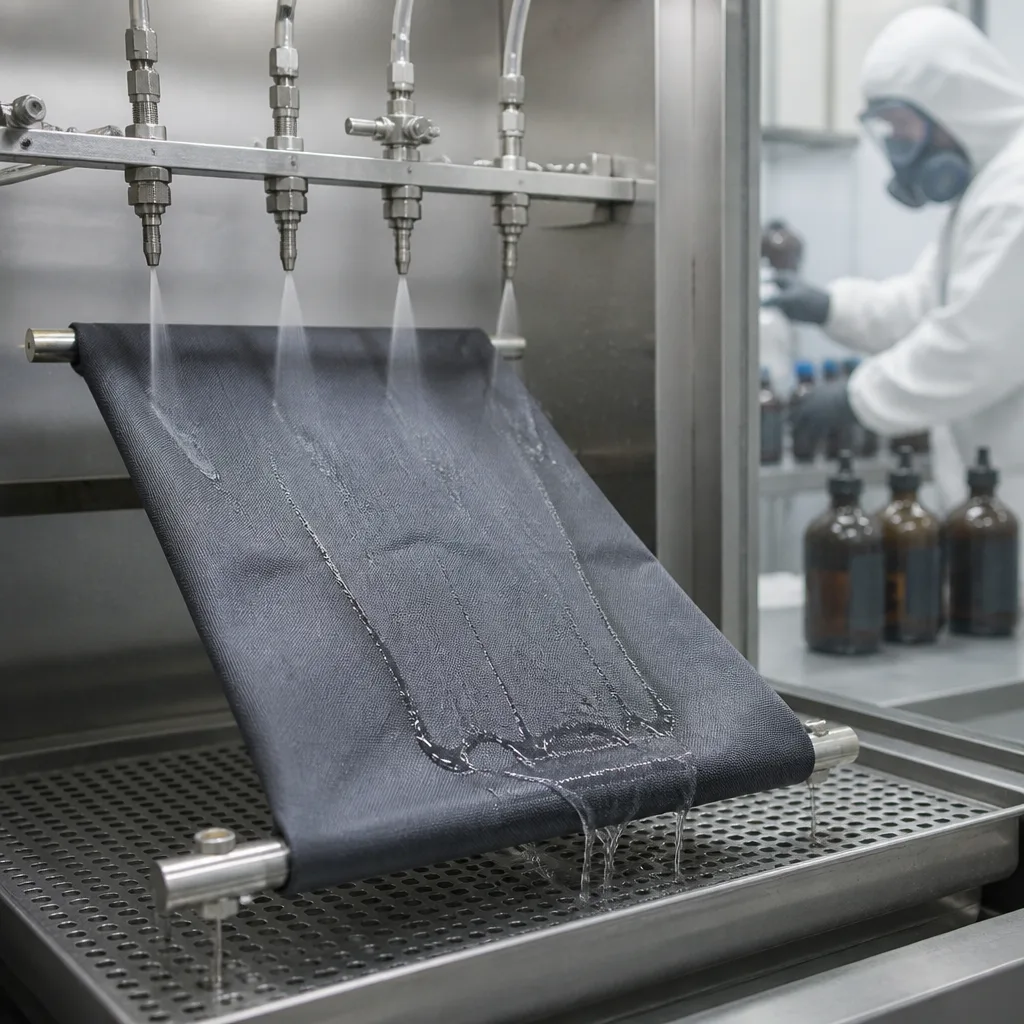
This list of test chemicals does not cover all chemical challenges. The chemicals have been selected to represent a wide range of liquid and gaseous chemical classes and properties. Not all chemical classes are represented. Other chemicals of particular interest to the manufacturer or user should be tested in addition to those recommended in this standard.
The ASTM F1001 standard is a widely referenced guideline, not a mandatory test method. This guideline provides a standardized, recommended list of challenging chemicals (both liquid and gas) to help manufacturers, testers, and users consistently evaluate chemical protective clothing (such as suits, gloves, boots, and fabrics). By testing against the same set of chemicals, it becomes much easier to compare performance data across different materials, products, and laboratories.
This standard encourages testing a common minimum set of chemicals to ensure comparable results. It helps material developers and evaluators quickly assess candidate protective clothing. The list represents a broad range of chemical classes, properties, and hazards, but is not exhaustive. Users are advised to test additional chemicals relevant to their specific risks. Results are generally obtained using the following standards:
Gaseous chemicals are not subject to the ASTM F903 standard in liquid penetration tests. Vapor protection systems require additional leakage assessment (e.g., ASTM F1052 standard).
The ASTM F1001 standard typically includes approximately 21 chemicals (15 liquids and 6 gases) selected to cover a variety of chemical families (e.g., ketones, nitriles, hydrocarbons, acids, bases, and halogenated compounds). Common examples taken from manufacturer data sheets and references include:
Definitive lists and updates are included in this standard. Manufacturers typically publish permeability breakdown times (in minutes) for these chemicals in their product literature.
The main applications of this standard are as follows:
The ASTM F1001 standard plays a fundamental role in occupational safety by promoting consistent, scientifically based assessments of chemical protective clothing and helps workers in environments with hazardous substance exposure remain safer.
In short, the ASTM F1001 standard is a standard guideline that helps select appropriate chemicals for testing the performance of protective clothing materials. This guideline is used as a decision-making framework rather than a direct test method.
Protective clothing is used in workplaces where personnel may be exposed to hazardous liquids, gases, vapors, or particles. Since no protective material exhibits equal resistance to every chemical, selecting the correct chemicals for testing is crucial. The ASTM F1001 standard provides a systematic method for selecting representative chemicals to assess material resistance.
This standard helps laboratories, manufacturers, and safety professionals identify chemicals that can adequately test protective clothing materials under realistic conditions. This standard supports the evaluation of materials used in the production of:
This standard establishes a structured selection process based on the chemical hazards that may be encountered in actual use, rather than randomly selecting chemicals. Generally, this standard includes guidelines for chemical selection based on the following considerations:
The ASTM F1001 standard is considered necessary for the following reasons:
The ASTM F1001 standard is commonly used in the following sectors:
For many years, our organization, with its competent and experienced team, has been understanding the needs of its clients, providing the advanced testing services they require, and assisting them in the establishment, implementation, and improvement of management systems. Within this framework, we also provide testing services in accordance with the ASTM F1001 standard.
To get an appointment, to get more detailed information or to request an evaluation, you can ask us to fill in our form and reach you.

