ISO 14877 Protective Clothing for Abrasive Blasting Operations Using Granular Abrasives
The International Organization for Standardization (ISO) standard "ISO 14877 Protective clothing for abrasive blasting operations using granular abrasives" specifies the minimum requirements and test methods for protective clothing for abrasive blasting operations and hand protection. This standard is designed for surface treatment using granular abrasives propelled by compressed air or mechanical means. This standard also covers protection against blasting agents and the connection between protective clothing and respiratory protective equipment. This standard does not apply to steam blasting, jet blasting, or flame blasting operations.
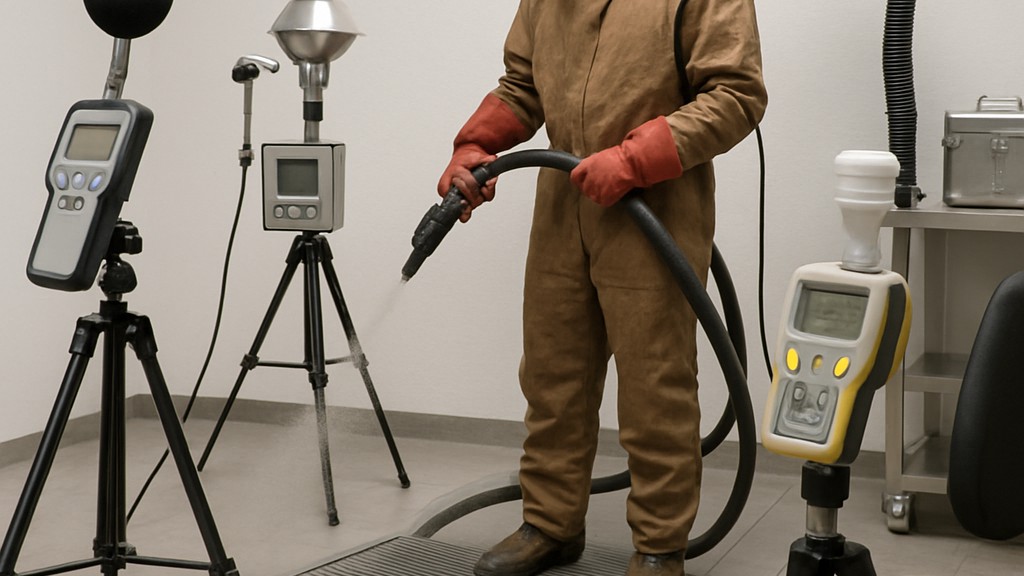
For the purposes of this standard, the terms and definitions given in EN 340 and EN 420, as well as the following definitions, apply:
- Abrasive blasting refers to the process of treating surfaces by directing abrasives toward the surface. During blasting, the abrasive blast operator and the blasted material are either in a closed room or outdoors. The blast operator is directly exposed to abrasive splash from the blasted material, the carrier medium, and the dust generated.
- Abrasives are granular materials that are directed at the surface of the material being blasted at high speed for surface treatment.
- Abrasive blasting combination is a combination of protective clothing and appropriate respiratory protective equipment that provides protection against the risks associated with abrasive blasting operations.
During testing, materials that may come into direct contact with the wearer's skin are likely to cause skin irritation or adverse health effects. The surface of any piece of equipment likely to come into contact with the wearer must be free of sharp edges and burrs.
The requirements for protective gloves for abrasive blasting operations are determined as follows:
- Protective gloves for abrasive blasting operations must comply with the requirements specified in standard EN 420. The protective performance of the gloves must be ensured equally for all parts of the hand.
- When the abrasion resistance of glove materials is tested according to this standard, the abrasion resistance of the glove material must meet at least performance level 3 according to standard EN 388. This corresponds to an abrasion resistance of 2000 cycles.
- When glove materials are tested for blade cut resistance according to this standard, the glove material must meet at least performance level 1 for blade cut resistance according to EN 388. This corresponds to a blade cut resistance index of 1,2.
- When the tear resistance of glove materials is tested according to the standard, the tear resistance of the glove material must meet at least performance level 3 according to standard EN 388. This corresponds to a tear resistance of 50 N.
- When glove materials are tested for puncture resistance in accordance with this standard, the puncture resistance of the glove material must meet at least performance level 3 in accordance with EN 388. This corresponds to a puncture resistance of 100 N.
- When the dimensions of gloves for abrasive blasting operations are measured in accordance with the EN 420 standard, the glove dimensions must at least comply with the requirements of the EN 420 standard with the values for minimum length given in the table entitled “Minimum length of gloves for abrasive blasting operations”.
- When dexterity for abrasive blasting operations is tested according to this standard, dexterity must meet at least performance level 1 according to standard EN 420. This corresponds to a pin diameter of 11 mm.
Three types of protective clothing are defined for abrasive blasting operations:
- Type 1: Protective clothing that protects the body or parts of the body against abrasives and materials produced by abrasive blasting. This type of protective clothing is independent of respiratory protective equipment.
- Type 2: Protective clothing that protects the body or parts of the body against abrasives and materials produced by abrasive blasting. This type of protective clothing is combined with a suitable respiratory protective device.
- Type 3: Dust-proof protective clothing that protects the wearer's entire body against abrasives and materials produced by abrasive blasting. This type of protective clothing is used in conjunction with a suitable respiratory protective device.
In short, the ISO 14877 standard aims to protect employees from:
- High speed particles of abrasive and debris
- Mechanical injuries from ricocheting materials
- Exposure to dust
- General workplace hazards in blasting environments
This standard covers:
- Protective clothing such as jackets, trousers, overalls and full suits
- Material performance, including resistance to abrasion, penetration and tearing
- Design features, such as overlapping closures, reinforced areas (e.g. sleeves, chest and leg fronts) and adjustable cuffs and hems
- Compatibility with other personal protective equipment (e.g. helmets, gloves, boots and respiratory equipment)
This standard includes test methods to evaluate:
- Wear resistance
- Tensile and tear strength
- Durability under similar blasting conditions
- Ergonomics and comfort (where relevant)
The ISO 18477 standard is considered important for the following reasons:
- Worker safety: Reduces injury risks in hazardous blasting environments
- Uniformity: Provides globally recognized criteria for manufacturers and users
- Compliance: Helps employers comply with occupational health and safety regulations
- Product quality: Promotes high-performance protective equipment for harsh environments
Our organization, which has been supporting businesses across all sectors for years through a wide range of testing, measurement, analysis, and evaluation activities, has a strong team of employees who closely follow global developments in science and technology and are constantly improving themselves. In this context, we also provide testing services to businesses in accordance with the ISO 14877 "Protective clothing for abrasive blasting operations using granular abrasives."



