

The European standard “EN 1486 Protective clothing for firefighters – Test methods and requirements for reflective clothing for special firefighting purposes” describes the requirements for the protection of the entire body, including the head, hands, and feet. However, according to this standard, head and foot coverings can provide adequate protection when worn in conjunction with the essential personal protective equipment specified in this standard and related standards.
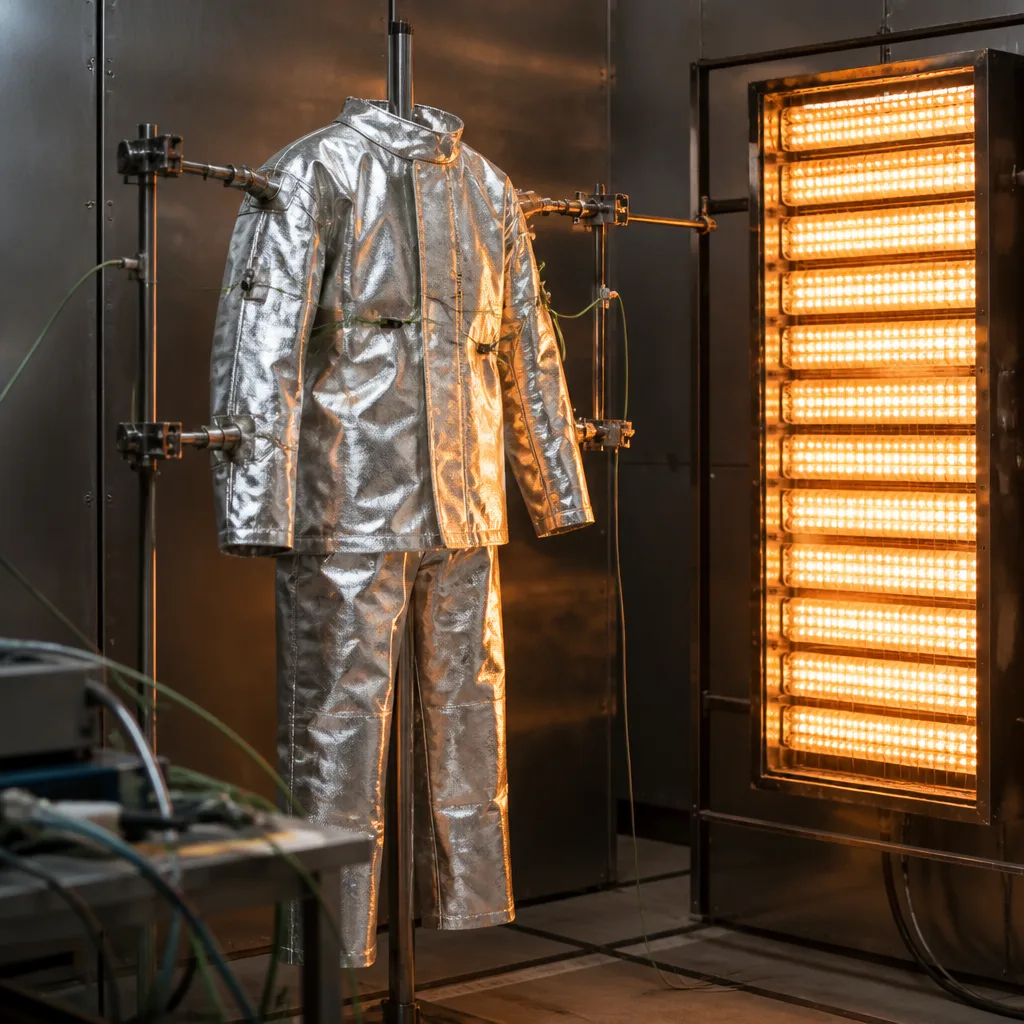
This standard defines test methods and minimum performance requirements for reflective protective clothing used in specialized firefighting. These garments provide protection against flame licking and intense radiant heat and are worn only for short periods to enable the firefighter to engage in certain high-risk firefighting and fire rescue situations that may also require the use of a breathing apparatus.
This standard covers only protective clothing based on the outer material's ability to reflect intense radiant heat. Such reflective clothing can also be used for industrial applications involving high levels of radiant heat. The reflective clothing mentioned in this standard is not included in the EN 469 standard.
For the purposes of this standard, the term obsolescence refers to a change in product performance over time during use or storage. Obsolescence results from a combination of various factors, such as:
The EN 1486 standard specifies test methods and minimum performance requirements for reflective protective clothing used in specialized firefighting operations. This standard focuses on clothing designed to protect firefighters from intense radiant heat and brief flame exposure (typically flame slicks). It is particularly important for proximity suits or aluminized suits used in high-risk scenarios such as aircraft rescue, industrial fires, or situations near sudden bursts of flame.
The EN 1486 standard applies to reflective clothing that provides protection against:
This standard does not cover general structural firefighting suits falling under EN 469 and similar standards, but targets specialized clothing for extreme heat environments. These suits typically feature aluminum-coated outer layers that reflect radiant heat and insulating inner layers.
The EN 1486 standard prescribes rigorous testing to ensure garments can withstand extreme conditions. Typical basic test methods include:
According to this standard, additional requirements generally include the following:
Clothing certified according to EN 1486 standard must bear the CE mark (under the Personal Protective Equipment Regulation) and the specific pictogram for fire-fighting protective clothing. Manufacturers must provide user information, including maintenance instructions, usage limitations, and care guidelines.
Clothing conforming to the EN 1486 standard is generally optimized for shorter durations of higher-intensity exposure compared to everyday firefighter attire. Reflective aluminum-infused clothing conforming to this standard allows firefighters to work closer to flames for rescue or control operations that would be impossible with standard equipment. Proper use significantly reduces the risk of burn injury from radiant heat, which is the primary heat transfer mechanism in many fire scenarios.
In short, the EN 1486 standard applies to reflective protective clothing designed for specific firefighting activities, including:
The main purpose of the EN 1486 standard is to ensure that reflective fire-fighting clothing provides the following:
The EN 1486 standard defines clothing suitable for specific operations such as:
Each application exposes firefighters to increasingly high thermal hazards and requires clothing that can reflect significant amounts of radiant heat while maintaining acceptable user protection.
The EN 1486 standard evaluates not only thermal protection but also the following mechanical durability:
These tests ensure that the garments remain protective even after normal service and maintenance.
Clothing conforming to the EN 1486 standard is generally used by:
Consequently, the EN 1486 standard remains a critical benchmark for high-performance protective clothing in specialized firefighting. As fire risks evolve alongside modern materials and industrial hazards, compliance with this standard ensures that protective suits provide reliable thermal protection while maintaining their usability. Fire services and industrial safety teams should always verify current certification and combine these suits with appropriate training and complementary personal protective equipment.
For many years, our organization, with its competent and experienced staff, has been understanding the needs of its clients, providing the advanced testing services they require, and assisting them in the establishment, implementation, and improvement of management systems. Within this framework, we also provide testing services in accordance with the EN 1486 standard.
To get an appointment, to get more detailed information or to request an evaluation, you can ask us to fill in our form and reach you.

