EN 29053 Acoustics - Materials for Acoustical Applications - Determination of Airflow Resistance
The European standard "EN 29053 Acoustics - Materials for acoustic applications - Determination of airflow resistance" describes two methods for determining the airflow resistance of porous materials for acoustic applications. This standard is applicable to test specimens cut from products made from porous materials. Details of publications on flow behavior under both amine and turbulent conditions are included in the standard's annex (Annex A).
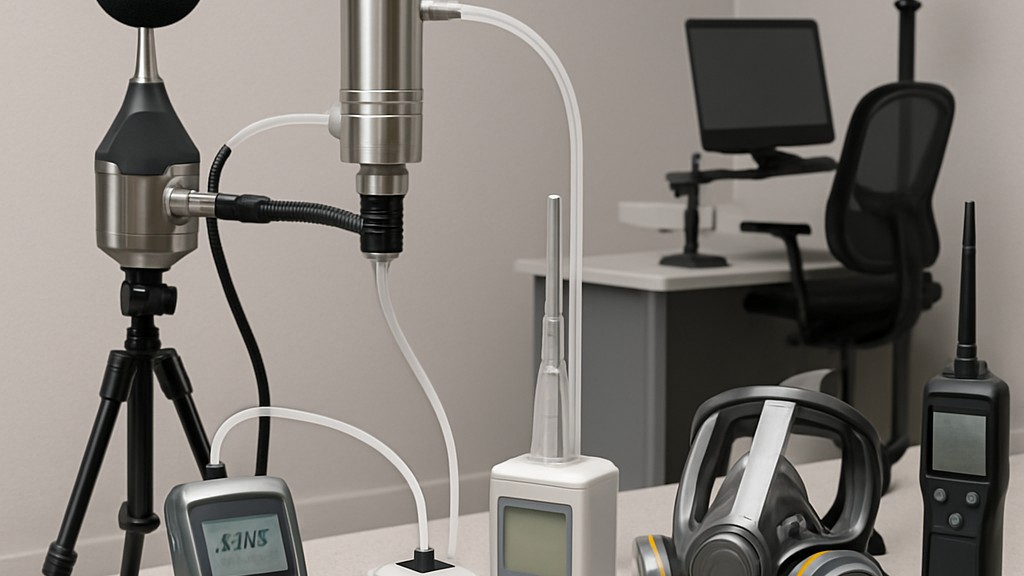
The EN 29053 standard specifies a laboratory method for determining the normal incident sound absorption coefficient and acoustic impedance of materials used for sound insulation or absorption. This method is primarily used in building acoustics and automotive or aerospace applications where sound-dampening materials are tested.
The main features of this standard are:
- Test method: Uses an impedance tube (Kundt tube) with two microphones to measure how much sound is absorbed by a material sample placed in the tube at one end.
- Frequency range: Generally covers a range from 50 Hz to 6.400 Hz, depending on tube dimensions.
- The measured quantities are:
- Sound absorption coefficient: A measure of how much of the incident sound is absorbed (0 to 1).
- Surface impedance: The ratio of sound pressure at the surface of the material to the particle speed.
During the test, a sound wave is generated in a tube directed toward a sample of the test material. Two microphones are placed along the tube to measure the sound pressure at different positions. The transfer function method is used to calculate the reflection coefficient, from which the absorption coefficient (how much sound is absorbed) is derived and the acoustic impedance is determined.
The areas of application of this standard include:
- Evaluation of acoustic performance:
- Wall or ceiling panels
- Foam and fibrous materials
- Automotive interior components
- Design and development of noise reduction solutions in the following areas:
- Buildings
- Araçlar
- Industrial equipment
Essentially, the EN 29053 standard describes a specific test method for determining the sound absorption coefficient and surface acoustic impedance of materials using a two-microphone impedance tube technique under normal incident conditions. The main test methods and steps outlined in this standard are:
The transfer function method (two-microphone method) is the basic method described in this standard. It is used to determine:
- Normal incident sound absorption coefficient
- Surface impedance and surface reactance
The test setup includes:
- Impedance tube (Kundt tube): A rigid tube with circular cross-section.
- Two microphones: Mounted flush with the inner wall of the tube at known distances.
- Sound source: A loudspeaker that typically produces broadband or stepped frequency noise.
- Data acquisition system: Captures and analyzes microphone signals.
The test sample is placed at one end of the impedance tube. A sound wave is generated in the tube. Pressure signals are recorded at two microphone positions.
The transfer function between microphones is used to calculate:
- Reflection coefficient
- Absorption coefficient
- Surface impedance using known tube parameters
Basic measurement parameters:
- Frequency range: Depends on tube diameter and microphone range.
- Smaller tubes: Higher frequencies
- Larger tubes: Lower frequencies
- Sample thickness: Usually 10-100 mm.
- Environmental conditions: Temperature and humidity should be monitored and reported.
This standard includes guidance for:
- Signal average
- Calibration of microphones and equipment
- Error minimization (e.g., microphone mismatch, tube wall reflections)
This standard is essential because it provides a reliable, standardized method for measuring the sound absorption and acoustic impedance of materials used in noise control applications. This standard is considered important for the following reasons:
- Standardized test method: The EN 29053 standard defines a precision laboratory test method using an impedance tube and two microphones. This
- Eliminates variability between laboratories and tests.
- Provides repeatable and reproducible measurements.
- Provides consistent data for comparing different materials.
Without such a standard, each manufacturer or laboratory may use a different method, leading to inconsistent or incomparable results.
- Material characterization: this standard is important to accurately characterize the acoustic properties of the material:
- acoustic panels
- Foam and fibrous materials
- Porous or layered composites
By determining absorption coefficients and impedance, designers can:
- Can choose the right material for sound control.
- It can predict acoustic behavior in real environments.
Critical for noise control engineering: Sound absorption data is vital for designing:
- Building interiors (offices, auditoriums, studios)
- Vehicle cabins (cars, trains, airplanes)
- Industrial enclosures and machinery
The EN 29053 standard supports the development of effective noise reduction solutions that meet comfort, safety and regulatory objectives.
Our organization, which has been supporting businesses across all sectors for years through a wide range of testing, measurement, analysis, and evaluation activities, has a strong team of employees who closely follow global developments in science and technology and are constantly improving themselves. In this context, we also provide testing services in accordance with the EN 29053 Acoustics - Materials for acoustic applications - Determination of airflow resistance standard.



