

In the CEI 20-13 standard developed by the Italian Electrotechnical Committee (CEI), according to the current building products legal regulations (rated voltages U0/U 0,6/1 to U0/U 18/30 kV AC), with special requirements for fire reaction performance Requirements for power cables with or without elastomeric insulation are described.
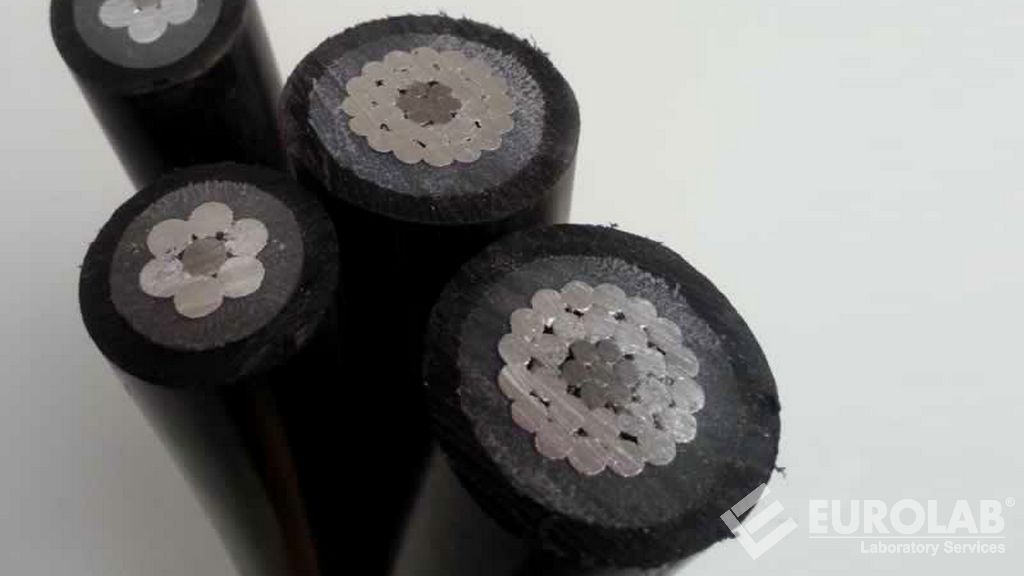
Rubber is commonly used for cable insulation. Long before other insulation materials like polyvinyl chloride (PVC) and polyethylene (PE) became widespread, rubber was used as a cable insulation and sheathing material. Today, it continues to be widely used in domestic and industrial applications. Initially, natural rubbers were used for insulation, but today these have largely been replaced by a variety of synthetic rubbers. All rubbers are thermoset, or cross-linked, through a process called vulcanization. As thermoset materials, they do not soften or melt when exposed to heat.
The properties of this type of rubber are significantly altered by the addition of various additives, including fillers, vulcanizing agents, accelerators, antioxidants and antiozonants. Typical rubber cable compounds include natural rubber, styrene-butadiene rubber, butyl, ethylene propylene rubber, silicone, polychloroprene, chlorosulfonated polyethylene, and fluorocarbon.
The main advantage of all rubber cables over other insulated cables is their excellent flexibility within a specific temperature range. They also have very good water absorption properties. Many rubber cables also have superior abrasion resistance and weather resistance. These properties make rubber material suitable for harsh environments as tracing cables for portable electrical devices, power tools, pumps, and generators. Rubber cables are also compounded to provide excellent resistance to oils and other chemicals.
The applications, which first started with natural rubber insulation and sheathing in the late 1970s, now continue with different types of synthetic rubber and materials.
Our company provides testing services for rubber insulated cables with rated voltage between 20 Kv and 13 Kv within the scope of CEI 1-30 standard, with its trained and expert staff and advanced technological equipment, among the numerous test, measurement, analysis and evaluation studies it provides for businesses in various sectors. also gives.
To get an appointment, to get more detailed information or to request an evaluation, you can ask us to fill in our form and reach you.

