

The standard “IEC EN 60255-22-7 Electrical relays - Part 22-7: Electrical disturbance tests for measuring relays and protection equipment - Power frequency immunity tests”, which has its origin in a European standard and was subsequently published by the International Electrotechnical Commission (IEC), is based on the concepts described in the standard “IEC 61000-4-16 Electromagnetic compatibility (EMC) - Part 4-16: Testing and measurement techniques - Immunity test for conducted common mode disturbances in the frequency range 0 Hz to 150 kHz”. This standard, where applicable, references this standard and describes the general requirements for power frequency immunity tests for measuring relays and protection equipment for power system protection (including control, monitoring and process interface equipment used with these systems).
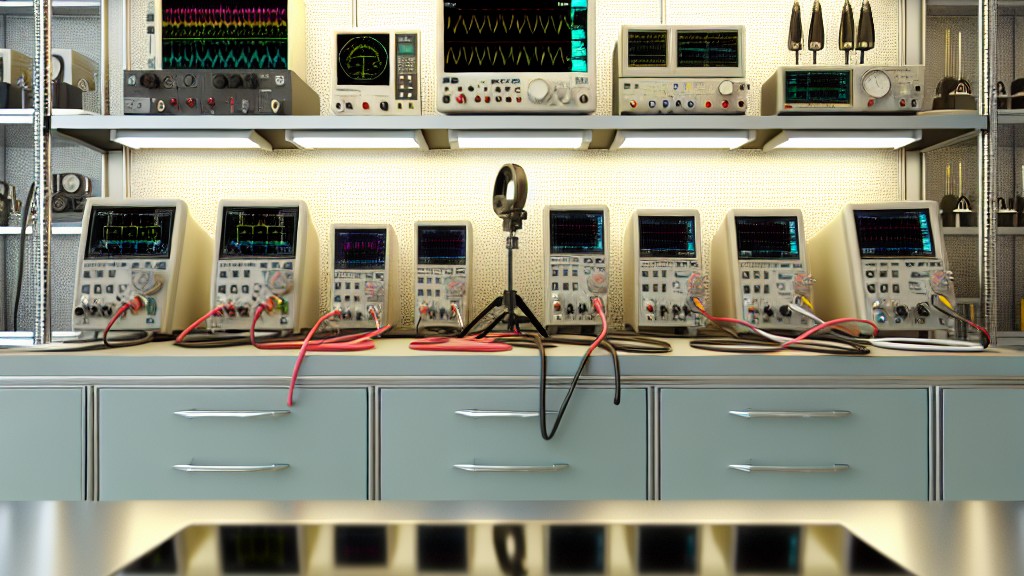
The purpose of the tests is to confirm that the equipment under test will operate properly when energized and subjected to short-duration conducted, common- and differential-mode power frequency disturbances applied to direct current (DC) inputs at the rated frequency of the equipment under test, e.g., 162/3 Hz, 50 Hz, and 60 Hz. Testing of pilot wire schemes between substations is not covered by this standard.
The requirements specified in this standard apply to measuring relays and protection equipment in a new condition and all tests specified are type tests only.
The main purpose of this standard is to specify:
In general, power frequency magnetic field immunity testing is designed to evaluate the ability of electronic devices to withstand magnetic field disturbances at power frequencies, typically 50 Hz or 60 Hz. These disturbances can originate from power lines, transformers or other electrical devices and can cause malfunctions, degraded performance or even catastrophic failure. Power Frequency magnetic field immunity testing ensures that electronic devices can withstand these disturbances without degrading their performance, thus increasing their reliability and safety.
Power frequency magnetic field immunity testing standards vary by region and product category. Some of the most common standards include:
Power frequency magnetic field immunity testing can be applied in a variety of industries, including consumer electronics, automotive, aerospace, telecommunications, medical devices, and industrial equipment. By complying with magnetic field immunity testing standards, manufacturers can ensure that their products are resistant to magnetic field disturbances and can operate and coexist reliably in relevant environments.
Power frequency immunity test failures can be caused by a variety of factors, including:
The following techniques are generally applied to resolve power frequency magnetic field immunity test failures:
Our organization has a strong staff that closely follows the developments in the world in the field of science and technology and constantly improves itself. Among the numerous test, measurement, analysis and evaluation studies provided for businesses in various sectors, there are also test services in accordance with the standard “IEC EN 60255-22-7 Electrical relays - Part 22-7: Electrical disturbance tests for measuring relays and protection equipment - Power frequency immunity tests”.
To get an appointment, to get more detailed information or to request an evaluation, you can ask us to fill in our form and reach you.

