

The dielectric withstand voltage (DWV) test, often referred to as the voltage withstand test or wet dielectric test, is one of the most commonly used tests when inspecting cables. This is because the test performs the most important part of the cable insulation evaluation. This test method determines whether the cable insulation is free from breaches or if a high voltage has deteriorated to the point of breaching any insulation weak points.
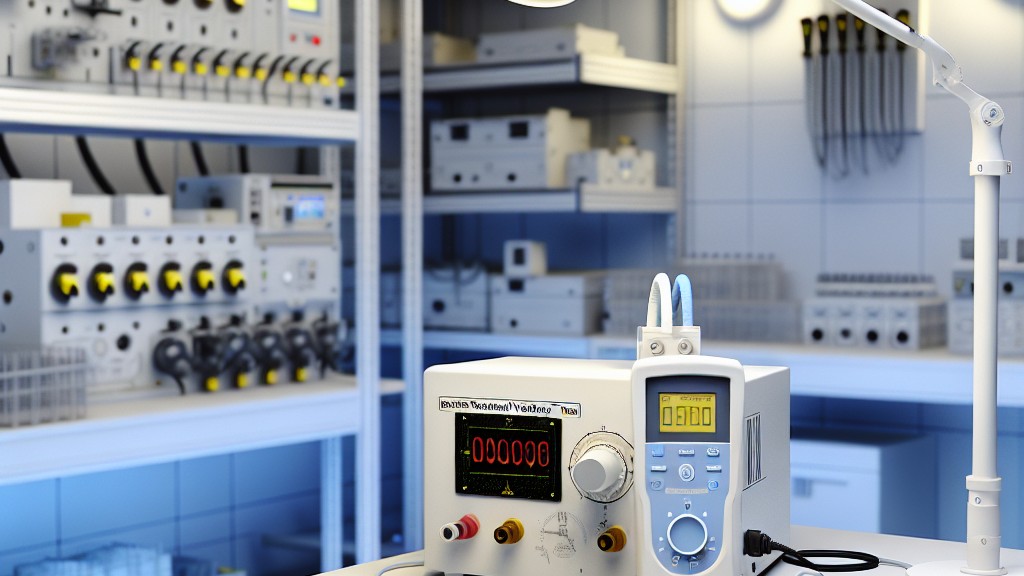
The basic concept of the DWV test is that the entire cable, except for about 2 cm at each end, is placed in a water bath and a high voltage potential is placed between the conductor and the return electrode in the water bath. If there is a fault in the insulation, then a noticeable current flow will occur. The following parameters can be changed as required for this test: pre-test soaking time, voltage amplitude, type of voltage (AC or DC), applied voltage duration, voltage frequency on the sample, and altitude.
Dielectric withstand voltage (DWV) testing is an integral part of the product safety assessment of electrical and electronic devices and provides manufacturers with important information about the quality and suitability of the selected insulation system. The test involves applying an extra high voltage to the insulation barrier of the device for one minute. If the insulation voltage holds, the device is considered to have passed the test. However, if the applied voltage causes the insulation material to suddenly fail and allows current to flow, the insulation is deemed to be inadequate, as it may pose a shock hazard to users.
Although dielectric strength testing is widely used, the true purpose of the test is often misunderstood, which can lead to incomplete tests or misleading test results. The mechanism of insulating materials is that a current flows in a material when an electromotive force strong enough to force the movement of an electric charge is applied. This charge movement is carried by electrons in the material and can be measured as an electric current. Metals such as copper have many free electrons to transfer the electric charge. This makes copper a good conductor because there is little resistance to the flow of charge and the energy lost as heat due to the current is minimal.
The performance of conducting materials contrasts markedly with that of insulators, which have a physical structure that prevents electrons from moving easily. Since electrons cannot move freely, they cannot effectively carry charge through the material. However, it is always possible to make a material conductive by subjecting it to a high enough voltage.
Dielectric breakdown of an insulating material is a complex physical phenomenon, but can generally be defined as a sudden change in the resistance of the insulation under test due to an applied voltage. Simply put, the test voltage breaks down the insulating properties of the material. The dielectric breakdown mechanism begins with the application of a strong electric field with a high voltage to the insulating material. Different materials require different levels of electric field for dielectric breakdown to occur. Metals and other conductors have free electrons without any applied electric field, but insulating materials usually require a very high electric field to allow electric current to flow.
When the electric field is sufficient, it energizes the electrons of the insulator until they gain enough energy to cross the band gap into the conduction band, dramatically increasing the conductivity of the material. This transformation is called dielectric breakdown, and the electric field required to initiate the breakdown is called the dielectric strength or breakdown strength. Dielectric breakdown is therefore a sudden and dramatic increase in the conductivity of a material due to an applied voltage.
Dielectric voltage withstand testing can provide important insight into the capabilities and limitations of a device’s insulation system. However, the purpose of the test is to evaluate the electrical strength of the insulation only. During dielectric testing, the current should not be evaluated against the leakage current limits of the device, because the dielectric test is performed at a much higher voltage.
Dielectric breakdown occurs when an insulating material is exposed to an exceptionally high voltage. The dielectric withstand voltage test, which is included in many international standards, is a test method that aims to create conditions that can cause dielectric breakdown in a product. If dielectric breakdown does not occur under these conditions, the insulation and design of the product are resistant to this hazard, even at extremely high voltages.
Dielectric withstand voltage testing is often performed in coordination with other requirements such as rain testing or grease conditioning. During the rain test, the product is exposed to water sprayed from above to determine if there is a defect in the product insulation that would allow water to act as a foreign conductor.
Dielectric withstand voltage (DWV) testing is crucial for evaluating the electrical insulation quality of components and systems. Several standards cover procedures and requirements for this testing. Notable among these are:
Our organization, which has been trying to support businesses from every sector with its testing, measurement, analysis and evaluation studies carried out in a wide range for years, has a strong staff that closely follows the developments in the world in the field of science and technology and constantly improves itself. In this context, dielectric withstand voltage (DWV) test services are also provided to businesses.
To get an appointment, to get more detailed information or to request an evaluation, you can ask us to fill in our form and reach you.

