IPC-TM-650 Test
IPC testing is divided into 6 sections and is divided into 1.0 report writing, 2.1 visual inspection, 2.2 length measurement, 2.3 chemical, 2.4 mechanical, 2.5 electrical, and 2.6 environmental testing.
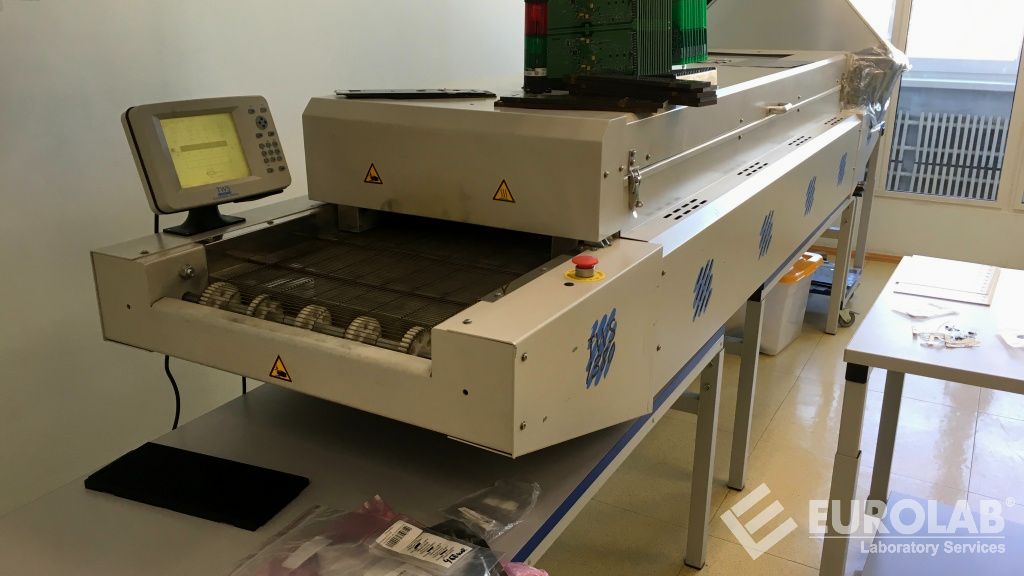
The following is a guide to the Interconnection and Packaging Electronics (IPC) test specification list.
IPC-TM-650 Information
The following test method is a list of Interconnection and Packaging Electronic Circuits (IPC).
This test method is divided into sections as follows. Please consult us for details.
- 1.0 Reporting and Measurement Analysis Methods
- 2.1 Visual Test Methods
- 2.2 Dimensional Test Methods
- 2.3 Chemical Test Methods
- 2.4 Mechanical Test Methods
- 2.5 Electrical Test Methods
- 2.6 Environmental Test Methods
Approved Test Methods
SECTION 1.0 – Reporting and Measurement Analysis Methods
- TM 1.1C Introduction 1/03
- TM 1.2A Calibration 1/03
- TM 1.3A Ambient Conditions 1/03
- TM 1.4A Reporting, General 1/03
- TM 1.5A Reporting, Format 1/03
- TM 1.6A Numerical Reporting 1/03
- TM 1.7A Reporting, Invalid Test Results 1/03
- TM 1.8A Estimation of Measurement Precision for Binary Data 1/03-Includes Calculator and User Manual
- TM 1.9A Estimation of Measurement Precision for Variable Data 1/03-Includes Calculator and User Manual
SECTION 2.1 - Visual Test Methods
- TM 2.1.1F Microsectioning, Manual and Semi or Automatic 6/15
- TM 2.1.2A Pinhole Assessment, Paint Penetration Method 3/76
- TM 2.1.3A Coated Hole Structure Evaluation 8/76
- TM 2.1.5A Surface Inspection, Uncoated and Metal Coated Material 12/82
- TM 2.1.6B Glass Fabric Thickness 12/94
- TM 2.1.6.1 Weight of Fabric Reinforcements 12/94, renumbered from 2.3.12
- TM 2.1.7C Glass Fabric Yarn Count 12/94
- TM 2.1.7.1 Yarn Count, Organic Fibers 12/87
- TM 2.1.8B Workmanship 12/94
- TM 2.1.9 Surface Scratch Inspection Metal Coated Foil 5/86
- TM 2.1.10A Visual Inspection for Undissolved Dicyandiamide 12/94
- TM 2.1.13B Control of Gaps in Flexible Printed Cardboard Materials 5/12
SECTION 2.2 – Dimensional Test Methods
- TM 2.2.1A Mechanical Dimension Verification 8/97
- TM 2.2.2B Optical Dimensional Verification 8/97
- TM 2.2.4C Dimensional Stability, Flexible Dielectric Materials 5/98
- Dimensional Studies Using TM 2.2.5A Microsections 8/97
- TM 2.2.6A Hole Size Measurement, Drilled 8/97
- TM 2.2.7A Hole Size Measurement, Coating 5/86
- TM 2.2.12A Copper Thickness by Weight 3/76
- TM 2.2.12.1 Overall Thickness and Profile Factor of Treated and Untreated Copper Foils 9/87
- TM 2.2.12.2 Weight and Thickness of Copper Foils with Releasable Carriers 7/89
- TM 2.2.12.3 Determination of Weight and Thickness of Abrasive Backing Copper Foils 7/89
- TM 2.2.13.1A Thickness, Coating in Holes, Microhm Method 1/83
- TM 2.2.14 Solder Powder Particle Size Distribution – Screen Method 1/4 for Types 1-95
- TM 2.2.14.1 Solder Powder Particle Size Distribution – Measurement Microscope Method 1/95
- TM 2.2.14.2 Solder Powder Particle Size Distribution – Optical Image Analyzer Method 1/95
- TM 2.2.14.3 Determination of Maximum Solder Powder Particle Size 1/95
- TM 2.2.17A Surface Roughness and Profile of Metallic Foils (Contact Pen Technique) 2/01
- TM 2.2.18 Determination of Laminate Thickness by Mechanical Measurement 12/94
- TM 2.2.18.1 Determination of Thickness of Metallic Coated Laminates, Section 12/94
- TM 2.2.19.1 Length, Width and Straightness of Laminate and Prepreg Panels 12/94
- TM 2.2.20 Solder Paste by Weight Metal Content 1/95
- TM 2.2.21 Flatness of Dielectrics for High Density Interconnect (HDI)/Microvia Technology 11/98
SECTION 2.3 - Chemical Test Methods
- TM 2.3.1 Chemical Processing, Suitable Processing Material 4/73
- TM 2.3.1.1B Chemical Cleaning of Metal Coated Laminate 5/86
- Chemical Resistance of TM 2.3.2G Flexible Printed Sheet Materials 12/07
- TM 2.3.4B Chemical Resistance, Marking Paints and Inks 8/87
- TM 2.3.4.2A Chemical Resistance of Laminates, Prepregs and Coated Foil Products by Solvent Exposure 12/94
- TM 2.3.4.3 Chemical Resistance of Core Materials to Methylene Chloride 5/86
- TM 2.3.6A Etching Ammonium Persulfate Method 7/75
- TM 2.3.7A Etching, Iron Chloride Method 7/75
- TM 2.3.7.1A Copper Chloride Etching Method 12/94
- TM 2.3.7.2A Alkaline Etching Method 12/94
- Flammability of TM 2.3.9D Prepreg and Thin Laminate 8/97
- TM 2.3.10B Flammability of Laminate 12/94
- TM 2.3.10.1 Flammability of Solder Mask in Printed Wiring Laminate 8/98
- TM 2.3.11 Glass Fabric Structure 4/73
- TM 2.3.13A Determination of Acid Value of Liquid Solder Flux - Potentiometric and Visual Titration Methods 6/04
- TM 2.3.14 Printing, Etching and Plate Test 4/73
- TM 2.3.15D Purity, Copper Foil or Coating 5/04
- TM 2.3.16B Prepreg Resin Content, Combustion 12/94
- TM 2.3.16.1C Prepregin Resin Content, 12/94 by Weight Treated
- TM 2.3.16.2 Weight of Machined Prepreg 12/94
- TM 2.3.17D Prepreg Resin Flow Percentage 8/97
- TM 2.3.17.1B Resin Flow of Adhesive Coated Films and Backed Adhesive Films 5/98
- TM 2.3.17.2B "No Flow" Prepreg 8/97 Resin Flow
- TM 2.3.18A Gel Time, Prepreg Ingredients 4/86
- Volatile Content of TM 2.3.19C Prepreg 12/94
- TM 2.3.21A Coating Quality Body Cell Method 8/97
- TM 2.3.22 Copper Protective Coating Quality 2/78
- TM 2.3.24 Gold Plated Porosity 2/78
- TM 2.3.24.1 Porosity Test of Electroded Gold on Nickel Plated Copper Surface Electrographic Method 10/85
- TM 2.3.24.2A Porosity of Metallic Coatings on Copper-Based Alloys and Nickel (Nitric Acid Vapor Test) 8/97
- Detection and Measurement of Ionizable Surface Contaminations with the Resistance of TM 2.3.25D Solvent Extract (ROSE) 11/12
- TM 2.3.25.1 Ionic Cleanliness Test of Bare PWBs 10/00
- TM 2.3.28B Ionic Analysis of Circuit Boards, Ion Chromatography Method 11/12
- TM 2.3.28.1 Halide Content of Soldering Flux and Pastes 6/04
- TM 2.3.28.2 Cleaning Bare Printed Cards with Ion Chromatography 12/09
- TM 2.3.30A Determination of Solvent pH in Anhydrous Fluorocarbon Solvents 11/81
- TM 2.3.32D Flux Induced Corrosion (Copper Mirror Method) 6/04
- TM 2.3.33D Presence of Halides in Flux, Silver Chromate Method 6/04
- TM 2.3.34C Solid Content, Flux 6/04
- TM 2.3.34.1B Flux-Coated and/or Flux-Cored on/in Flux Percentage 1/95
- TM 2.3.35C Halide Content, Quantitative (Chloride and Bromide) 6/04
- Fluorides, Fluxes – Qualitative 2.3.35.1/6 with TM 04A Spot Test
- TM 2.3.35.2A Fluoride Concentration, Fluxes – Quantitative 6/04
- TM 2.3.36 Acid Acceptance of Chlorinated Solvents 10/85
- Volatile Content of TM 2.3.37B Adhesive Coated Dielectric Films 5/98
- TM 2.3.40 Thermal Stability 7/95
- TM 2.3.41 Test Method for Total Halogen Content in Basic Materials 4/06
- TM 2.3.42 Solder Mask – Resistance to Solvents and Cleaning Agents 3/07
- TM 2.3.44 Determination of Thickness and Phosphorus Content in Electroless Nickel (EN) Layers by X-Ray Fluorescence (XRF) Spectrometry 11/17
SECTION 2.4 - Mechanical Test Methods
- TM 2.4.1E Adhesion, Tape Test 5/04
- TM 2.4.1.5A Determination of Treatment Transfer 5/95
- TM 2.4.1.6 Adhesion, Polymer Coating 7/95
- Ductility of TM 2.4.2A Copper Foil 3/76
- TM 2.4.2.1D Flexural Fatigue and Ductility, Foil 3/91
- TM 2.4.3E Flexural Strength, Flexible Printed Cabling Materials 6/11
- TM 2.4.3.1C Bending Fatigue and Ductility, Flexible Compressed Cabling 3/91
- TM 2.4.3.2C Bending Fatigue and Ductility, Flexible Metal Clad Dielectrics 3/91
- TM 2.4.4B Flexural Strength of Laminates (At Ambient Temperature) 12/94
- TM 2.4.4.1A Flexural Strength of Laminates (At Elevated Temperature) 12/94
- TM 2.4.5.1 Flexibility – Conformal Coating 7/00
- TM 2.4.6 Hot Oil 4/73
- TM 2.4.7A Machinability, Printed Wiring Materials 7/75
- TM 2.4.7.1 Solder Mask - Determination of Machinability 3/07
- Peel Strength of TM 2.4.8C Metallic Coated Laminates 12/94
- TM 2.4.8.1 Peel Strength, Metal Foil (Keyhole Method for Thin Laminates) 1/86
- TM 2.4.8.2A Peel Strength of Metallic Coated Laminates at High Temperature (Hot Fluid Method) 12/94
- TM 2.4.8.3A Peel Strength of Metallic Coated Laminates at High Temperature (Hot Air Method) 12/94
- TM 2.4.8.4 Carrier Release, Fine Copper 1/90
- TM 2.4.9E Peel Strength, Flexible Dielectric Materials 6/14
- TM 2.4.9.1 Peel Strength of Flexible Circuits 11/98
- TM 2.4.9.2 Bonding 11/98
- TM 2.4.12A Solderability, Edge Dipping Method 6/91
- TM 2.4.13F Solder Float Resistance Flexible Printed Wiring Materials 5/98
- TM 2.4.13.1 Thermal Stress of Laminates 12/94
- TM 2.4.14.2A Liquid Flow Activity, Wetting Equilibrium Method 6/04
- TM 2.4.15A Surface Coating, Metal Foil 3/76
- TM 2.4.16B Initial Tear Strength, Flexible Insulation Materials 3/14
- TM 2.4.17 Tear Strength (Spread) 4/73
- TM 2.4.17.1B Spread Tear Strength, Flexible Insulation Material 2/13
- TM 2.4.18B Tensile Strength and Elongation, Copper Foil 8/80
- TM 2.4.18.1A Tensile Strength and Elongation, In-House Coating 5/04
- TM 2.4.18.2 Hot Break Strength, Foil 7/89
- TM 2.4.18.3 Tensile Strength, Elongation and Modulus 7/95
- TM 2.4.19C Tensile Strength and Elongation, Flexible Printed Cabling Materials 5/98
- TM 2.4.21F Black Bond Strength, Unsupported Component Hole 1/07
- TM 2.4.22C Spring and Twist (Percent) 6/99
- TM 2.4.22.1C Spring and Twist Laminate 5/93
- TM 2.4.22.2 Surface Curvature: Silicon Wafers with Insulated Dielectrics 7/95
- TM 2.4.23 Soldering Resistance of Laminate Materials 3/79
- TM 12C Glass Transition Temperature and Z Axis Thermal Expansion with TMA 94/2.4.24
- TM 2.4.24.1 Delamination Time (TMA Method) 12/94
- TM 2.4.24.2 Glass Transition Temperature of Organic Films – DMA Method 7/95
- TM 2.4.24.3 Glass Transition Temperature of Organic Films – TMA Method 7/95
- TM 2.4.24.4 Glass Transition and Modulus of Materials Used in High Density Interconnection (HDI) and Microvias -DMA Method 11/98
- TM 2.4.24.5 Glass Transition Temperature and Thermal Expansion of Materials Used in High Density Interconnection (HDI) and Microvias -TMA Method 11/98
- Decomposition Temperature (Td) of Laminate Material Using TM 2.4.24.6 TGA 4/06
- Glass Transition Temperature and Hardening Factor with TM 2.4.25D DSC 11/17
- TM 2.4.26 Tape Test for Inserted Printed Cards 3/79
- TM 2.4.27.1B Wear (Taber Method) Solder Mask and Conformal Coating 1/95
- TM 2.4.28.1F Solder Mask Adhesion – Tape Test Method 3/07
- TM 2.4.29C Adhesion, Solder Mask, Flexible Circuit 3/07
- TM 2.4.30 Impact Strength, Polymer Film 10/86
- TM 2.4.34 Solder Paste Viscosity – T-Bar Spindle Method (valid for 300.000 - 1.600.000 Centipose) 1/95
- TM 2.4.34.1 Solder Paste Viscosity – T-Bar Spindle Method (Less than 300.000 Centipoise Applicable) 1/95
- TM 2.4.34.2 Solder Paste Viscosity – Spiral Pump Method (valid for 300.000 to 1.600.000 Centipoise) 1/95
- TM 2.4.34.3 Solder Paste Viscosity – Spiral Pump Method (Less than 300.000 Centipoise Applicable) 1/95
- TM 2.4.34.4 Paste Flux Viscosity – T-Bar Shaft Method 1/95
- TM 2.4.35 Solder Paste – Slump Test 1/95
- TM 2.4.36C Rework Simulation, Coated Holes for Leaded Components 5/04
- TM 2.4.38A Prepreg Scale Flow Test 6/91
- TM 2.4.39A Dimensional Stability, Glass Reinforced Thin Laminates 2/86
- TM 2.4.40 Inner Layer Bonding Strength of Multilayer Printed Circuit Boards 10/87
- TM 2.4.41 Coefficient of Linear Thermal Expansion of Electrical Insulation Boards 3/86
- TM 2.4.41.1A Glassy Silica (Quartz) Thermal Expansion Coefficient by Dilatometer Method 8/97
- TM 2.4.41.2A Coefficient of Thermal Expansion – Strain Gage Method 5/04
- TM 2.4.41.3 In-Plane Thermal Expansion Coefficient, Organic Films 7/95
- TM 2.4.41.4 Volumetric Thermal Expansion Polymer Coatings on Inorganic Surfaces 7/95
- TM 2.4.42 Torsional Strength of Chip Adhesives 2/88
- TM 2.4.42.1 High Temperature Mechanical Strength Retention of Adhesives 3/88
- TM 2.4.43 Solder Paste – Solder Ball Test 1/95
- TM 2.4.44 Solder Paste - Adhesion Test 3/98
- TM 2.4.45 Solder Paste – Wetting Test 1/95
- TM 2.4.46A Spread Test, Liquid or Extracted Flux, Solder Paste, and Extracted Core Wires or Preforms 6/04
- TM 2.4.47 Flux Residual Dryness 1/95
- TM 2.4.48 Spitting Cored Wire Solder 1/95
- TM 2.4.49 Solder Pool Test 1/95
- TM 2.4.50 Thermal Conductivity, Polymer Films 7/95
- TM 2.4.51 Self Shimming Thermal Conductive Adhesives 1/95
- TM 2.4.52 Fracture Toughness of Resin Systems for Base Materials 10/13
- TM 2.4.53 Dye and Tensile Test Method (formerly known as Dye and Shrinkage) 8/17
SECTION 2.5 - Electrical Test Methods
- Arc Resistance of TM 2.5.1B Printed Wiring Material 5/86
- Capacity of TM 2.5.2A Insulation Materials 7/75
- TM 2.5.3B Current Diffraction, Coated Through Holes 8/97
- TM 2.5.4.1A Conductor Temperature Increase Due to Current Changes in Conductors 8/97
- TM 2.5.5.2A Dielectric Constant and Dissipation Factor of Printed Wiring Board Material-Clip Method 12/87
- TM 2.5.5.3C Materials Permeability (Dielectric Constant) and Loss Tangent (Spreading Factor) (Two Fluid Cell Method) 12/87
- TM 2.5.5.5C Strip Line Test for Permeability and Loss Tangent (Dielectric Constant and Dissipation Factor) in X-Band 3/98
- TM 2.5.5.5.1 Strip Line Test for Complex Relative Permeability of Circuit Board Materials 14 GHZ 3/98
- TM 3A Characteristic Impedance Lines on Cards Printed by TDR 04/2.5.5.7
- TM 2.5.5.9 Permeability and Loss Tangent, Parallel Plate, 1MHz - 1.5 GHz 11/98
- TM 2.5.5.10 High Frequency Test to Determine Permeability and Loss Tangent of Embedded Passive Materials 7/05
- TM 2.5.5.11 Delay of Propagation of Lines by TDR on Printed Cards 4/09
- TM 2.5.5.12A Test Methods for Determining the Amount of Signal Loss in Printed Cards 7/12
- TM 2.5.5.13 Relative Permeability and Loss Tangent Using Split Cylinder Resonator 1/07
- Dielectric Casting of TM 2.5.6B Rigid Printed Wiring Material 5/86
- TM 2.5.6.1B Solder Mask – Dielectric Strength 3/07
- Electrical Strength of TM 2.5.6.2A Printed Wiring Material 3/98
- TM 2.5.6.3 Dielectric Breakdown Voltage and Dielectric Strength 10/86
- TM 2.5.7D Dielectric Withstand Voltage, PWB 5/04
- TM 2.5.7.1 Dielectric Withstand Voltage – Polymeric Conformal Coating 7/00
- TM 2.5.7.2A Dielectric Withstand Voltage (HiPot Method) – Thin Dielectric Layers for Printed Cards 11/09
- TM 2.5.10.1 Insulation Resistance for Adhesive Interconnect Ties 11/98
- TM 2.5.12 Connection Resistor, Multilayer Printed Cabling 4/73
- TM 2.5.13A Copper Foil Resistance 3/76
- Resistance of TM 2.5.14A Copper Foil 8/76
- TM 2.5.15A Guidelines and Test Methods for RFI-EMI Shielding of Flat Cable 10/86
- TM 2.5.17E Volume Resistance and Surface Resistance of Printed Wiring Materials 5/98
- TM 2.5.17.1A Volume and Surface Resistance of Dielectric Materials 12/94
- TM 2.5.17.2 Volume Resistance of Conductive Materials Used in High Density Interconnection (HDI) and Microvias, Two-Wire Method 11/98
- TM 2.5.18B Characteristic Impedance Flat Cables (Unbalanced) 7/84
- Propagation Delay of Flat Cables Using TM 2.5.19A Time Domain Reflectometer 7/84
- Propagation Delay of Flat Wires Using TM 2.5.19.1A Dual Tracking Oscilloscope 7/84
- TM 2.5.21A Digital Unbalanced Crosstalk, Flat Cable 3/84
- TM 2.5.27 Surface Insulation Resistance of Raw Printed Wiring Board Material 3/79
- TM 2.5.30 Balanced and Unbalanced Cable Attenuation Measurements 12/87
- TM 2.5.33 Measuring Electrical Surge from Soldering Hand Tools 11/98
- TM 2.5.33.1 Measurement of Electrical Overstrain from Soldering Hand Tools – Ground Measurements 11/98
- TM 2.5.33.2 Measurement of Electrical Surge from Soldering Hand Tools – Transient Measurements 11/98
- TM 2.5.33.3 Measurement of Electrical Overstrain from Soldering Hand Tools – Current Leakage Measurements 11/98
- TM 2.5.33.4 Measuring Electrical Surge from Soldering Hand Tools – Shielded Enclosure 11/98
- TM 2.5.34 Power Density Rating for Embedded Resistors 7/12
SECTION 2.6 – Environmental Test Methods
- TM 2.6.1G Mushroom Resistance Printed Wiring Materials 3/07
- TM 2.6.1.1 Fungal Resistance – Conformal Coating 7/00
- TM 2.6.2D Moisture Absorption, Flexible Printed Cabling 2/12
- TM 2.6.2.1A Water Absorption, Metal Coated Plastic Laminates 5/86
- TM 2.6.3F Moisture and Insulation Resistance, Printed Sheets 5/04
- TM 2.6.3.1E Solder Mask – Moisture and Insulation Resistance 3/07
- TM 2.6.3.2C Surface Insulation and Moisture Resistance, Copper Clad Flexible Dielectric Material 8/15
- TM 2.6.3.3B Surface Insulation Resistance, Fluxes 6/04
- TM 2.6.3.4A Moisture and Insulation Resistance – Conformal Coating 7/03-Replaces 2.6.3.4 and 2.6.3.1C for Conformal Coating Test
- TM 2.6.3.5 Bare Plate Cleaning with Surface Insulation Resistance 1/04
- TM 2.6.3.6 Surface Insulation Resistance – Fluxes – Telecommunications 1/04
- TM 2.6.3.7 Surface Insulation Resistance 3/07
- TM 2.6.4B Degassing, Printed Cards 5/04
- TM 2.6.5D Physical Shock, Multilayer Printed Cabling 5/04
- TM 2.6.7.1A Thermal Shock – Conformal Coating Replaces 7 for 00/2.6.7.1-Conformal Coating Tests
- TM 2.6.7.2B Thermal Shock, Continuity and Microsection, Printed Card 5/04
- TM 2.6.7.3 Thermal Shock – Solder Mask Replaces 7 for 00/2.6.7.1-Solder Mask Test
- TM 2.6.8E Thermal Stress, Coated Holes 5/04
- TM 2.6.8.1 Thermal Stress, Laminate 9/91
- TM 2.6.9B Vibration, Hard Pressure Wiring 5/04
- TM 2.6.9.1 Test for Determining the Sensitivity of Electronic Devices to Ultrasonic Energy 1/95
- TM 2.6.9.2 Test to Determine the Sensitivity of Electronic Components to Ultrasonic Energy 1/95
- TM 2.6.10A X-Ray (Radiography), Multilayer Printed Wiring Card Test Methods 8/97
- TM 2.6.11D Solder Mask – Hydrolytic Stability 3/07
- TM 2.6.11.1 Hydrolytic Stability – Conformal Coating Replaces 7B for 00/2.6.11-Conformal Coating Test
- TM 2.6.13 Evaluation of Susceptibility to Metallic Dendritic Growth: Uncoated Printed Cabling 10/85
- TM 2.6.14D Solder Mask – Electrochemical Migration Resistance 3/07
- TM 2.6.14.1 Electrochemical Migration Resistance Test 9/00
- TM 2.6.15C Corrosion, Flux 6/04
- TM 2.6.16 Pressure Vessel Method 7/85 for Glass Epoxy Laminate Integrity
- TM 2.6.16.1 Moisture Resistance of High Density Interconnection (HDI) Materials Under High Temperature and Pressure (Pressure Vessel) 8/98
- TM 2.6.18A Low Temperature Flexibility, Flexible Printed Cabling Materials 7/85
- TM 2.6.21B Service Temperature of Metal Clad Flexible Laminate, Covering Material and Adhesive Adhesive Films 6/11
- TM 2.6.23 Test Procedure for Steam Ager Temperature Repeatability 7/93
- TM 2.6.24 Intersection Stability in Environmental Conditions 11/98
- TM 2.6.25B Conductive Anodic Filament (CAF) Resistance Test: XY Axis 4/16
- TM 2.6.26A DC Current Source Thermal Cycle Test 6/14
- TM 2.6.27A Thermal Stress, Convection Reflow Assembly Simulation 8/17
- TM 2.6.28 Moisture Content and/or Moisture Absorption Rate, (Bulk) Printed Card 8/10
Outdated Test Methods
SECTION 3.0 - Connector Test Methods
- TM 3.1A Contact Resistor, Connectors 7/75
- TM 3.2A Contact Hold, Connectors 7/75
- TM 3.3A Tightening Tensile Strength, Connectors 7/75
- TM 3.4B Durability, Connectors 1/83
- TM 3.5A Humidity, Connectors 7/75
- TM 3.6A Insulation Resistor, Connectors 7/75
- TM 3.7A Low Level Circuit Connectors 7/75
- TM 3.8A Mechanical Shock, Connectors 7/75
- TM 3.9A Salt Spray, Connectors 7/75
- TM 3.10A Solderability, Connectors 7/75
- TM 3.11A Thermal Shock, Connectors 7/75
- TM 3.12A Vibration, Connectors 7/75
- TM 3.13A Withstand Voltage, Connectors 7/75
- TM 3.14 High Temperature Life, Connectors 7/75
- TM 3.15 Fungus Resistance, Connectors 7/79
- TM 3.16 Friction Corrosion, Connectors 2/78
- TM 3.17 Industrial Gas Test (Battelle Method), Connectors 2/78
- TM 3.18 Mating and Unmating Force, Connectors 1/83
Canceled Test Methods
SECTION 2.1 - Visual Test Methods
- TM 2.1.1.1 Microsectioning, Ceramic Surface 12/87
- TM 2.1.1.2A Microsectioning—Semi- or Automated Technical Microsection Equipment (Alternative) Replaces 5/04 2.1.1F
SECTION 2.2 – Dimensional Test Methods
- TM 2.2.8 Location of Holes 4/73
- TM 2.2.10A Hole Location and Conductor Location 12/83
- TM 2.2.15 Cable Dimensions (Flat Cable) 6/79
- Artwork Master Evaluation Using TM 2.2.16 Perforated Panel 12/87
- TM 2.2.16.1 Artwork Master Evaluation with Overlay 12/87
- TM 2.2.19 Measuring Hole Pattern Position 12/87
SECTION 2.3 - Chemical Test Methods
- TM 2.3.3A Chemical Resistance of Insulation Materials 2/78
- TM 2.3.5B Density, Insulation Material 8/97
- TM 2.3.8.1 Flammability of Flexible Printed Cabling 12/88
- TM 2.3.23B Curing (Persistence) Thermally Cured Solder Mask 2/88
- TM 2.3.23.1A Curing (Persistence) UV Initiated Dry Film Solder Mask 2/88
- TM 2.3.25B Detection and Measurement of Ionizable Surface Contaminants Replaces 8/97-2.3.26 and 2.3.26.1
- Replaces TM 2.3.26A with Test Method 2.3.25 Replaces 2/88-Test Method 2.3.25
- TM 2.3.26.1 Replaces Test Method 2.3.25 Replaces 2/88-Test Method 2.3.25
- TM 2.3.26.2 Mobile Ion Content of Polymer Films 7/95
- TM 2.3.27 Cleanliness Test – Residual Rosin 1/95
- TM 2.3.27.1 Rosin Flux Residue Analysis-HPLC Method 1/95
- TM 2.3.29 Flammability, Flexible Flat Cable 11/88
- TM 2.3.31 Relative Cure Degree of UV Curable Material 2/88-Reconfirmed
- TM 2.3.38C Surface Organic Contamination Detection Test 5/04
- TM 2.3.39C Surface Organic Contaminant Identification Test (Infrared Analytical Method) 5/04
SECTION 2.4 - Mechanical Test Methods
- TM 2.4.1.1B Adhesion, Marking Paints and Inks 11/88
- TM 2.4.1.2 Adhesion of Conductors to Hybrid Surfaces 12/87
- TM 2.4.1.3 Adhesion, Resistors (Hybrid Circuits) 12/87
- TM 2.4.1.4 Adhesion, Overglaze (Hybrid Circuits) 12/87
- TM 2.4.5 Folding Endurance, Flexible Printed Cabling Materials 4/73
- TM 2.4.9D Peel Strength, Flexible Dielectric Materials 10/88
- TM 2.4.10 Coating Adhesion 4/73
- TM 2.4.11 Shear Strength Flexible Dielectric Materials 4/73
- TM 2.4.14 Solderability of Metallic Surfaces 4/73
- TM 2.4.14.1 Solderability, Wave Soldering Method 3/79
- TM 2.4.20 Terminal Bond Strength, Flexible Printed Wiring 4/73
- TM 2.4.27.2A Solder Mask Wear (Pen Method) 2/88-Reconfirmed
- TM 2.4.28B Adhesion, Solder Mask (Non Melting Metals) 8/97
- TM 2.4.31A Folding Flexible Flat Cable 4/86
- TM 2.4.32A Folding Temperature Test, Flexible Flat Cable 4/86
- TM 2.4.33C Bending Fatigue and Ductility, Flat Cable 3/91
- TM 2.4.37A Evaluation of Hand Soldering Tools for Terminal Connections 7/91
- TM 2.4.37.1A Evaluation of Hand Soldering Tools for Printed Wiring Board Applications 7/91
- TM 2.4.37.2 Evaluation of Hand Soldering Tools at Heavy Thermal Loads 7/93
- TM 2.4.42.2 Die Cutting Strength 3/18
- TM 2.4.42.3 Wire Tensile Strength 3/18
SECTION 2.5 - Electrical Test Methods
- TM 2.5.4 Current Carrying Capacity, Multilayer Pressed Crimping 4/73
- TM 2.5.5A Dielectric Constant of Printed Wiring Materials 7/75
- TM 2.5.5.1B Permeability (Dielectric Constant) and Loss Tangent (Dissipation Factor) of Insulation Material at 1MHz (Contact Electrode Systems) 5/86
- TM 2.5.5.4 Dielectric Constant and Dissipation Factor of Printed Wiring Board Material – Micrometer Method 10/85
- TM 2.5.5.6 Non-Destructive Full Sheet Resonance Test for Permeability of Coated Laminates 5/89
- TM 2.5.5.8 Low Frequency Dielectric Constant and Loss Tangent, Polymer Films 7/95
- TM 2.5.7.2 Dielectric Withstand Voltage (HiPot Method) – Thin Dielectric Layers for Printed Circuit Boards (PCBs) 12/07
- Dispersion Factor of TM 2.5.8A Flexible Printed Cabling Material 7/75
- TM 2.5.11 Insulation Resistance, Multilayer Printed Cabling (Within a Layer) 4/73
- TM 2.5.16A Shorts, Internal Multilayer Printed Cabling 11/88
- TM 2.5.24 Conductor Resistance, Flexible Flat Cable 6/79
- TM 2.5.25A Dielectric Withstand Voltage Flexible Oil Cable 11/85
- TM 2.5.26A Insulation Resistance Flexible Flat Cable 11/85
- TM 2.5.28A Q Resonance, Flexible Printed Cabling Materials 4/88
- TM 2.5.31 Current Leakage (From Overglaze Films) 12/87
- TM 2.5.32 Resistance Test, Covered Through Holes 12/87
SECTION 2.6 – Environmental Test Methods
- TM 2.6.6B Temperature Cycle, Printed Wiring Board 12/87
- TM 2.6.7A Thermal Shock and Continuity, Printed Card 8/97
- TM 2.6.7.1 Thermal Shock – Conformal Coating 7/00 replaces 2.6.7.1 for Conformal Coating Tests
- TM 2.6.12 Temperature Test, Flexible Flat Cable 6/79
- TM 2.6.17 Hydrolytic Stability, Flexible Printed Cabling Material 12/82
- TM 2.6.19 Environmental and Insulation Resistance Test of Hybrid Ceramic Multilayer Surface Sheets 12/87
- TM 2.6.20A 2.6.20A 1/95 - Replaces J-STD-020A
- Replaced by TM 2.6.22 2.6.22 1/95-J-STD-035
Withdrawn Test Methods
SECTION 2.1 - Visual Test Methods
- TM 2.1.1.3 Microsection Preparation for Microvia Structures 6/15
SECTION 2.3 - Chemical Test Methods
- TM 2.3.8A Flammability, Flexible Insulation Materials 12/82



