

The Electronic Components Industry Association (ECIA), formerly the Electronic Industries Association (EIA), describes a test method for evaluating the ability of connectors to withstand the effects of controlled amounts of ozone while still providing effective environmental protection in the “EIA-364-14B Ozone Exposure Test Procedure for Electrical Connectors” standard.
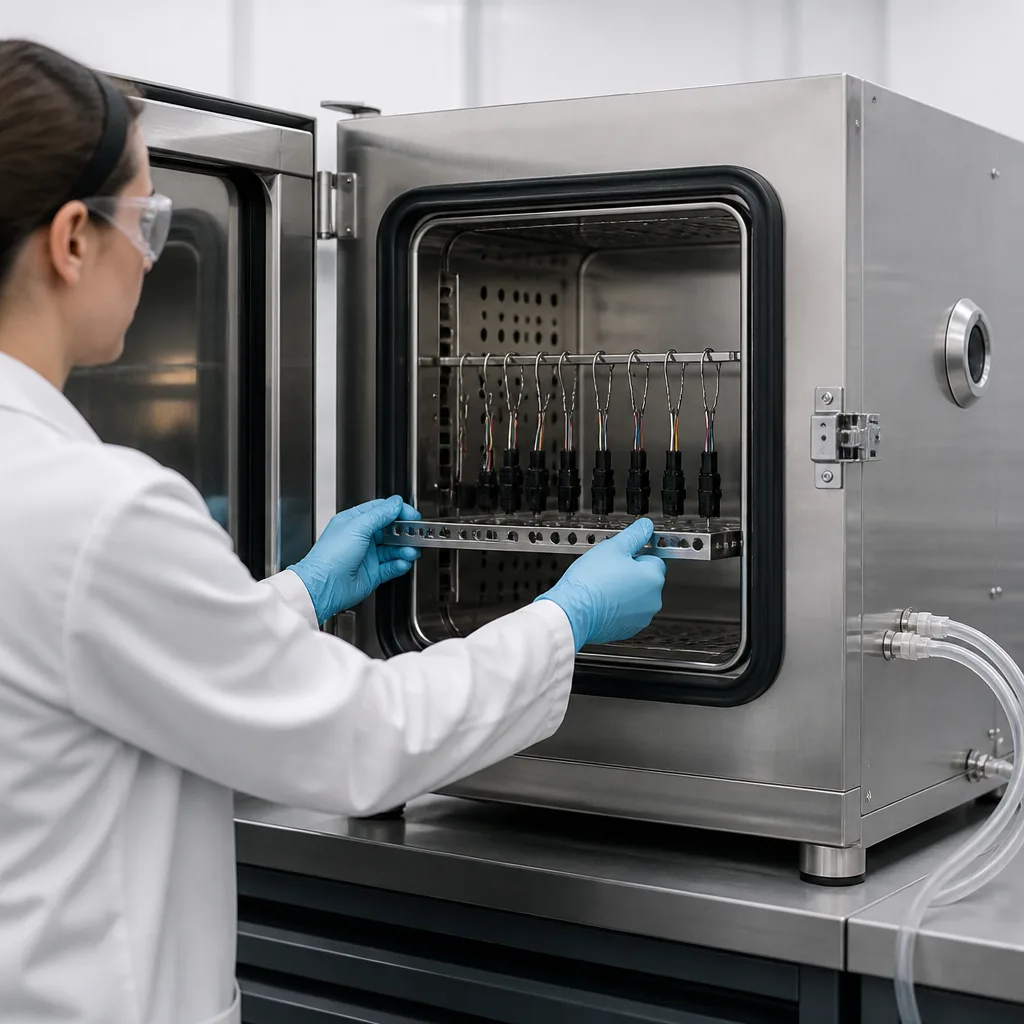
Electrical connectors that are in or will be in contact with ozone must be made of materials that can withstand ozone's oxidizing and penetrating effects. This is because ozone causes materials to crack, become brittle, lose their strength, and undergo other types of degradation.
The EIA-364-14B standard defines a laboratory procedure for evaluating the resistance of electrical connectors to ozone exposure, ensuring they continue to provide reliable environmental sealing and electrical performance after exposure to ozone-rich environments.
Ozone is a highly reactive form of oxygen that can attack many elastomeric materials used in connector seals, gaskets, cable sheaths, and insulation components. Over time, ozone exposure can cause:
The EIA-364-14B standard establishes a standardized method for determining whether binders can withstand controlled ozone exposure while maintaining their intended sealing and performance properties.
This standard applies primarily to:
This standard applies particularly to binders containing elastomeric sealing components that may be susceptible to ozone degradation.
During testing, the binder samples are, in principle, placed in an ozone chamber where temperature, humidity, airflow, and ozone concentration are carefully controlled. After exposure for the specified time, the binders are examined in terms of the following aspects:
The aim is to determine whether ozone exposure affects the fastener's ability to protect against environmental pollutants.
According to this standard, specialized equipment is used, including the following:
The test chamber is constructed from ozone-resistant materials to prevent contamination or ozone loss during testing. The ozone generator is located outside the chamber, and precautions must be taken as ozone is toxic.
When applying the described test method, the following steps are generally followed:
After ozone exposure, connectors are evaluated in terms of the following aspects:
Acceptance criteria are generally defined by product specifications or customer requirements.
The EIA-364-14B standard is widely used in industries where connectors are used in harsh outdoor or industrial environments, including:
The EIA-364-14B standard is part of the broader EIA-364 series of standards that include procedures for evaluating many aspects of connector performance. These include:
Together, these procedures provide a comprehensive qualification framework for electrical connectors.
Modern vehicles are becoming increasingly reliant on sealed electrical connections located in challenging environments such as engine compartments, underbody components, and battery systems. Ozone, produced by electrical equipment, motors, and atmospheric conditions, can accelerate the degradation of elastomeric seals.
Testing according to the EIA-364-14B standard helps manufacturers in the following areas:
Implementing the EIA-364-14B standard offers several advantages:
In conclusion, the EIA-364-14B standard is a crucial environmental durability standard for electrical connectors. By establishing a consistent ozone exposure test, it enables manufacturers to verify that connectors and seals can withstand ozone-induced degradation while maintaining mechanical integrity and environmental protection. Although this standard focuses specifically on ozone resistance, it complements the broader family of EIA-364 connector qualification tests, helping to ensure reliable performance in automotive, aerospace, industrial, and telecommunications applications where long-term environmental durability is essential.
For many years, our organization, with its competent and experienced team, has been understanding the needs of its clients, providing the advanced testing services they require, and assisting them in the establishment, implementation, and improvement of management systems. Within this framework, we also provide testing services compliant with the EIA-364-14B standard.
To get an appointment, to get more detailed information or to request an evaluation, you can ask us to fill in our form and reach you.

