
EN IEC 60601-2-41 Basic Safety and Essential Performance of Surgical and Diagnostic Lighting Fixtures.

EN IEC 60601-2-41 Basic Safety and Essential Performance of Surgical and Diagnostic Lighting Fixtures.

The standard “EN IEC 60601-2-41 Medical electrical equipment - Part 2-41: Specific requirements for the basic safety and basic performance of surgical lighting fixtures and diagnostic lighting fixtures”, developed by the International Electrotechnical Commission (IEC) and later published as a European standard within the scope of harmonization efforts, describes the specific requirements for the basic safety and basic performance of surgical lighting fixtures (operating room lamps) and diagnostic lighting fixtures (examination lamps used in medical settings). These are classified as medical electrical equipment and differ from general-purpose lighting fixtures.
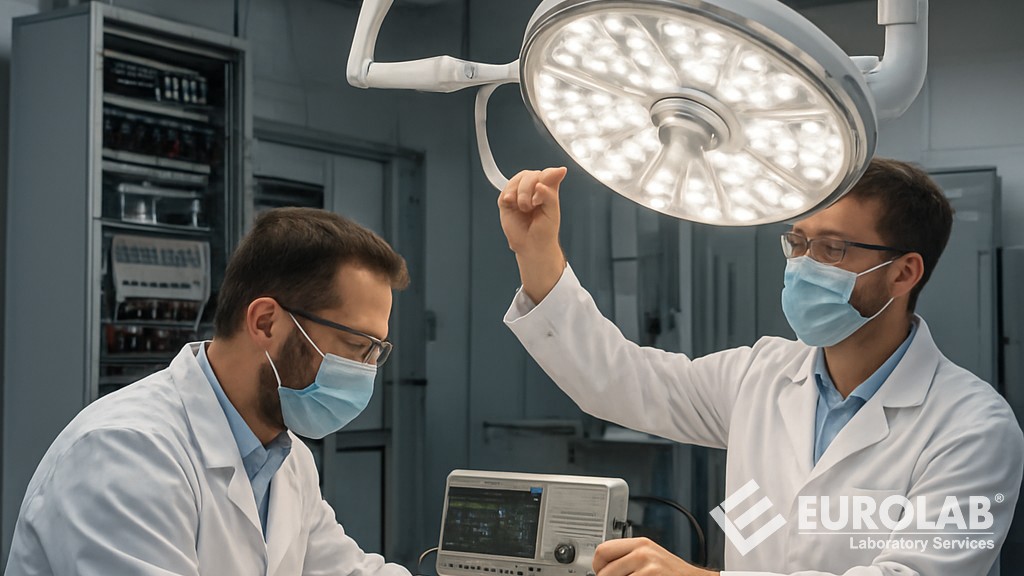
EN IEC 60601-2-41 Basic Safety and Essential Performance of Surgical and Diagnostic Lighting Fixtures.

This standard does not apply to the following:

  • headlights
  • Endoscopes, laparoscopes, and light sources within the scope of the IEC 60601-2-18 standard.
  • Dental lighting fixtures covered by the ISO 9680 standard.
  • General purpose lighting fixtures within the scope of IEC 60598-2-1 and IEC 60598-2-4 standards.
  • Therapeutic lighting fixtures
  • Specialized light sources for air and surface disinfection, UV lamps for dermatological diagnostics, slit lamps for ophthalmology, lamps for surgical microscopes, and lamps for surgical navigation systems are examples of special-purpose lamps with different application conditions.
  • Lamps attached to surgical instruments such as illuminated retractors
  • Lighting fixtures for emergency lighting within the scope of IEC 60598-2-22 standard.

The aim of the EN IEC 60601-2-41 standard is to ensure that these devices provide safe and effective lighting without posing risks such as excessive heat, glare, poor color rendering, electrical hazards, or mechanical instability.

Key performance and safety criteria include:

  • Central lighting: Typically between 40.000 and 160.000 lux at the reference distance, and a maximum of 160.000 lux at the maximum illumination distance.
  • Light field geometry: Light field diameters d10 and d50 (where the center of illumination drops to 10% and 50% of the value). For good homogeneity and reduced glare/eye strain, the d50/d10 ratio should be at least 0,5.
  • Color temperature: Generally, it should be in the range of 3.000 K to 6.700 K for natural, color-neutral light that supports tissue visualization and diagnosis.
  • Radiation and thermal safety: For a single lighting fixture, the radiation in the illuminated area should not exceed 700 W/m2 along the vertical axis to prevent heating of patient tissue. Warnings are recommended for overlapping areas of multiple lights.
  • Shadow management: Tests are performed with masks and simulated cavities to ensure light penetration and minimal shadowing (e.g., in deep surgical areas).
  • Other considerations include: mechanical stability (e.g., handle connection tests), electrical safety, electromagnetic compatibility, protection against excessive radiation, and proper controls.

These parameters help surgeons prevent hazards such as eye strain, and in patients, burns or impaired vision during procedures.

Compliance with the EN IEC 60601-2-41 standard is required for CE marking in European Union countries (and generally for market access globally). Some manufacturers emphasize that their surgical lamps are designed and tested to meet or exceed the requirements of this standard, thus ensuring improved patient safety, staff comfort, and surgical precision.

This standard reflects advancements in LED technology, improved risk management, and compliance with broader IEC 60601 series updates.

In short, the EN IEC 60601-2-41 standard is part of the broader medical electrical equipment safety framework defined by EN IEC 60601-1 and related series.

Surgical lighting systems are critical components in operating rooms and clinical examination areas. They must provide high-intensity, homogeneous illumination without compromising patient safety or clinical performance. This standard ensures that these lighting systems meet stringent requirements regarding electrical safety, mechanical reliability, optical performance, and usability.

This standard applies to surgical lighting fixtures and examination lamps designed for use in the following healthcare facilities:

  • Operating rooms
  • Intensive care units
  • emergency services
  • Examination rooms
  • Polyclinics

This standard covers lighting fixtures with the following characteristics:

  • Ceiling mounted
  • Wall-mounted
  • Mobile or ground-mounted
  • Integrated into medical systems

These lighting devices are used to illuminate surgical or examination areas to enable healthcare professionals to perform procedures with the best possible visibility.

The EN IEC 60601-2-41 standard defines several essential aspects that surgical lighting fixtures must meet.

  • Optical performance: Lighting quality is critical in surgical environments. This standard includes the following requirements:
  • Lighting (light intensity) in the surgical area
  • Homogeneity of lighting
  • Shadow reduction (minimizing shadows caused by surgical personnel)
  • Color rendering index to provide accurate texture visualization.
  • Color temperature stability
  • Light field diameter and illumination depth

These features allow surgeons to clearly see anatomical structures during procedures.

  • Thermal safety: Surgical lights operate at high intensity and can generate heat. This standard sets limits for:
  • Increase in temperature on light-emitting surfaces
  • Infrared radiation levels
  • Exposure to heat in the surgical area

This prevents tissue dehydration and discomfort for both patients and healthcare personnel.

  • Electrical safety: As medical electrical equipment, lighting fixtures must meet stringent electrical protection requirements, including:
  • Protection against electric shock
  • Secure insulation systems
  • Proper grounding
  • Leakage current limits

These requirements are compliant with the requirements of the EN IEC 60601-1 standard.

  • Mechanical safety and stability: Surgical lighting fixtures typically incorporate articulated arms and suspension systems. This standard requires testing for the following:
  • Mechanical durability
  • Arm strap durability
  • Secure positioning mechanisms
  • Resistance to repeated adjustments

These tests ensure that the lights remain stable and safe during surgical procedures.

  • Usability and ergonomics: Modern surgical lighting systems are designed for easy positioning and intuitive operation. This standard addresses the following:
  • Arm design for sterile manipulation.
  • Ease of positioning
  • Control accessibility
  • Movement resistance and balance

Proper ergonomics help surgical teams quickly adjust lighting without interrupting procedures.

Manufacturers must demonstrate compliance through various laboratory and performance tests, including:

  • Lighting measurement tests
  • Shade thinning test
  • Mechanical durability test
  • Temperature rise test
  • Electrical safety test

For many years, our organization, with its competent and experienced staff, has been understanding the needs of its clients, providing the advanced testing services they require, and assisting them in the establishment, implementation, and improvement of management systems. Within this framework, we also provide testing services compliant with the EN IEC 60601-2-41 standard.

WhatsApp

